
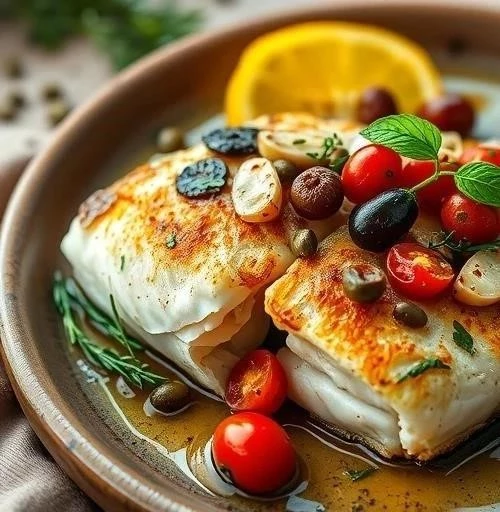
Oven sea bass stays moist because gentle heat protects its delicate texture and flavor!
Choose fresh sea bass—also known as lavrak—and bake it in the oven because this gentle method keeps the fish moist while allowing Mediterranean cuisine’s clean, bright flavors to shine.
Choose fresh sea bass, also called lavrak, with clear eyes and firm flesh; these signs matter because good quality remains evident after cooking. Baking is a sound choice: gentle, steady heat cooks the fish evenly while reducing moisture loss, so its delicate texture stays tender. This restrained method suits Mediterranean cuisine, letting its clean, bright character frame the fish instead of overwhelming it. So, gentle oven baking keeps the fish quite moist.
Build a fish marinade with olive oil, garlic, lemon, sea salt, black pepper, rosemary, thyme, oregano, basil, and parsley; these aromatic herbs complement the fish rather than overpowering it.
A balanced fish marinade starts with olive oil, which carries garlic and lemon across the surface, without masking the sea bass. Add sea salt and black pepper for clear seasoning, then use rosemary, thyme, oregano, basil, and parsley in measured amounts. This restraint matters: aromatic herbs should support the fish’s mild flavor, not compete with it. Brief contact lets flavors blend; measured herbs support the fish’s mild character, keeping seasoning in balance.
Prepare the fish with lemon and garlic, then bake it with cherry tomatoes, olives, capers, and a splash of white wine; this combination gives the baked sea bass savory depth and balanced acidity.
Place lemon slices and crushed garlic in and around the fish, then add cherry tomatoes, olives, capers, and a small splash of white wine to the baking dish.
This pairing is effective because tomatoes soften and release juices, olives bring a savory note, and capers add a crisp, briny edge. White wine lends acidity, while lemon keeps the flavor bright; together, these ingredients give baked sea bass depth without making its delicate taste feel heavy overall.
Serve the finished dish with a simple side dish for sea bass, such as roasted vegetables or potatoes, because a light accompaniment lets this Mediterranean recipe—and the careful cooking of the fish—remain the focus.
Use a simple side dish for sea bass, such as roasted vegetables or potatoes, because its role is to support, not compete. A modest portion keeps the fish central, while tender vegetables add color and potatoes provide substance without making the plate feel heavy. This restraint is especially sensible for a Mediterranean recipe: diners can appreciate the fish’s careful preparation, and each accompaniment contributes balance rather than stealing its spotlight.


3 Comments. Оставить новый
The ingredient suggestions create a thoughtful balance: tomatoes add softness, olives bring savory depth, and capers contribute brininess. Including a small amount of white wine and lemon makes sense for brightness, though the recipe would benefit from a clear baking temperature and cooking time.
The article makes a persuasive case for gentle oven baking, explaining how it helps preserve sea bass’s delicate texture. I also appreciate the emphasis on measured seasoning, since the herbs and other ingredients should complement rather than overpower the fish.
This is an appealing Mediterranean-style approach, and the practical note about choosing fresh fish gives readers a useful starting point. The advice to use herbs sparingly is especially sound; precise quantities would make the marinade easier to reproduce consistently.