
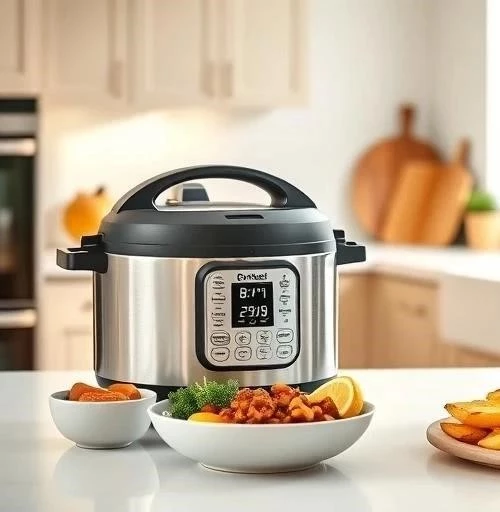
A multicooker and an air fryer can both make everyday cooking easier, but they solve different problems․ A multicooker is designed mainly for simmering, boiling, steaming and pressure cooking in a covered pot․ An air fryer circulates hot air around food to brown and crisp its surface․ The better choice depends less on which appliance has more programs and more on what you usually cook․
The main difference
Think of a multicooker as an automated pot․ Add ingredients, choose a program and let the appliance cook with limited supervision․ Depending on the model, it may prepare porridge, soup, rice, stew, steamed vegetables, yoghurt or baked dishes․ Some models also work as pressure cookers, reducing the time needed for foods such as beans and tougher cuts of meat․ A delay timer and keep-warm function can be useful when you want a meal ready around a particular time․
An air fryer is closer to a compact convection oven․ A heating element and fan move hot air around food, producing a browned, crisp exterior with less oil than deep-frying usually requires․ It is particularly suited to fries, chicken pieces, vegetables, fish fingers and reheating foods that become soggy in a microwave․ It does not literally fry food, and results depend on the basket size, temperature and how much food you load into it․
What each appliance does best
Choose a multicooker if you make meals in a pot
For soups, stews, grains, legumes and one-pot dinners, a multicooker is generally the more useful option․ Its covered bowl retains moisture, so ingredients can cook together without constant stirring․ Automatic programs and delayed start can reduce hands-on effort, especially for busy households․ It is also a practical choice if you do not have a full-size cooker or want to prepare a warm meal while doing other things․
Its limitations follow from the same design․ Moist heat does not create the dry, crisp finish of an air fryer․ A multicooker can brown some ingredients, but it is not the best tool for crunchy chips or crisp-skinned chicken․ Baking performance also varies by model and should not be assumed to match an oven․
Choose an air fryer if you value browning and texture
An air fryer is a strong choice for small portions that benefit from a crisp surface․ It can cook many frozen convenience foods quickly and reheat pizza, pastries or leftovers more successfully than a microwave․ It may also use less oil than traditional frying, although “air-fried” does not automatically mean low-calorie: the ingredients and portion size still matter․
However, a basket has limited capacity․ If you pile food too high, air cannot circulate freely and the result may be uneven or soft; cooking in batches may be necessary․ An air fryer is also less suited to liquid-heavy dishes such as soup, and its fan can make it noisier than a multicooker․ Check basket capacity and cleaning requirements before buying․
Convenience, space and cost
Neither appliance is universally simpler․ A multicooker often needs little attention once a program starts, but cooking can take time, and the bowl may need soaking after sticky rice or sauces․ An air fryer is usually quick for a small serving, but food may need shaking or turning, and a full basket can be awkward to wash․ Removable parts, dishwasher compatibility and the availability of replacement bowls or baskets are worth checking․
Consider your counter space and household size as well․ A compact multicooker can suit a small kitchen and can replace several basic cooking functions․ A large air fryer may be convenient for a family but takes up room; a small one may require repeated batches․ Compare the appliance’s usable capacity, not just its advertised volume․ Prices and features vary widely, so paying extra for app control or numerous presets makes sense only if you will actually use them․
So, which is better?
For most people who regularly cook soups, grains, stews or complete one-pot meals, a multicooker is the more versatile first purchase․ It covers a broader range of moist-cooking tasks and can make meal planning easier․ If your usual meals are crispy vegetables, chicken, snacks and quick reheated portions, an air fryer is the better match․ It delivers the texture a multicooker cannot reproduce as well․
If you cook both kinds of food often and have enough space and budget, owning both is reasonable: use the multicooker for the main moist-cooked dish and the air fryer for crisp sides․ If you can buy only one, write down the meals you prepare most during a typical week and choose the appliance that fits those meals—not the one with the longest feature list․ In short, there is no universal winner: the multicooker prioritizes variety and unattended pot cooking, while the air fryer prioritizes speed and crispness․
9 Comments. Оставить новый
I like that the article avoids presenting one appliance as universally better. Their different cooking methods mean the right choice depends on the food you prepare most often and the textures you want.
The comparison is easy to follow and connects appliance features to actual meals. The point about pressure cooking being useful for beans and tougher cuts is especially relevant for anyone trying to save time on longer-cooking ingredients.
This is a balanced overview that explains both convenience and limitations. In particular, noting that a multicooker cannot produce the same dry, crisp finish as an air fryer helps set realistic expectations.
The description of an air fryer as a compact convection oven is a helpful way to explain how it works. It also makes the contrast with a covered multicooker straightforward for readers unfamiliar with either appliance.
The article makes a strong case for choosing based on cooking habits. Someone who regularly prepares soups and grains will likely get more use from a multicooker, while people seeking crisp reheated food may prefer an air fryer.
This gives readers a sensible starting point for comparing the two appliances. The focus on everyday cooking tasks is more useful than treating extra programs or settings as the main reason to buy one.
I appreciate the realistic explanation that an air fryer does not literally fry food. Mentioning that results depend on basket size and how much food is loaded gives readers helpful context beyond the basic appliance descriptions.
The comparison is useful because it focuses on how the appliances cook rather than simply listing features. The distinction between moist, covered cooking and hot-air crisping makes it easier to decide which one fits your usual meals.
The practical examples help clarify the differences between these appliances. I would also consider how many people I cook for, since capacity can affect whether either option is convenient for everyday use.