
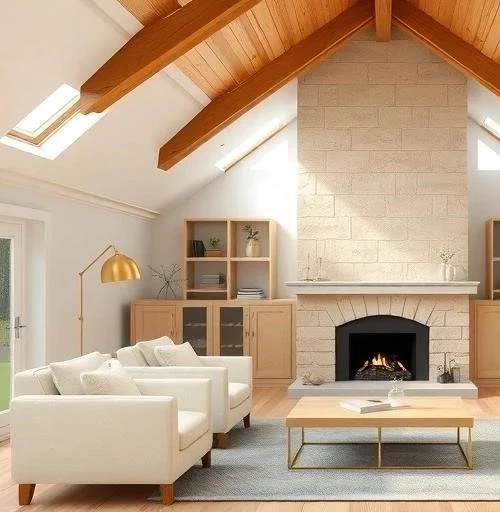
Natural stone in an interior brings depth‚ permanence and a connection to nature—qualities that make it especially effective in an attic. Yet stone works best when it supports the room rather than overwhelms it. In a modern classic attic interior‚ combine restrained detailing‚ comfortable furnishings and honest materials to create a space that feels elegant and welcoming‚ not like a cold gallery.
Choose stone for the architecture
Begin with the roofline. A sloped ceiling and exposed wooden beams already provide strong visual character‚ so a stone wall finish should usually be limited to one carefully chosen surface. A stone accent wall behind the bed‚ sofa or fireplace gives the eye a focal point while preserving the openness an attic needs. Pale limestone for interior use or softly veined travertine can brighten a low room; slate adds richer texture and a more dramatic‚ contemporary note. Marble in the interior is best used selectively‚ for example around a fireplace or as a small decorative detail‚ rather than across every wall.
Decorative stone is not only about appearance. Its colour‚ scale and surface affect how the room feels: finely textured‚ light-toned stone can make a compact attic seem calmer‚ while deep‚ irregular pieces may visually crowd it. Ask for samples and view them under the room’s actual lighting before deciding. Choose a finish suited to the location and consult an installer about weight‚ fixing methods and the roof structure.
Balance texture with warmth
The most convincing country house interior pairs stone and wood. Wooden beams‚ a timber floor or a simple oak console soften the mineral surface and make natural textures feel lived-in. The contrast is especially useful in attic wall finishing: rather than covering every slope‚ use stone on a vertical gable wall and finish the remaining surfaces with matte plaster. This combination of stone and plaster keeps the design light while giving the room a distinctive‚ crafted character.
Warm shades—sand‚ cream‚ muted taupe and soft grey—help unite the materials. In modern classic style‚ refined shapes can sit comfortably beside rugged stone: choose a tailored sofa‚ understated metal accents and textiles with subtle woven patterns. Linen curtains‚ wool throws and plush cushions add comfort without competing with the masonry. These ecological finishing materials also bring tactile variety‚ an important quality in a room defined by hard surfaces.
Plan light and use
A fireplace in the attic can turn a striking stone wall into the heart of the room‚ provided the installation meets fire-safety and structural requirements. If a real fireplace is not practical‚ a well-designed electric model can create a similar focal point. Soft lighting is essential: combine warm general illumination with wall lights or discreet spots that graze the stone and reveal its relief. Avoid a single harsh ceiling fixture‚ which can flatten textures and make the space feel less inviting;
Thoughtful zoning makes attic space work harder. Place a reading chair and lamp beside the stone feature to form a cozy lounge; arrange a desk near daylight‚ and keep circulation clear beneath the lowest parts of the roof. A rug can define the sitting area without adding another hard finish. The result is a cozy attic room that feels organized‚ intimate and usable throughout the day.
A considered‚ lasting design
Successful stone attic design depends on proportion. Use stone where it adds architectural meaning‚ repeat its tones in smaller details‚ and let wood‚ plaster and textiles provide balance. This approach makes natural stone in an interior feel purposeful‚ supports the elegance of modern classic design‚ and creates a warm retreat that will age gracefully.


8 Comments. Оставить новый
Pairing stone with timber is a convincing way to make an attic feel welcoming rather than austere. The balance between mineral texture and warm wood seems particularly suited to a country house interior.
The advice to limit stone to one focal wall is practical for an attic, where sloped ceilings and beams already create plenty of visual interest. It helps preserve openness while still giving the room a distinctive feature.
The article sensibly treats installation as more than a design decision. Checking the roof structure, fixing method and material weight with a qualified installer is important before committing to a stone finish.
Using stone on a vertical gable wall and plaster on the remaining slopes is a clear, adaptable design strategy. It adds character without making every surface compete for attention.
The guidance on using marble selectively is well judged. A fireplace surround or small detail can provide elegance, while extensive marble might make the room feel less relaxed than the intended modern classic style.
I appreciate the distinction between different stone finishes. Light limestone and travertine can keep a compact room feeling airy, while slate brings a stronger mood that may work better in a larger or brighter attic.
This is a thoughtful approach to natural stone in a challenging space. It recognizes that colour, texture and scale matter as much as the material itself, and that restraint can make the final design more effective.
The recommendation to view samples in the actual room is especially useful. Stone can look quite different under warm lamps or limited daylight, so choosing from a catalogue alone could lead to an unexpected result.