
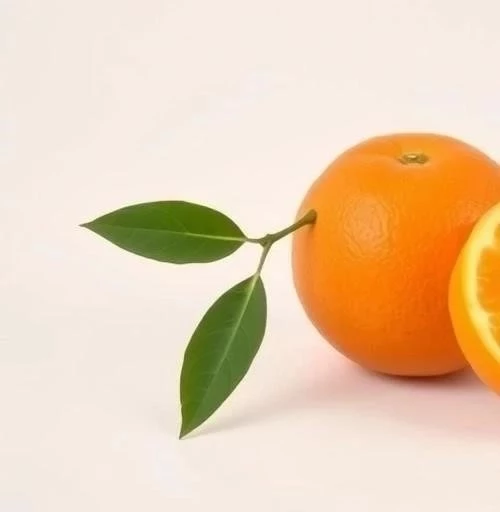
An orange is a round citrus fruit that grows on an evergreen tree in the genus Citrus. The fruit is best known for its bright-colored rind, juicy segments, and sweet-tart flavor. Oranges are widely eaten fresh and used in drinks, cooking, and food products. The word can also refer to the tree that produces the fruit, but in everyday use it usually means the fruit itself.
The orange tree and its fruit
Orange trees have glossy leaves and fragrant white blossoms. After pollination, a flower may develop into a fruit. The time needed for an orange to mature varies with the variety, climate, and growing conditions. Many orange trees are cultivated in warm regions, although they can also grow in suitable protected environments.
An orange has an outer rind and an inner edible portion. The rind consists of a colored outer layer, which contains aromatic oils, and a pale, spongy layer beneath it. Inside, thin membranes divide the fruit into segments. Each segment contains small juice-filled sacs; some varieties also contain seeds, while others are grown to be seedless.
Varieties and flavor
There are several kinds of oranges, selected for differences in taste, appearance, and use. Sweet oranges are commonly eaten fresh or squeezed for juice. Navel oranges are recognized by a small, navel-like feature at the blossom end and are often easy to peel. Valencia oranges are frequently used for juice. Blood oranges have red or deep-colored flesh, while bitter oranges are more commonly used in marmalade, flavorings, and cooking than eaten as fresh fruit.
Flavor depends on the balance of natural sugars and acids, as well as on the variety and ripeness. The rind may smell strongly of citrus because it contains volatile oils. Color alone does not always indicate sweetness or readiness: oranges may develop their characteristic color under different conditions, and a greenish tint can remain even when a fruit is ripe.
Nutrition and uses
Oranges provide vitamin C, dietary fiber, water, and other nutrients. The exact amounts vary by size and variety. Eating the whole fruit supplies fiber from the pulp and membranes; juice contains less fiber, particularly when the pulp is removed. Oranges can be included in a varied diet, but they are not a substitute for an overall balanced pattern of eating.
People commonly peel and eat an orange, add segments to salads, or use its juice in drinks and recipes. Grated zest—the colored outer part of the rind—can add aroma to baked goods, sauces, and desserts. Only the outer layer is usually used for zest, since the pale layer beneath it can taste bitter. The rind may also be candied or used to make marmalade.
Harvesting and storage
Oranges do not continue to ripen in the same way as some fruits after picking, so growers generally harvest them when their flavor and maturity are suitable. A sound orange feels firm for its size and has no extensive soft spots or mold. It can be kept at room temperature for a short period or refrigerated to help it stay fresh longer. Washing the rind before zesting is a sensible food-handling step.
Why oranges matter
Oranges are important both as food and as an agricultural crop. They are grown commercially in many parts of the world and sold fresh or processed into juice, concentrates, preserves, and flavor ingredients. Their availability and quality are influenced by weather, pests, disease, cultivation practices, and transportation. In short, an orange is a citrus fruit valued for its edible segments, juice, fragrance, and versatility.
2 Comments. Оставить новый
The descriptions of flavor and ripeness add useful context to the basic information about oranges. The final section appears incomplete, so some details about nutrition and uses are not included.
The article gives a clear overview of orange varieties, structure, and common uses. Its section headings make the information easy to follow.