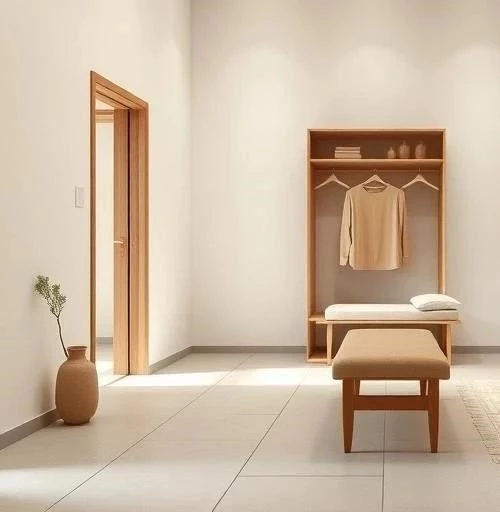
A dressing room should feel calm‚ work efficiently and withstand daily use. Porcelain tile can support all three goals when chosen as part of a considered Japandi design. This style brings together Japanese minimalism and Scandinavian simplicity: minimalism and naturalness‚ useful forms‚ natural shades and a calm colour palette. The result is not a cold showroom‚ but a functional interior with tactile‚ natural textures.
Choose finishes that create a quiet foundation
For closet finishing‚ start with the floor. Porcelain tile on the floor is a practical flooring choice for a dressing room because it resists wear‚ handles dirt and is easy to maintain. Matte porcelain tile reduces glare and feels understated. Large-format tile creates fewer grout lines‚ helping a compact dressing room appear more spacious and making the restrained interior easier to keep clean.
Look for a stone texture in soft beige‚ warm grey or muted taupe. Wood imitation can bring warmth where real timber is impractical‚ while a subtle pattern keeps the surface from competing with clothes and storage. Used on a single wall‚ porcelain wall cladding can form an accent wall behind a dressing table or at the entrance. Keep the remaining surfaces simple so the feature feels intentional‚ not decorative for its own sake.
Use tile to define zones
Zoning a dressing room does not always require partitions. Zoning through finishes—for example‚ continuing one tile across the main circulation path and using a different finish near a mirror or dressing seat—creates visual separation while preserving openness. This approach is especially useful in a compact dressing room‚ where every partition can reduce usable space. A change in tile direction‚ tone or texture can signal a new function without interrupting movement.
Consider how materials work together. Wood and stone make a balanced combination: porcelain provides a durable‚ stable base‚ while timber shelves or cabinet fronts soften the composition. This mix of materials in the interior should be restrained; repeating one or two natural finishes is more convincing than collecting many competing patterns. Built-in wardrobes suit a clean‚ continuous look. Open storage systems can add lightness‚ but need thoughtful organisation to avoid visual clutter.
Plan for comfort as well as appearance
Good dressing room design depends on storage ergonomics and lighting. Place frequently used items within easy reach‚ leave a clear route between wardrobes‚ and light shelves‚ mirrors and the full-length viewing area evenly. Warm‚ layered lighting brings out natural textures and prevents stone-look surfaces from appearing harsh. Tile can also help distinguish a practical dressing or shoe-care area from a softer seating nook‚ while maintaining a coherent Japandi interior.
In short‚ porcelain tile in a dressing room is most effective when it serves a clear purpose: a durable surface underfoot‚ an easy-care backdrop or a subtle zoning tool. Choose a matte finish‚ natural shades and a measured combination of wood and stone. This practical finish supports daily routines and lets Japandi style express itself through simplicity‚ balance and quiet functionality.