
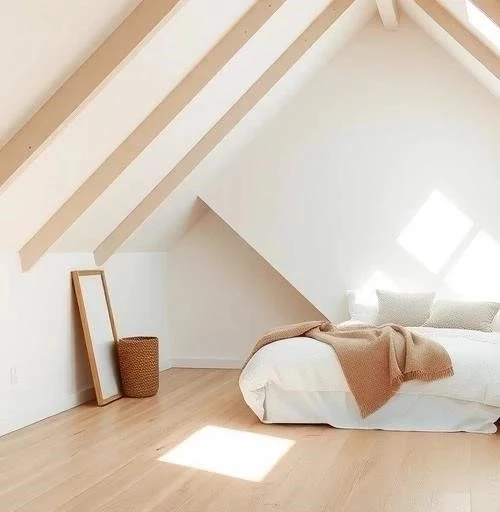
A Scandinavian interior can make an attic feel calm, bright, and practical. Good attic design starts by working with the room’s distinctive shape rather than trying to disguise it. The roof slope, exposed structure, and limited floor area can become defining features of the interior. A thoughtful approach to attic-floor arrangement balances simplicity with comfort, creating a space that feels welcoming without appearing crowded.
Light, materials, and colour
A light attic benefits from a restrained palette. White walls and other light shades reflect daylight, while a neutral colour palette helps connect different areas. Grey accents can add definition without making the room feel heavy. Where possible, roof windows should bring in natural light and provide ventilation. Their position matters: daylight can brighten a work surface, illuminate a reading corner, or make a compact bedroom feel more open.
Natural materials bring warmth to this simple backdrop. Wooden beams may be left visible, and natural wood flooring or furniture can soften the geometry of a sloping ceiling. Choose finishes that suit the structure and are easy to maintain. Linen-and-cotton textiles, such as curtains, cushions, and bedding, add texture without overwhelming the room. Eco-friendly materials are also worth considering, especially when selecting paints, flooring, and insulation.
Layout and storage
An ergonomic layout makes the most of areas with different ceiling heights. Place a bed, low bench, or built-in drawers beneath the roof slope, where standing space is limited. Storage under the slopes can keep belongings accessible while preserving the central area for movement. Compact furniture with clean lines is often more useful than bulky pieces. Before buying, measure doorways, stairs, and the usable floor area, including the height beneath each section of the roof.
Space zoning can distinguish sleeping, working, and relaxing areas without adding visual barriers. A rug, a change in lighting, or the placement of a sofa can suggest separate functions while keeping the plan open. In an attic bedroom, position the bed where there is comfortable access on both sides. A living room in Scandinavian style may use a small sofa, a simple coffee table, and flexible seating. Practical design depends on daily routines, not decoration alone.
Comfort and finishing touches
Scandinavian decor favours concise forms and a considered selection of objects. A few books, ceramics, or plants can give the room character; leaving some surfaces clear helps maintain visual spaciousness. Soft lighting is important after sunset; Combine a ceiling fixture with task lighting and a bedside lamp, choosing warm-toned bulbs for a relaxed atmosphere. Layered lighting also makes awkward corners easier to use.
For a cosy interior, add comfortable textiles in a measured way: a wool throw, cotton bedding, or a linen cushion can introduce softness and support a hygge-inspired interior. Keep patterns subtle and repeat a small number of colours to create continuity. The finish of the attic should also respond to temperature and sound: suitable insulation, reliable ventilation, and durable surfaces contribute to comfort as much as furnishings do.
A balanced result
The most successful combination of attic architecture and Scandinavian aesthetics is not a fixed formula. It brings together minimalism, functionality, natural textures, and a layout tailored to the household. Let the roof shape guide furniture placement, use daylight thoughtfully, and select only the details that serve a purpose or add comfort. With these principles, the attic can become a coherent, adaptable part of the home.

2 Comments. Оставить новый
The article offers a clear overview of how light, natural materials, and thoughtful furniture placement can make an attic feel more comfortable. Its emphasis on measuring ceiling heights and usable floor space is especially practical.
The suggestions for using sloped areas for low furniture and storage provide a useful starting point for planning an attic layout. The article also explains how a restrained palette and natural textures can create a cohesive interior.