
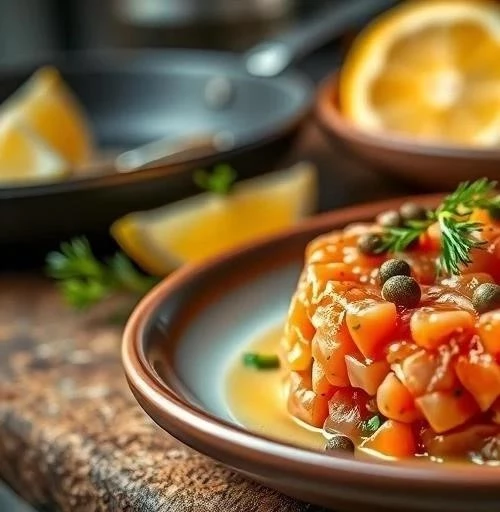
This recipe combines the clean flavor of fresh fish with the savory depth of seared salmon. Strictly speaking, classic tartare is uncooked; here, a brief turn in the pan adds a warm, smoky note while keeping the center tender. Choose sushi-grade salmon if you prefer to leave it raw, and keep it chilled until serving. For the cooked version, use a firm salmon fillet and avoid overcooking: the aim is a juicy texture, not a dry steak.
Ingredients
- 300 g salmon fillet, skin removed
- 1 ripe avocado and ¼ small red onion, finely diced
- 1 tbsp olive oil, plus 1 tsp lemon juice
- 1 tsp Dijon mustard and 1 tsp soy sauce
- 1 tbsp capers, rinsed and chopped
- 1 tsp sesame seeds, chopped herbs, black pepper and mild spices
- Optional: a little lightly salted salmon, diced for extra savoriness
Step-by-step recipe
- Prepare the fish. Pat the salmon dry and check carefully for bones. Cut it into two portions: finely dice one for the tartare, and keep the other in a neat piece for searing. This contrast gives the dish both delicate freshness and a richer, warm bite.
- Make the quick marinade. Stir together olive oil, lemon juice, Dijon mustard, soy sauce, pepper and a pinch of spices. Fold half into the diced salmon with capers and red onion. Chill for 10 minutes, but do not leave the fish in the acidic mixture for long: lemon changes its texture.
- Sear briefly. Heat a pan until hot, add a thin film of oil, and cook the reserved piece for about 30–45 seconds on each side. Let it rest, then dice. A very quick sear keeps the middle moist and makes the flavor more complex.
- Finish the mixture. Gently combine the seared cubes with the marinated fish and avocado. Taste before adding salt, since capers and soy sauce are already salty. Add more lemon or herbs only if needed.
Tartare presentation and cooking tips
For an elegant tartare presentation, pack the mixture lightly into a ring mold, lift the mold away, and scatter sesame seeds and fresh herbs on top. Serve immediately with crisp toast or cucumber slices. Keep the portions small: this is a quick appetizer, not a heavy main course.
The balance matters. Avocado softens the saltiness, red onion adds bite, and mustard brings gentle heat; together they support the salmon rather than hide it. Use good-quality fish, a hot pan, and a light hand when mixing. These simple cooking tips preserve the fish’s flavor and give this fish dish a satisfying, rich taste without sacrificing its juicy texture.

8 Comments. Оставить новый
The short searing time is useful, especially for cooks who might otherwise overcook the reserved salmon. Letting it rest before dicing also makes practical sense and should help preserve a tender texture.
The combination of capers, Dijon, soy sauce, and avocado sounds flavorful without relying on a complicated preparation. The note about tasting before adding salt is sensible, as several ingredients already contribute saltiness.
The recipe is well organized, moving logically from preparing the fish to marinating, searing, and finishing the mixture. Its advice to serve immediately is particularly relevant because avocado can discolor and the fish is best enjoyed fresh.
I like that the recipe offers presentation advice without making the dish sound difficult. A ring mold and a little fresh herb garnish can make it look polished, while the instructions remain accessible for a home cook.
This preparation sounds appealing for someone who enjoys both fresh and cooked salmon in one dish. The distinction between the finely diced marinated fish and the seared cubes gives the recipe a clear textural purpose rather than adding steps without explanation.
The ingredient list balances richness from the salmon and avocado with acidity from lemon and the sharpness of red onion. The recommendation to adjust the lemon and herbs only after tasting is a good way to keep those flavors in balance.
This is a thoughtful take on tartare because it explains that the dish is only partly cooked and distinguishes it from a strictly raw version. The guidance to use sushi-grade salmon for the raw portion is an important safety consideration.
The recipe clearly explains the contrast between the fresh, chilled tartare and the briefly seared salmon. I especially appreciate the reminder to keep the fish cold and avoid leaving it in lemon juice too long, since both details help protect its texture.