
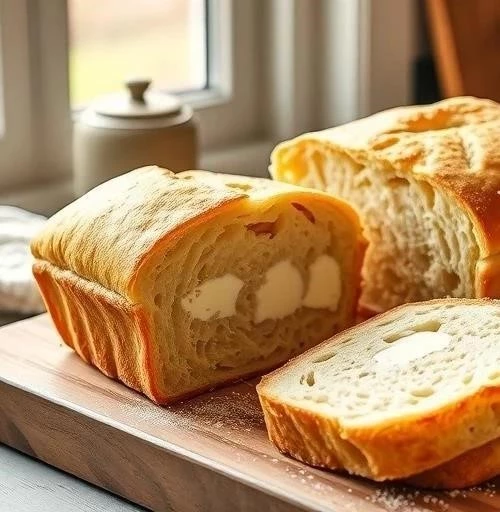
This homemade bread with cottage cheese is soft, filling, and easy to adapt. Cottage cheese enriches the dough, while careful proofing helps create a tender crumb and golden crust. Follow each stage rather than rushing: yeast needs time, and well-drained cheese prevents a soggy loaf.
Ingredients for the bread
- 450 g wheat flour, plus a little for kneading
- 200 g cottage cheese, preferably smooth and well drained
- 180 ml warm milk, 1 egg, and 40 g softened butter
- 7 g dry yeast or 20 g fresh yeast
- 2 tablespoons sugar and 1 teaspoon salt
- For the filling: 150 g cottage cheese, 1 egg yolk, and a pinch of salt
Use room-temperature ingredients. Milk should feel warm, not hot: excessive heat can weaken the yeast. Dry yeast can be mixed with flour; fresh yeast should first be dissolved in warm milk with a little sugar.
Step-by-step recipe
- Prepare the starter. For a slower, reliable rise, combine the yeast, warm milk, sugar, and two tablespoons of flour. Cover and leave for 10–15 minutes, until foamy. This is the dough starter; if using instant dry yeast, this step is optional.
- Mix and knead. Mash the dough cottage cheese until smooth. Add the egg, butter, salt, and starter. Gradually stir in the flour. Knead for 8–10 minutes, until the dough is elastic and slightly tacky. Add flour sparingly: too much makes the loaf dense.
- First rise. Put the yeast dough in a lightly oiled bowl, cover, and leave in a warm place for about 60–90 minutes, until doubled. Rising time depends on room temperature, so judge by volume, not the clock alone.
- Prepare the filling. Drain the cottage cheese and press it through a sieve if grainy. Mix with the yolk and salt. This preparation gives the filling a smooth texture and helps keep excess moisture out of the bread.
- Shape and proof. Gently deflate the dough and roll it into a rectangle. Spread the filling, leaving a small border, then roll it up and pinch the seam closed. Place seam-side down in a greased loaf pan. Cover and proof for 30–40 minutes.
- Bake. Heat the oven to 180°C (350°F). Brush the loaf with milk or beaten egg for a glossy, browned crust. Bake for 35–45 minutes. If the top browns too quickly, cover it loosely with foil.
Doneness, serving, and storage
Oven temperature and loaf size affect baking time. To check doneness, tap the underside: it should sound hollow; A thermometer inserted into the center should read about 93°C (200°F). Cool the loaf on a rack before slicing; cutting too soon can compress the soft crumb.
For successful homemade baking, measure flour carefully, avoid overheating the milk, and allow both rises to finish. Store cooled bread in a paper bag or sealed container at room temperature for up to two days. Refrigeration can dry it out; freeze sliced portions for longer storage.
Why this method works
The starter confirms that the yeast is active, kneading builds structure, and the second proof gives the shaped loaf time to expand. Draining the filling protects the crumb, while moderate heat cooks the center without burning the crust. These simple choices make cottage cheese bread in the oven dependable, tender, and flavorful;


6 Comments. Оставить новый
This recipe offers helpful explanations alongside the steps, rather than assuming readers already know how to handle yeast dough. The rise and proofing guidance is particularly valuable for adapting to different kitchen temperatures.
The recipe is clearly organized, and the reminders about warm—not hot—milk and well-drained cottage cheese explain why those details matter. The advice to judge the first rise by the dough’s volume rather than the clock is especially practical.
The shaping instructions are concise and practical, especially the reminder to place the loaf seam-side down. A note about checking the loaf for doneness would make the guidance even more complete, but the preparation advice is strong.
The note to add flour sparingly is useful because cottage-cheese dough can become dense if it is made too firm. The suggested kneading time and description of a slightly tacky texture give readers helpful cues.
Separating the cottage cheese for the dough from the cottage cheese for the filling makes the ingredient list easy to understand. Draining and sieving the filling should also help produce a smoother result without excess moisture.
I appreciate that the instructions distinguish instant dry yeast from fresh yeast and explain when a starter is optional. That makes the recipe easier to follow for bakers using different types of yeast.