
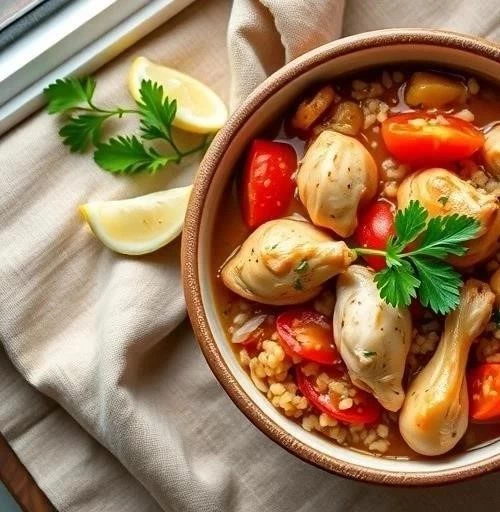
This one-pot stew combines lean chicken, buckwheat and vegetables with tomato, cumin and paprika. The seasoning is inspired by flavors used in Turkish cooking; the recipe is an everyday adaptation rather than a claim of a traditional regional dish. Buckwheat gives the stew a hearty texture, while vegetables add color and variety. A measured amount of oil and skinless chicken keep the preparation relatively light.
Ingredients
Makes 4 servings. Use a standard 240 ml cup for measuring.
- 600 g skinless chicken breast or boneless thigh, cut into bite-sized pieces
- 200 g (about 1 cup) buckwheat groats, rinsed and drained
- 1 medium onion, finely chopped
- 1 medium carrot, diced
- 1 red bell pepper, diced
- 1 small courgette, diced
- 2 garlic cloves, finely chopped
- 200 g chopped tomatoes, fresh or canned
- 600–700 ml low-salt chicken stock or water
- 1 tablespoon olive or other vegetable oil
- 1 teaspoon ground cumin, 1 teaspoon sweet paprika, and black pepper to taste
- Salt to taste; chopped parsley and lemon wedges to serve
Method
- Check the buckwheat for debris, rinse it under cold water and drain well. Prepare the vegetables and cut the chicken into pieces of similar size so they cook evenly.
- Warm the oil in a heavy saucepan or deep skillet over medium heat. Add the onion and carrot and cook for 4–5 minutes, stirring occasionally, until softened. Add the pepper and courgette and cook for another 3 minutes. If the pan becomes dry, add a spoonful of water rather than extra oil.
- Add the garlic, cumin and paprika. Stir for about 30 seconds, just until fragrant. Add the chicken and black pepper. Cook, turning the pieces, until the outside is no longer raw; browning is optional and does not mean the chicken is fully cooked.
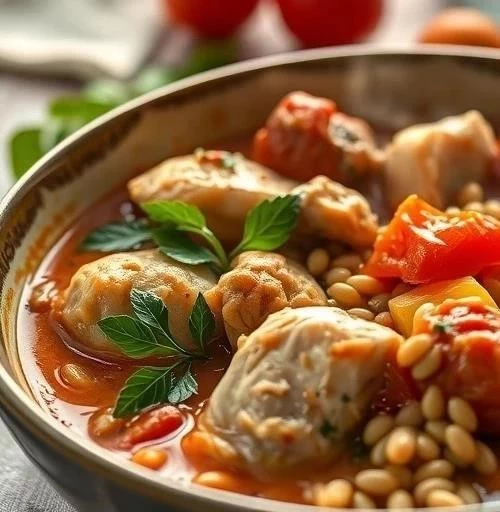
- Stir in the tomatoes and buckwheat. Pour in 600 ml of stock or water and add a small amount of salt. Bring the mixture to a gentle boil, then cover and reduce the heat. Simmer for 18–22 minutes, stirring once or twice, until the buckwheat is tender and most of the liquid has been absorbed.
- Check the thickest chicken pieces with a food thermometer: they should reach 74°C (165°F). If the groats are still firm, add a little hot water, cover and cook for several more minutes. If the stew is too liquid, simmer uncovered briefly. Taste and adjust the seasoning.
- Remove the pan from the heat and leave it covered for 5 minutes. Fluff gently with a fork, then serve with parsley and a squeeze of lemon.
Making the dish suitable for everyday meals
For a balanced plate, keep the listed amount of oil and choose skinless chicken. Breast is lean; boneless thigh tends to stay moist and has a richer flavor. The vegetables can be varied according to availability: mushrooms, green beans or a handful of spinach work well. Add quick-cooking greens near the end so they retain their texture. Extra stock may be needed when adding vegetables that absorb liquid.
Buckwheat is naturally gluten-free, but packaged groats may be processed alongside wheat. Anyone avoiding gluten should check the label for cross-contamination information. Stock, canned tomatoes and spice blends can also contain added salt, so choose lower-salt products where practical and season gradually. The recipe’s nutritional values will vary with the chicken cut, stock and portion size; it is not a substitute for individualized dietary advice.
Serving and storage
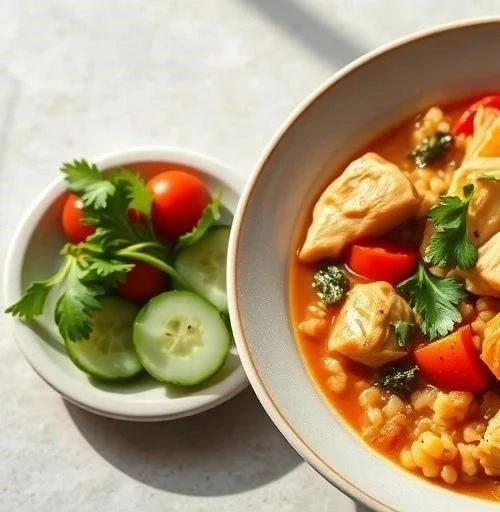
Serve the stew on its own or alongside a crisp salad, plain yoghurt or sliced cucumber. Lemon and fresh herbs add brightness without requiring a heavy sauce. Divide leftovers into shallow containers and refrigerate promptly; use within 3–4 days, reheating until steaming hot. The stew can also be frozen in portions. Thaw it in the refrigerator and add a splash of water when reheating if the buckwheat has thickened.


6 Comments. Оставить новый
The article describes the Turkish influence as an inspiration rather than presenting the recipe as a traditional dish. That distinction provides helpful context.
The note that browning the chicken does not mean it is fully cooked is a useful food-safety clarification. A final internal-temperature guideline could make that instruction more specific.
The ingredient quantities and serving count make the recipe straightforward to plan. The use of low-salt stock also gives readers flexibility to adjust the seasoning.
The combination of chicken, buckwheat and vegetables offers several textures in one dish. The recipe also gives water as an alternative to chicken stock.
The preparation steps are organized in a clear sequence, from preparing the ingredients to simmering the stew. The suggested cooking time is useful for estimating how long the meal will take.
The supplied method ends mid-sentence, so the complete cooking and serving instructions are not available in the text. The preceding steps are easy to follow, but the ending would need to be restored for the recipe to be complete.