
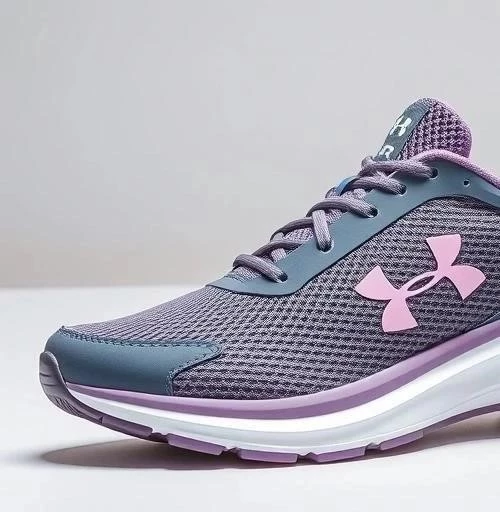
Under Armour women’s fitness shoes combine cushioning, support, traction and breathable materials to meet the demands of activities such as strength training, gym classes, treadmill running and everyday movement. The exact construction differs by shoe model and generation: a feature found in one pair may not appear in another, even when both carry the Under Armour name. Technology names are useful guides, but the intended activity, fit and feel matter just as much when choosing a shoe.
Cushioning systems
UA HOVR
HOVR is Under Armour’s branded cushioning platform, used in selected running and training models. The foam is designed to soften impact and provide a responsive feel as the foot moves through a stride. Some HOVR shoes also use an upper or surrounding structure intended to help contain the cushioning material and support the foot. The result varies with the shoe’s shape, foam amount and construction, so the name alone does not indicate how soft or stable a specific model will feel.
In some HOVR running shoes, connected footwear features have been offered to record or display workout information through a compatible app. Availability depends on the model and product version; it should not be assumed that every HOVR shoe includes sensors or connectivity. For gym users, the practical considerations remain comfort, a secure fit and suitable grip, rather than an electronic feature that may not be included.
Charged Cushioning
Charged Cushioning is another Under Armour foam technology found across a range of footwear. It is intended to absorb impact and provide a responsive platform. The ride can differ between models because the foam density, thickness and arrangement are not necessarily identical. A firmer feel may suit someone who prefers a more direct connection with the floor, while a softer ride may feel more comfortable during repeated steps or short runs.
Cushioning is not the same as stability. A soft midsole can feel comfortable but may not provide the secure base a person wants for lateral movements or lifting. When testing a shoe, walk, jog and perform a few controlled side steps if those actions match the intended workout. The foot should feel supported without excessive movement inside the shoe.
Support and a stable base
UA TriBase
UA TriBase is a sole design used in selected training shoes. Its purpose is to encourage ground contact and provide a stable foundation, particularly for movements where balance and controlled force transfer are important. Some versions use a wider or more articulated contact area beneath the foot. This type of construction can be useful for strength training, circuit sessions and exercises that involve changing direction.
A stable training platform is different from a highly cushioned running platform. Running shoes are generally designed to accommodate repeated forward motion, while many gym shoes aim to feel more planted during lifting and lateral drills. Neither category is automatically suitable for every workout. Someone who combines treadmill running with heavy lifting may prefer separate pairs, or a versatile trainer that balances comfort with a reasonably stable base.
Heel shape, midsole width and upper fit also influence stability. A technology label cannot compensate for a shoe that is too narrow, too long or poorly suited to a person’s movement. When trying on a pair, check that the heel does not slip significantly and that the foot does not spill over the midsole during a comfortable stance.
Outsoles, grip and flexibility
The outsole is the part of the shoe that contacts the floor. Under Armour uses different rubber compounds, tread patterns and coverage depending on the model’s intended use. Rubber in high-wear areas can help protect the sole, while grooves or segmented sections may allow it to bend more naturally; Traction depends on the compound, tread, surface and condition of the shoe; no pattern guarantees grip on every gym floor.
Some Under Armour models use Flow, a sole construction that combines cushioning and outsole functions without a conventional separate rubber layer across the full bottom. It is designed to reduce weight and offer a responsive ride. Flow is model-specific, not a feature of all women’s fitness shoes from the brand. Because outsole designs differ, users should follow product guidance and consider the surfaces on which they plan to train. A shoe suitable for a clean indoor studio may not be the best choice for wet or rough outdoor ground.
Flex grooves and forefoot shaping can help the shoe bend during a step or exercise. For workouts with lunges, jumps or quick changes of direction, the shoe should allow natural movement while holding the foot securely. Excessive flexibility, however, may not feel supportive during heavy lifting. The right balance depends on the exercises and personal preference.
Upper materials and fit
Many fitness shoes use engineered mesh or other lightweight textiles to help air circulate around the foot. Different knit structures can balance breathability with reinforcement, and synthetic overlays may add structure in areas that experience more movement. A breathable upper can improve comfort during a warm or intense session, but it does not make a shoe waterproof. Mesh may also allow dust or moisture to enter more readily than a closed upper.
Some models include a molded sockliner or a shaped insole intended to provide a comfortable surface beneath the foot. A sockliner can influence step-in softness and the way the shoe holds the foot, but it is not a substitute for a medical orthotic where one has been prescribed. Removable insoles, where present, should be checked before replacing them, since a thicker insert can change the fit and reduce interior space.
Women’s versions may use women-specific sizing or fit proportions, but the construction is not identical across the entire range. Foot shape varies widely, and labels do not predict individual comfort. Check toe room, width across the forefoot, arch contact and heel security. The toes should have space to move, while the foot should not slide excessively during a change of direction. Trying shoes on later in the day can help account for normal foot swelling.
Choosing by workout
- Strength training: Look for a stable-feeling base and secure upper. A highly cushioned running shoe may feel less grounded for heavy lifts.
- Running or treadmill sessions: Prioritize comfortable cushioning, a suitable fit and a smooth transition through the stride. Running-oriented HOVR or Charged Cushioning models may be options, depending on the specific shoe.
- Classes and circuit workouts: Consider grip, lateral support and enough flexibility for varied movements. A trainer designed for gym use may be more appropriate than a road-running shoe.
- Mixed activity: Choose according to the activity performed most often. If workouts include both long runs and heavy lifting, two purpose-built pairs may serve better than one compromise design.
Care and practical limitations
Foam and textile materials gradually change with use. Repeated compression, worn tread, loose seams or a less secure fit can affect comfort and performance. Allow shoes to dry after use, remove surface dirt with a soft brush or cloth, and follow the care instructions supplied with the product. Machine washing or direct heat can damage materials unless the manufacturer specifically permits it.
Technology descriptions explain design intentions, not guaranteed outcomes. Cushioning does not prevent injury, and a particular sole does not ensure better technique. Comfort and suitability depend on fit, training style, body mechanics, surface and personal preference. Anyone experiencing persistent pain should consider stopping the activity and seeking advice from a qualified health professional.
Under Armour women’s fitness shoes may feature HOVR or Charged Cushioning for impact management, TriBase for a more grounded training platform, Flow in selected lightweight designs, and mesh uppers for ventilation. These technologies serve different purposes and are not present in every model. Comparing the shoe’s intended use with the workout, then checking fit and stability in person, provides a more reliable basis for choosing than relying on a technology name alone.
2 Comments. Оставить новый
The explanation is neutral and accessible, particularly in clarifying that cushioning technology does not necessarily indicate stability. The discussion would be more complete with examples of specific models and their intended uses.
The article clearly distinguishes between HOVR and Charged Cushioning and notes that features can vary by model. Its focus on fit, comfort and intended activity provides useful context for comparing women’s training shoes.