
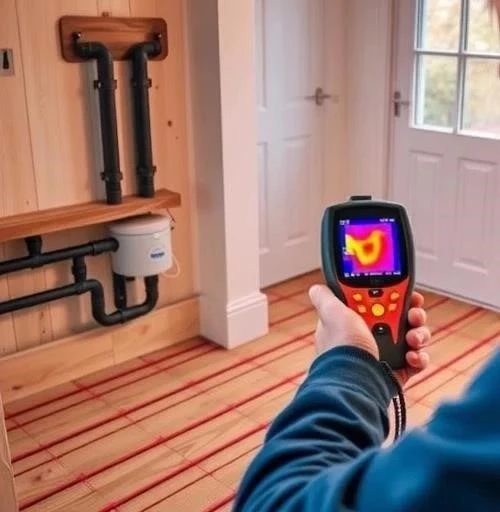
Underfloor heating in a cottage provides quiet, even warmth, but a fault may be difficult to spot because pipes or cables are hidden beneath the floor. Timely diagnostics of underfloor heating helps identify the cause of discomfort, prevent damage to finishes and keep country house heating reliable. A proper heating system check should examine controls, electrical components and the heat distribution circuit—not just the boiler.
Recognising the symptoms
Uneven floor heating, cold spots, slow warm-up or a system that switches off unexpectedly can indicate incorrect settings, restricted flow or a component failure. Note when the problem began, which rooms are affected and whether the boiler or thermostat displays an error. Compare the actual floor temperature with the setting, allowing for the system’s normal response time.
Checks for hydronic systems
For hydronic underfloor heating, a technician inspects the manifold, valves, flow meters, circulation pump and connections. They measure pressure in the heating system and look for signs of a coolant leak, such as dampness, falling pressure or unexplained topping-up. A pipe inspection may include checking flow and return temperatures and confirming that each loop is open and balanced. If needed, a hydraulic pressure test is carried out under controlled conditions to assess circuit tightness. Never increase pressure beyond the equipment manufacturer’s limits.
Checks for electric systems and controls
With electric underfloor heating, the heating cable test includes a cable resistance test, insulation checks and comparison with the manufacturer’s data. Measurements should be taken by a qualified electrician using suitable equipment; careless probing can damage wiring or create a safety risk. The technician also checks the thermostat, its connections and the floor temperature sensor. A sensor that is misplaced or faulty may cause premature shut-off, excessive heating or inaccurate readings.
Finding hidden faults
Troubleshooting begins with the least invasive tests. Thermal imaging can reveal temperature patterns and help locate cold spots, blocked loops or a suspected leak without immediately lifting the floor. However, an image is not proof of a specific fault: insulation, floor coverings, sunlight and recent operating changes affect the result. A specialist combines imaging with pressure, electrical and control measurements before recommending repair.
Repair and prevention
Underfloor heating repair depends on the diagnosis. Solutions may include balancing loops, bleeding air, cleaning a filter, replacing a sensor or thermostat, or repairing a confirmed cable or pipe fault. After work, the system should be tested again and settings recorded. Include heating system maintenance in the cottage’s seasonal care: inspect visible joints, verify controls and pump operation, and follow the maker’s service schedule. Correct balancing and sensible temperatures support the energy efficiency of the cottage while protecting the floor and maintaining comfortable heat.
Because concealed circuits can be costly to access, avoid guessing or repeatedly changing settings. If pressure drops, a protective device trips, or a floor becomes unusually hot, switch off the affected circuit when safe and contact a qualified heating or electrical professional. Accurate records of loop layout, test readings and repairs make future diagnostics faster and help keep the whole system dependable.

5 Comments. Оставить новый
A helpful overview of the different causes of uneven underfloor heating. I especially appreciate the reminder to check the thermostat and system settings before assuming there is a leak.
Clear and practical advice, with sensible reminders not to exceed equipment pressure limits or probe electrical wiring carelessly. A useful starting point before arranging professional help.
I like that the article explains why a boiler check alone may not be enough. Manifolds, flow rates, sensors and controls all deserve attention when the floor is not warming properly.
Useful guidance for homeowners, especially the suggestion to note which rooms are affected and when the problem started. That information can help a technician diagnose the fault more efficiently.
The distinction between hydronic and electric systems makes the diagnostic steps easy to follow. The safety advice about electrical testing is important.