
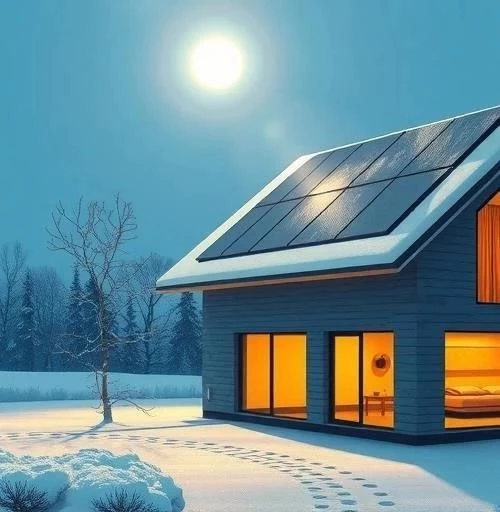
A solar collector can reduce the energy needed to heat a home‚ but it should not be treated as the sole source of warmth in a cold winter. Solar panels produce electricity‚ while collectors capture heat; both depend on daylight. Winter solar energy is limited by short days‚ cloud‚ snow and roof orientation. The efficiency of solar collectors also changes with outdoor temperature and system design. A solar thermal system is therefore best planned as support for a dependable heating system.
Choose a reliable backup
For heating in severe frost‚ size a backup heat source to meet the home’s full design demand when solar gain is minimal. Options include a heat pump‚ gas boiler‚ electric boiler or solid-fuel boiler. A heat pump can be efficient when correctly selected for local conditions‚ while boilers may provide high output during cold spells. The right choice depends on fuel availability‚ electricity supply‚ installation cost and maintenance. A combined heating arrangement lets solar heat reduce routine consumption while backup heating covers prolonged cold weather.
Store and distribute heat
A buffer tank‚ also called a heat accumulator or thermal store‚ can hold surplus heat collected during sunny periods and release it later. Its size should match collector output‚ household demand and the operating pattern of the system. The heat transfer fluid must suit the equipment and expected temperatures. Where pipes may freeze‚ use heating antifreeze or another approved non-freezing liquid‚ following the manufacturer’s guidance. Correct circulation‚ controls and freeze protection are essential for reliable operation.
Design for the whole house
Before choosing equipment‚ calculate the heating load using the building’s area‚ insulation‚ windows‚ ventilation and local design temperatures. Good home insulation lowers heat losses and improves energy efficiency‚ often reducing the required capacity more economically than adding collectors. Low-temperature heating‚ such as well-designed underfloor heating‚ may help a heat pump work efficiently. A properly controlled hybrid heating system can prioritise solar heat‚ then call on the main heater and finally activate supplementary or backup heating as needed.
Solar heating does not guarantee autonomous heating in every winter climate. Ask a qualified designer to assess roof exposure‚ storage‚ controls‚ service access and expected cold-weather performance. Test the backup mode before winter and maintain each heat source. The goal is not to make solar equipment carry the entire load during a frost‚ but to use available solar heat sensibly while preserving uninterrupted heating when sunlight is insufficient.

2 Comments. Оставить новый
The discussion offers a balanced overview of solar heat storage and backup options. Including system sizing and manufacturer guidance helps readers understand that equipment choices depend on local conditions and household needs.
The article clearly explains why solar thermal systems need dependable backup heating in cold climates. Its emphasis on heat-loss calculations, insulation and freeze protection is useful for planning a reliable installation.