
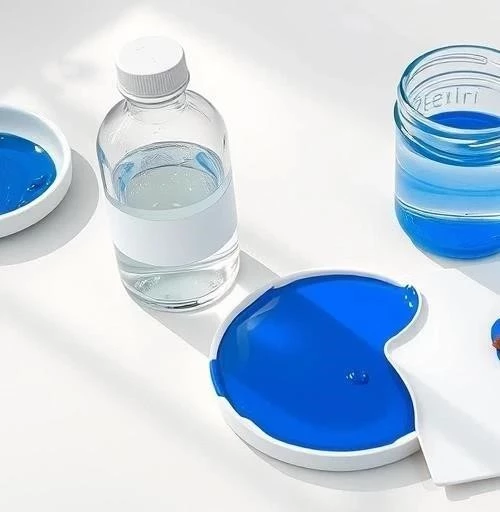
Acrylic paint is water-based, so the simplest option for thinning it is clean water. The right choice depends on what you are painting, how thin the paint needs to be, and whether you want to preserve its coverage, texture, or drying behavior. Always check the label: manufacturers may recommend a particular medium or thinner.
Water: the easiest option
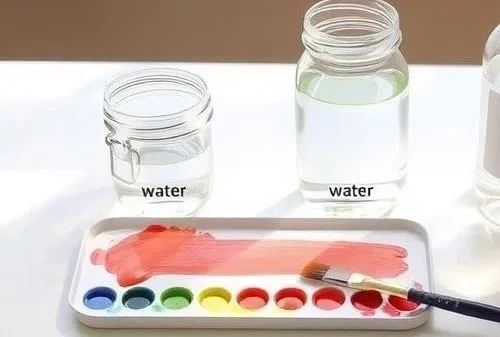
For general painting, add a little water to the paint and mix thoroughly. Use small amounts at a time; a few drops can make a noticeable difference. Water is suitable for brushes and many craft or art applications, especially when you want a lighter, more fluid consistency.
Too much water can weaken the paint film. The color may become transparent, lose its ability to cover, or adhere poorly. Some paint makers specify a maximum dilution, so follow their guidance, particularly for work that needs to last. Do not assume that a ratio suitable for one brand will work for every paint.
Acrylic mediums
Acrylic mediums are often the best choice when you need thinner paint without simply adding more water. A fluid or gloss medium makes paint flow while helping it retain pigment strength and form a durable film. A matte medium offers a similar effect with a less shiny finish. Pouring medium is designed for flowing techniques, not necessarily for ordinary brushwork.
Mix the medium in gradually and test the result on scrap material. Mediums can change sheen, transparency, and drying time, so choose one that suits the intended finish.
For airbrushes and other uses
For airbrushing, use an airbrush thinner or reducer made for acrylic paint. It is formulated to improve flow through a fine nozzle and may help reduce clogging. Follow the paint and airbrush instructions, and strain the mixture if the manufacturer recommends it. For miniature painting, specialized acrylic thinner can also produce a smoother consistency than water alone.
What to avoid
Do not use turpentine, mineral spirits, or other oil-paint solvents to thin ordinary water-based acrylics; they are not compatible and may spoil the mixture. Household cleaners are also unreliable. If paint has dried hard in the container, adding water will not restore it to its original condition.
Practical method
- Put a small amount of paint in a separate palette or cup.
- Add water or the appropriate medium a little at a time, mixing well.
- Test the consistency and coverage on the actual surface or a sample.
- Use clean tools, and close the paint container promptly.
In short: use water for modest thinning, acrylic medium when you want to preserve paint performance, and a purpose-made thinner for airbrush work. The product instructions and a small test are the safest guides.
9 Comments. Оставить новый
The section about airbrush products makes this guide useful for more than ordinary brush painting.
A helpful and easy-to-follow article. The practical tips make it simple to choose an appropriate thinning option.
I like that the article explains how thinning can affect the finished paint film, not just its consistency.
This is a clear, practical guide. I especially appreciate the reminder to check the paint manufacturer’s instructions.
This helped me understand why adding more water is not always the best way to improve acrylic paint flow.
A useful overview, especially the advice to add thinner gradually and test the mixture before using it on the final piece.
The explanations of different mediums and their effects on sheen and transparency are especially useful.
Good, straightforward advice. The warning against using oil-paint solvents is an important point to include.
The distinction between using water and using an acrylic medium is helpful for anyone trying to maintain good coverage.