
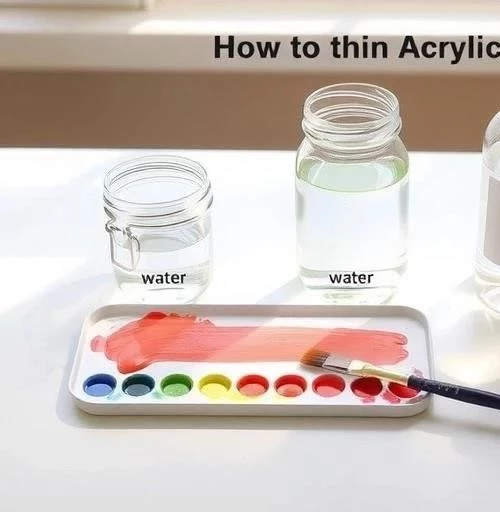
Acrylic paint is usually thinned with clean water or with a product made specifically for acrylics. The right choice depends on the paint, the surface, and the effect you want. Water is convenient for small adjustments and transparent washes, while an acrylic medium is generally a better option when you need to preserve the paint’s body, even flow, or durability. Always check the paint manufacturer’s instructions: formulas and recommended thinning limits vary.
Water: the simplest option
For ordinary brush painting, add a little water to the paint and mix thoroughly. Begin with a few drops, test the consistency, and add more gradually if necessary. A small amount can make thick paint easier to spread. More water produces a thinner, more transparent layer, which can be useful for washes, underpainting, or watercolor-like effects.
There is no universal water-to-paint ratio. The amount that works depends on the brand, the age and thickness of the paint, the tool, and the surface. A rough starting point for general brushwork is to use only enough water to improve flow, rather than measuring a fixed proportion. For a wash, add more in small increments and test it on spare material before applying it to the finished work.
Why too much water can be a problem
Acrylic paint forms a film as it dries. Excessive dilution can reduce the amount of binder in a layer, making the paint less able to adhere evenly or form a durable coating. The result may look patchy, remain powdery, or rub off more easily, especially on a surface that has not been prepared properly. A highly diluted layer may also dry with uneven edges or leave visible marks.
For this reason, avoid treating water as a substitute for an acrylic medium when you need substantial thinning. Some manufacturers set a maximum dilution for their products; follow that guidance rather than assuming that every acrylic paint can be diluted in the same way. If the paint needs to become much more fluid, use a compatible medium or a product intended for the particular technique.
Acrylic mediums and flow products
Acrylic mediums are designed to mix with acrylic paint. A fluid or gloss medium can reduce thickness and improve flow while adding acrylic binder to the mixture. Depending on the product, a medium may also change the finish, transparency, or working characteristics. It is a useful choice for glazing, smooth brushwork, and applications where maintaining adhesion matters.
For transparent layers, use a glazing medium or a suitable fluid medium and build the color gradually. A medium usually gives more control than adding a large amount of water: the paint becomes more transparent without being diluted in the same way. Follow the label, since some products are intended for particular finishes or techniques and may alter drying time.
Flow improvers and airbrush reducers serve more specific purposes. A flow improver can help paint move smoothly from a brush, but it is concentrated and should be used only as directed. An airbrush reducer is formulated to help paint pass through an airbrush. Ordinary water may work with some paints and equipment, but it can cause clogging, poor atomization, or inconsistent results. Use a compatible product and test the mixture first.
Products that are not interchangeable
A retarder slows drying; it is not simply a thinner. It can be useful when longer blending time is needed, but too much may leave the paint tacky or affect drying. Varnish is a finishing layer, not a thinning agent. Oil-paint solvents such as mineral spirits or turpentine are not suitable for thinning water-based acrylic paint and should not be added to it.
How to thin paint for different uses
- Brush painting: Add small amounts of water or fluid acrylic medium until the paint spreads comfortably. Keep enough body for an even, opaque coat.
- Transparent washes: Use water sparingly for light effects, or choose a glazing medium when you need a more binder-rich transparent layer. Apply a test layer and let it dry.
- Airbrushing: Use paint and reducer recommended for the airbrush and follow the equipment and paint instructions. Strain the mixture if the manufacturer advises it.
- Rollers or large surfaces: Choose a product suitable for the surface and application method. Excess dilution can produce poor coverage and uneven drying.
Practical method
- Stir the paint gently until its consistency is uniform. Do not rely on liquid separated on the surface until it has been mixed in.
- Transfer a small quantity to a palette or mixing cup. Add water or the chosen medium a little at a time.
- Mix thoroughly, then check how the paint flows from the brush or tool. It should suit the task without becoming watery or separating.
- Test the mixture on a scrap piece of the same or a similar surface. Let it dry before judging coverage, color, and adhesion.
- Adjust gradually. Record a successful mixture if you need to repeat the result.
Surface and storage considerations
The surface affects how diluted paint behaves. A properly prepared canvas, primed board, or other compatible surface generally gives more predictable results than a dusty, greasy, or very absorbent one. Clean and prepare the surface according to the paint manufacturer’s directions. Thin coats are often more reliable than one heavily diluted coat; allow each layer to dry before applying the next.
Mix only the quantity needed for the session when possible. Keep containers closed, and avoid returning contaminated paint or rinse water to the original container. Wash brushes and tools with water while the paint is still wet. Once acrylic paint has dried, it becomes water-resistant, so dried residue may be difficult to remove.
In brief
Use clean water for modest thinning and washes, adding it gradually. For stronger thinning, glazing, or improved flow while retaining binder, choose a compatible acrylic medium. Use a purpose-made reducer for airbrushing, and reserve retarders for extending working time. Because paints and techniques differ, the safest guide is the product label, followed by a small test on the intended surface.


3 Comments. Оставить новый
The explanation of how excessive dilution can affect the paint film gives useful context for the recommendations. Following the manufacturer’s guidance is an important point, since acrylic formulas can vary.
The discussion is organized around common painting needs and potential problems, making the information easy to follow. The article also appropriately avoids presenting one dilution ratio as suitable for every paint.
The article clearly distinguishes between using water for modest adjustments and using an acrylic medium for more substantial thinning. Its advice to add liquid gradually and test the mixture first is practical.