
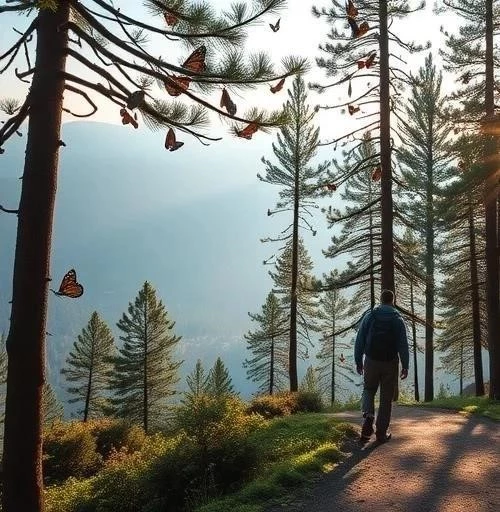
The Monarch Butterfly Biosphere Reserve protects the high-altitude forests where millions of monarch butterflies spend the winter. Located in the mountains of Michoacán and the State of Mexico, it offers a striking encounter with wildlife and a glimpse of rural life. A day trip can be rewarding, but it requires an early start, realistic expectations and respect for the forest. The butterflies are seasonal visitors, so the experience depends on when you go.
Know what the visit involves
Monarchs generally arrive in the region in autumn and remain through winter, with the main viewing period usually falling between November and March. The exact timing and density of butterflies vary with weather and seasonal conditions. They gather in clusters on oyamel fir trees; on warmer, calmer days, some may take flight. On cold or rainy days, they tend to remain still. Visitors should not expect a guaranteed spectacle, and conditions can differ from one day to the next.
Several public sanctuaries provide access to the reserve. El Rosario and Sierra Chincua are among the best-known, but routes, opening arrangements and visitor services may change. Choose one sanctuary rather than trying to visit several in a single day. Check current access information with local tourism authorities or your accommodation before setting out.
A practical one-day itinerary
- Leave early. Start from Mexico City, Morelia or another nearby base before sunrise, depending on your route. Driving times can be several hours, and traffic, mountain roads and weather may add delays. Arrange transport in advance if you are not driving.
- Arrive and prepare. At the sanctuary, follow the official entrance and ask about trail conditions, guide options and estimated walking time. Carry water, snacks, cash for local services and a light packed meal. Toilets and food choices may be limited.
- Walk at a steady pace. The trails climb through forest at high elevation. Take breaks, stay on marked paths and allow extra time for the return. Some sites offer horseback transport on part of the route, but availability and suitability vary; confirm locally rather than relying on it.
- Spend unhurried time observing. Follow your guide’s directions and watch quietly from designated viewing areas. Avoid touching butterflies, shaking branches, using flash or making loud noises. Keep a respectful distance and leave no litter;
- Return before evening. Allow time for the descent and the drive back. Mountain roads can be dark and winding, so avoid planning additional distant attractions after the sanctuary.
What to bring and wear
Temperatures can be cool in the morning and change as the day warms. Wear layers, a wind- or rain-resistant outer layer, comfortable walking shoes with grip, and sun protection. A small daypack is easier to manage on narrow trails than a bulky bag. Bring any personal medication you need, and carry water without disposable packaging where possible. Mobile coverage may be limited, so save directions and essential details offline.
Travel thoughtfully
The reserve is both a protected habitat and a source of livelihood for nearby communities. Use authorized entrances, follow local guidance and consider hiring a community guide. Buying a meal, craft or other service from local providers can support the people who help care for the area. Do not collect plants, disturb wildlife or stray from marked routes. If you are visiting with children, explain the quiet-observation rules before the walk.
Make the day manageable
A one-day visit is most suitable for travelers prepared for a long journey and a moderate hike at altitude. People with mobility limitations, breathing or heart conditions, or young children may want to ask the sanctuary about trail conditions and available assistance before committing. If the drive feels too demanding, stay overnight in a nearby town and visit at a relaxed pace. Whatever the plan, treat the butterflies as wild animals rather than a performance: a calm visit, even on a day when few are flying, is part of experiencing the reserve responsibly.
2 Comments. Оставить новый
The itinerary highlights useful planning details, including an early departure, preparation for high-altitude trails and limited services. The emphasis on staying on marked paths also supports responsible visiting.
The article gives a clear overview of seasonal conditions and practical considerations for visiting the reserve. Its advice to check current access information and focus on one sanctuary helps set realistic expectations.