
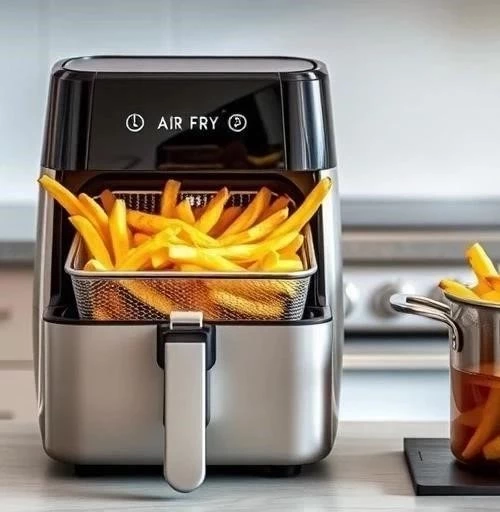
Yes, an air fryer can make many foods usually associated with deep frying—but it cannot truly replace a deep fryer. It can produce a browned, crisp exterior with little oil by circulating hot air around the food. A deep fryer, by contrast, cooks food while it is submerged in hot oil. The two methods can yield similarly satisfying results, but they do not work in the same way, and the texture will not always be identical.
How an air fryer works
An air fryer is essentially a compact countertop convection oven. A heating element warms the air, and a fan moves it rapidly around the food. The moving heat dries and browns the surface, while the basket lets air reach much of the food from different directions. A small amount of oil can help with browning and crispness, but the food is not immersed in fat.
That difference matters. Deep-frying transfers heat efficiently through oil and gives battered food its characteristic continuous, crisp shell. Air frying relies on hot air, so exposed surfaces brown best; the result can be drier or less evenly crisp, especially if the food is crowded or coated in a wet batter.
What works well?
Air fryers are particularly useful for foods that already have a dry or lightly oiled surface. Frozen fries, potato wedges, chicken wings, breaded cutlets, nuggets, vegetables, and many reheated leftovers can turn crisp and golden. Commercial frozen snacks often contain some oil and are designed to brown in an oven, which makes them good candidates.
For homemade food, a thin, even coating usually works better than a thick one. Pat ingredients dry, season or bread them as desired, then mist or brush the outside with a little oil. Arrange pieces in a single layer with space between them. Shake the basket or turn larger pieces during cooking so that hot air can reach different sides. The exact temperature and cooking time depend on the food and the appliance, so use a tested recipe as a starting point and check that the food is safely cooked through.
What does not work as well?
Loose, liquid batter is the main limitation. In a deep fryer, batter sets quickly as it enters the oil. In an air fryer, it may drip through the basket before it firms up, leaving a mess and an uneven coating. For battered foods, use a firm breading—such as flour, egg, and breadcrumbs—or choose a recipe specifically developed for air frying. Even then, expect a different crust from the one produced by a traditional fryer.
Delicate foods can also be troublesome. Light ingredients may blow around in the strong airflow, while very large or tightly packed portions cook unevenly. Cheese that melts freely, wet coatings, and foods with excessive oil can drip, smoke, or burn. Do not assume that every deep-fryer recipe can be transferred directly: smaller batches and adjusted timing may be necessary.
How to get a crisp result
- Preheat if your model or recipe recommends it. A hot cooking chamber can help food begin browning promptly.
- Dry the surface. Excess moisture creates steam and works against crispness.
- Use a little oil, not a pool of it. A light coating helps browning; pouring oil into the drawer does not turn the appliance into a fryer and may create smoke or a safety hazard.
- Leave room for airflow. Cook in batches rather than piling food into the basket.
- Turn, shake, and check. Airflow varies between models, so inspect the food and adjust the cooking time as needed.
Is air frying healthier?
Often, air frying uses substantially less added oil than deep-frying, which can reduce the amount of fat in a dish. However, “air-fried” does not automatically mean nutritious: the ingredients, portion size, breading, and seasonings still matter. A lightly oiled vegetable dish is different from a heavily breaded snack, even if both come from the same appliance.
Less oil also does not mean no oil is ever useful. A small amount can improve color, flavor, and texture, particularly on fresh potatoes or lean ingredients. The goal is to use only what the recipe needs, rather than adding oil indiscriminately.
Safety and cleanup
Follow the appliance manual, keep the air intake and exhaust unobstructed, and place the unit on a stable, heat-resistant surface. Avoid filling the drawer with oil, and clean away grease and crumbs after the appliance has cooled. Excess residue can smoke during later use. Use accessories only if they are approved for your model, and do not cover the basket in a way that blocks airflow.
The bottom line
An air fryer can replace a deep fryer for many everyday foods, but it is better described as a convenient way to crisp food with circulating hot air. It is a strong choice for fries, wings, breaded items, and reheating, especially when you want to use less oil and avoid a pot of hot fat. It is less suitable for classic wet-battered foods or recipes that depend on full immersion. Choose the appliance based on the texture you want: close-to-fried crispness is often achievable, but an identical deep-fried result is not guaranteed.


8 Comments. Оставить новый
A useful guide for anyone deciding what to cook in an air fryer. It explains both the advantages and the limitations, helping readers choose suitable foods and avoid expecting exactly the same result as deep-frying.
The distinction between dry coatings and wet batter is especially helpful. It explains why some foods work well in an air fryer while others may not develop the crisp shell people expect.
The reminder to turn or shake food during cooking is a helpful detail. Airflow and appliance design can vary, so the advice to check the food rather than rely blindly on one timing is sensible.
The suggestion to pat ingredients dry and use a small amount of oil is practical. Those simple steps seem more useful than assuming the appliance alone will guarantee a crisp result.
I found the explanation of hot-air circulation clear and accessible. It gives readers a basic understanding of the cooking method without making the comparison overly technical.
This is a balanced overview rather than an exaggerated claim that an air fryer can do everything. The examples of suitable foods make the guidance easy to apply.
The explanation of how an air fryer differs from a deep fryer is useful. It sets realistic expectations: circulating hot air can brown food, but it will not always reproduce the texture of food cooked in oil.
I appreciate the practical advice about leaving space between pieces. Crowding the basket is easy to do, and the article clearly explains why it can keep food from crisping evenly.