
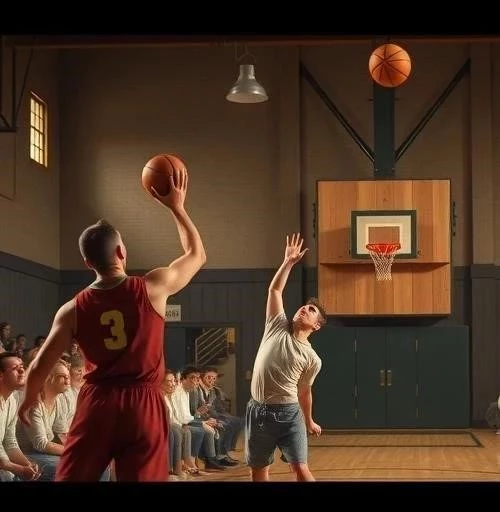
A basketball backboard looks like a quiet rectangle behind the rim․ It does not run‚ dribble‚ or celebrate․ Yet it was born from a very lively problem: in the game’s early days‚ the people watching could interfere with the game itself․ The board was invented to protect the shot from the crowd—and‚ in doing so‚ it became one of basketball’s most important pieces of equipment․
A peach basket and a balcony full of spectators
In December 1891‚ physical-education instructor James Naismith devised a new indoor game for students at the YMCA International Training School in Springfield‚ Massachusetts․ He hung a peach basket at each end of the gym and gave players a soccer ball․ The goal was wonderfully literal: get the ball into the basket․
The baskets were attached to a balcony railing․ That meant spectators were sitting just above the action‚ close enough to reach toward the ball․ Accounts of basketball’s early development describe the audience’s position as a practical nuisance: a spectator could interfere with a shot or send the ball back into play․ The game needed a barrier between the contest and the crowd․ The backboard supplied one․
At first‚ the answer was not necessarily the polished glass panel familiar from modern arenas․ Early boards were simple barriers‚ and historical accounts describe wire-mesh versions before solid wooden boards became common․ Materials and designs changed over time‚ but the basic idea endured: keep wandering hands out of the flight of the ball․
First a shield‚ then a target
The board’s original job was defensive in the architectural sense․ It separated the playing space from the spectators and made the basket a more reliable goal․ But the new surface immediately offered players another possibility․ A shooter could aim at the board‚ let the ball glance off at an angle‚ and guide it through the rim․ The backboard had become not just a fence‚ but a second way to score․
That small change gave basketball a new visual language․ A direct shot travels from hand to hoop; a bank shot takes a brief detour‚ like a message bounced off a wall․ Players learned to judge the angle and the “softness” of the touch․ Coaches began to teach shots from the side of the basket‚ where the board can turn a difficult attempt into a controlled one․
The accidental invention of the rebound game
A backboard also changes what happens when a shot misses․ Instead of sailing harmlessly out of bounds‚ the ball can strike the board or rim and spring back into the court․ That return creates a contest: who will claim the rebound? The board helped transform a miss from an ending into a fresh beginning‚ giving rise to the urgent scramble beneath the basket․
This is why the board matters to more than shooters․ Centers and forwards use it to judge rebounds; defenders use their bodies to establish position; guards may turn a long bounce into a fast break․ A piece of equipment originally meant to keep spectators out of the action now helps shape nearly every phase of play near the hoop․
From gym furniture to sporting instrument
As basketball spread‚ equipment became more standardized․ Boards grew into sturdy‚ carefully positioned surfaces‚ and transparent glass eventually let spectators see the action more clearly․ Modern backboards are designed to withstand powerful play and to provide a consistent response․ Their dimensions and placement are regulated‚ so a shooter in one gym can expect much the same target in another․
The familiar rectangle is therefore both a boundary and a tool․ It protects the game from outside interference‚ gives players a reliable visual reference‚ and returns the ball to the court․ Its shape makes the target legible from a distance; its surface makes new skills possible․ Even the square often marked above the rim is a practical aiming guide‚ especially for bank shots․
Why it still matters
It is tempting to think the backboard is merely a support for the hoop․ History says otherwise․ Without it‚ the early game’s spectators might have remained accidental participants‚ and basketball would have lost the bank shot and much of the rebound battle․ One solution to a crowded balcony quietly altered the sport’s tactics‚ rhythms‚ and drama․
So the next time a ball kisses the glass and drops through‚ imagine the board’s first‚ less glamorous assignment: standing between a curious audience and a flying ball․ It was invented to keep the game fair․ Basketball‚ being basketball‚ promptly found a way to make that barrier part of the game․

6 Comments. Оставить новый
The best part is the backboard’s accidental second career. It started as a barrier, then players discovered it could help shape a shot. A rare case of a wall becoming an invitation.
This is a neat reminder that sports equipment often carries the memory of old inconveniences. The modern glass panel looks sleek, but behind it is a charmingly practical idea: keep the crowd out of the ball’s way.
I had never thought of the backboard as a boundary between audience and action. That perspective makes the familiar bank shot feel almost poetic: the very surface that once blocked interference now helps players create.
The peach basket detail makes basketball feel wonderfully homemade. It is striking that a game now defined by precision and spectacle began with a basket on a balcony—and a board meant to keep enthusiastic onlookers from joining in.
A small invention with a surprisingly big afterlife. The backboard did not just protect the game; it gave players a new angle, literally. I will never look at that quiet rectangle above the rim quite the same way.
I love how this history turns a piece of gym equipment into a solution to a very human problem: spectators were simply too close to the game. The backboard began as crowd control and somehow became part of basketball’s imagination.