
“Match watch call” is not a standard English phrase with one established meaning. Its interpretation depends on where it appears and how the words are connected. It may be a fragment of a search query, a translation assembled from separate words, or a reference to matching a phone call with a smartwatch or another record.
Understanding the individual words
- Match can mean to pair, compare, or make two things correspond. In Russian, “сопоставить” is often translated as “compare,” “match,” or “map,” depending on the task.
- Watch can mean a wristwatch or smartwatch. As a verb, it means to look at or monitor something.
- Call can mean a phone call, a request for someone to come, or a computer command or function.
Putting the words together without punctuation or context does not produce a clear instruction. For example, “match a watch to a call” might mean linking a call record to a particular smartwatch, while “watch a call” might mean observing or listening to a call. These are different ideas, and neither is automatically meant by the three-word sequence;
Possible meaning in a smartwatch context
If the phrase appears in instructions for a phone or smartwatch, “match” may refer to linking information between devices. A user might be asked to identify which watch, contact, or call log entry corresponds to a particular event. In clearer English, the instruction could be “match the call to the correct contact” or “pair the watch with the phone.”
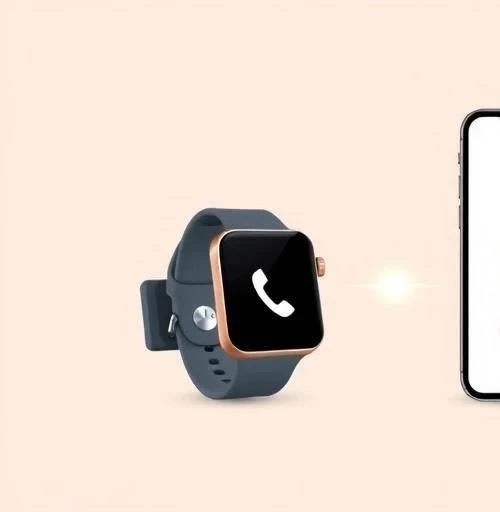
Smartwatches can display call notifications and, depending on the model and its connection to a phone or cellular network, may allow calls to be answered or made. However, “match watch call” is not a universal name for that feature. The exact options depend on the device, operating system, settings, and service plan. The phrase alone does not tell you whether a call is being paired, logged, answered, or merely shown on the watch.
Possible meaning in software or data work
In a database, support tool, or programming task, “match” often means to associate one record with another. “Watch” could be a device name, a field, or an object being monitored; “call” could be a phone event or a software call. In that setting, the intended action might be to compare a call event with a watch identifier or connect a call record to a matching entry.
For example, a clearer technical instruction would say: “Match each call log entry to the device that received it.” If “watch” is a programming term or a product label, the surrounding documentation should define it. Do not assume that the phrase refers to a particular programming language function simply because the word “call” can have a technical meaning.
Could “Watch Call” be a title?
Capitalization can also change how the words should be read. “Watch Call” might be part of a film, episode, video, or product title, while “watch” could be an instruction to view it. Search results that contain phrases such as “watch [title] online” often place the verb “watch” next to a title containing “Call.” That does not necessarily create a phrase whose meaning is “match a watch call.”
Likewise, results about wristwatches, incoming calls, television programs, or online videos may appear together because they share common words. A search-result snippet is not enough to establish a special definition. Look at the full sentence, the page title, and the source where the wording appears.
How to work out the intended meaning
- Check the complete sentence. Find out what exactly is being matched: a contact, a device, a call record, or something else.
- Identify the setting. A smartwatch manual, a software screen, a subtitle, and a video listing use these words differently.
- Look for punctuation or missing words. A comma or preposition may have been omitted when text was copied or translated.
- Use a more precise translation. Depending on context, “сопоставить” could be “match,” “compare,” “link,” or “associate.”
For instance, “сопоставить звонок с контактом” is naturally rendered as “match the call with the contact.” If the intended meaning is to connect a watch to a phone, say “pair the watch with the phone.” If someone should view a video, say “watch the video.” These versions make the action clear in a way the bare phrase does not.
In short
“Сопоставить watch call” most likely asks for the words “watch” and “call” to be matched or interpreted in context, but it is not a fixed English expression. It may concern linking a smartwatch and a call, comparing call records, or reading a search-result fragment. To translate it accurately, identify what “watch” refers to and what “call” refers to, then choose a specific verb such as “pair,” “link,” “compare,” or “match.” Without that context, any single translation would be a guess.
2 Comments. Оставить новый
The article clearly explains why “match watch call” is ambiguous and gives useful examples of how context can change its meaning. The distinction between smartwatch use and software or data work is especially helpful.
A thoughtful overview of an unusual phrase. I appreciate the reminder that it is not a standard expression and that the surrounding instructions or device context are needed to interpret it accurately.