
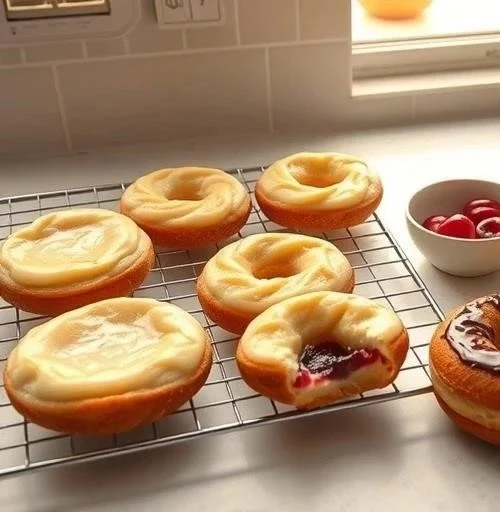
Spot the fault, learn from each batch, and make every cherry doughnut better next time; keep trying
Dough Preparation: Yeast Dough, Airy and Fluffy Dough, Ingredient Temperature, Fresh or Dry Yeast, Flour Quality, Kneading, Sticky or Stiff Dough, Proofing, Rising Time, and Why Dough Won’t Rise
Yeast dough needs care; sound preparation matters.
For airy dough and fluffy dough, measure ingredients
at the right temperature; cold liquids slow yeast.
Check fresh or dry yeast; replace expired packets.
Good flour quality supports a firm dough structure
Knead well; develop gluten, but avoid overworking.
A sticky dough needs patience; add flour sparingly
Stiff dough needs measured liquid not extra flour.
Proof until doubled; respect the rising time.
If dough won’t rise, check yeast, warmth, and air.
Cherry Filling: Fresh or Frozen Cherries, Cherry Juice, Juicy or Thick Filling, Starch for the Filling, and Why the Cherries Leak
Use fresh cherries only when fully ripe, and pit them carefully; frozen cherries work too, but thaw and drain them well. Excess cherry juice makes a juicy filling runny and can weaken its flavor. Simmer fruit briefly, then stir in starch for the filling, mixed with a little cold juice, until glossy and thick. Cool completely before using: a thick filling stays contained better than a hot, watery one. If cherries leak, the filling may be too loose, too warm, or overloaded with liquid. Set starch and sweetness for each fruit by taste.
Shaping the Doughnuts: Thinly Rolled Dough, Proper Doughnut Shaping, and a Secure Seam
Roll the dough evenly, not too thin: a weak sheet may tear, while thick patches shape unevenly. Cut matching rounds and place a modest portion in the center, keeping the rim clean and dry. Fold carefully, press out trapped air, then pinch the edges firmly all around. Secure seam should be smooth without gaps or filling caught between layers. Check the join gently before setting each piece down; loose folds can open later. Avoid stretching the dough as you seal, and keep each doughnut evenly shaped for a neat, reliable result.
Deep-Frying Mistakes: Vegetable Oil, Oil Temperature, Raw Centers, Burnt Crusts, Doughnuts Absorbing Oil, Frying Errors, and Common Causes of Baking Failure
Choose neutral vegetable oil and use a thermometer: aim for 170–175°C (338–347°F). If oil is too cool, doughnuts absorb oil; if too hot, a burnt crust can hide raw centers. Fry in small batches, keeping the temperature steady, and turn once for even color. Let excess oil drain on a rack, not in a crowded pile. Avoid guessing by bubbles alone, overheating the pan, or adding too many pieces at once. These frying errors are common causes of failure; adjust heat between batches and check one center before serving.
Check oil first.
1 Comment. Оставить новый
Helpful, practical advice—especially the reminder to cool and thicken the cherry filling before shaping. The troubleshooting tips make it easier to avoid leaks and get soft, well-formed doughnuts.