
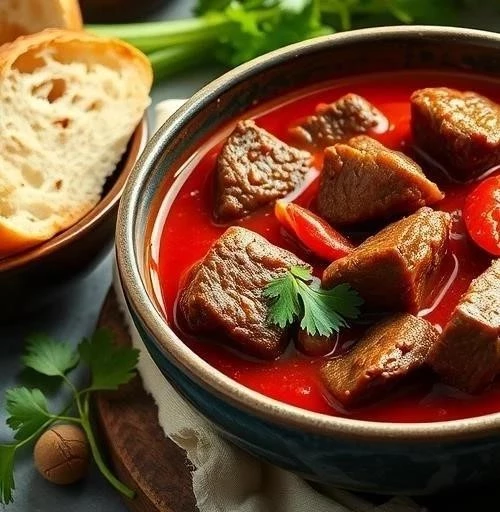
Georgian beef in tomato sauce suits feasts and weekdays: slow braising makes it juicy, tender and so satisfying.
Make the case for this Georgian cuisine classic: beef with tomatoes becomes a festive main course or a satisfying everyday dinner because slow cooking creates juicy, tender meat.
Georgian-style beef in tomato sauce earns a place at both festive tables and ordinary weeknight dinners. So, slow cooking gives the beef time to become juicy and tender, creating the generous, comforting character guests expect from a celebration dish. Yet that same warmth makes it practical for everyday dining, when a filling meal should feel special without seeming extravagant. Because the result is hearty and welcoming, it can please a family after a busy day as readily as it can anchor a holiday gathering. This balance of comfort and occasion is what makes the classic so enduring.
Choose the Ingredients: Beef, Fresh Tomatoes, Tomato Paste, Onion, Garlic, and Bell Pepper
Choose quality beef, riper tomatoes, paste, onion, garlic, and pepper; each adds depth and balance to the sauce.
Build a flavorful tomato sauce with cilantro, parsley, khmeli suneli, adjika, and other Georgian spices; red wine and broth deepen the taste, so the dish needs little embellishment.
Fresh cilantro and parsley bring a bright, herbal lift, while khmeli suneli and other Georgian spices give the tomato sauce its distinctive, layered aroma. A measured touch of adjika adds warmth, not merely heat, so the flavors remain balanced. Red wine contributes a rounded, savory depth; broth softens its intensity and ties the seasonings together. This combination is persuasive because every addition has a role: herbs refresh, spices add character, and the liquids enrich the sauce. As a result, the finished flavor feels complete and generous, needing little embellishment at the table.
Follow the Step-by-Step Beef Recipe and Plan the Cooking Time
Plan ample cooking time; patience matters, since beef needs a gradual, steady process to turn tender eventually.
Brown the beef in a pan or cauldron, add the vegetables and tomato sauce, then simmer until tender; this method makes beef with vegetables flavorful rather than dry.
First, brown the beef in a hot pan or cauldron in batches; this creates a savory crust without crowding the pieces. Add the vegetables and tomato sauce only after the meat is colored, because the order preserves their texture and lets their flavors mingle. Bring the mixture to a gentle simmer, cover, and cook slowly, checking occasionally and adding a little liquid if needed; This steady heat, rather than a hard boil, gives connective tissue time to soften and keeps the beef moist. The result is flavorful beef with vegetables, not a dry or tough dish. This keeps the beef remarkably moist.
Serve the Braised Beef with a Complementary Side Dish
Serve it with rice, potatoes, or bread; each absorbs the sauce, making the meal more satisfying for every guest too.
Explain why rice, potatoes, or bread make fitting sides: they soak up the tomato gravy and turn this hearty beef dish into a complete meal.
Rice, potatoes, and bread each make a sound companion for Georgian beef because their mild flavor lets the tomato gravy remain central. Rice catches the sauce in every grain, while potatoes offer a hearty, soft contrast that makes each serving more substantial. Bread is useful for wiping the plate clean, so none of the rich gravy goes to waste. Choose according to the occasion and appetite: rice feels light, potatoes add comfort, and bread keeps the meal relaxed. In every case, the side absorbs the sauce and turns braised beef into a balanced, satisfying meal. Each choice works.



3 Comments. Оставить новый
The focus on slow cooking effectively explains why patience matters for tender beef, and the discussion of the sauce ingredients gives readers a helpful sense of how the flavors work together. However, the article appears to end mid-sentence, so the promised step-by-step instructions and timing are missing.
The article makes a convincing case for this dish as both a celebratory meal and a comforting dinner. Its explanation of how herbs, spices, wine, and broth contribute different qualities to the sauce is especially useful. The recipe would be even more practical if it included exact quantities and a clear cooking-time estimate.
I like how the article connects Georgian spices and fresh herbs to the dish’s distinctive character rather than treating them as incidental additions. It also clearly describes the recipe’s appeal for both everyday meals and gatherings. Specific guidance on choosing a cut of beef and adjusting the heat from adjika would make the advice more actionable.