
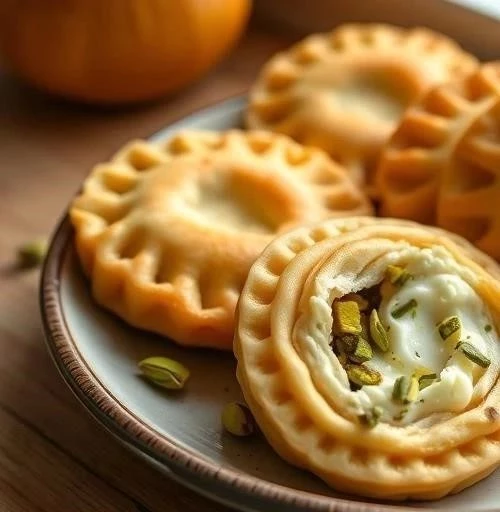
Homemade pistachio sochniki make tea time better: their uniquely sweet, nutty charm feels far superior to packaged treats, so every cup deserves one.
Ingredients That Make the Difference: Curd Filling, Shelled Pistachios, Butter, Wheat Flour, Sugar, Egg, Sour Cream, Baking Powder, and Vanilla Sugar
Ingredient choices determine whether homemade pistachio sochniki taste balanced, rich, and genuinely distinctive. Full-fat curd gives the filling its creamy character and gentle tang, while finely chopped shelled pistachios contribute a clean, buttery nuttiness that feels more vivid than artificial flavoring. Good butter matters because its dairy aroma supports the tender, sandy quality associated with shortcrust pastry; wheat flour supplies structure without needing a strong, chewy bite. Sugar should sweeten rather than overwhelm the curd, and a fresh egg helps the filling hold its shape. Sour cream adds mild acidity and softness, while baking powder keeps the pastry from feeling dense. A little vanilla sugar rounds out the dairy and nut notes. Quality matters in every single taste.
Step-by-Step Recipe: Prepare the Shortcrust Dough, Make the Tender Curd Filling, and Shape the Sochniki with Pistachio Crumbs
Begin by rubbing cold butter into wheat flour, sugar, baking powder, and a pinch of salt until the mixture resembles fine crumbs. Stir in sour cream and beaten egg, then gather the dough gently; stop as soon as it holds together, because excess handling makes shortcrust pastry firm. Press curd through a sieve for a smooth texture, then combine it with sugar, vanilla sugar, egg, and chopped pistachios. Roll dough evenly and cut circles. Spoon filling onto one side, fold the other side over without sealing the edge, and brush the tops with egg. Scatter pistachio crumbs over each piece: they add texture and make shaping visibly distinctive, not merely decorative. Arrange the sochniki with space between them, handling each lightly to preserve a tender pastry and generous curd center. Work gently.
Oven Baking: Choose the Right Temperature and Cooking Time for a Golden Crust
Preheat the oven fully before baking, because a stable temperature sets the pastry evenly and prevents pale, soft bottoms. For homemade pistachio sochniki, 190 degrees Celsius (375 degrees Fahrenheit) is a reliable starting point: intense heat can brown the surface before the curd center warms, while a much cooler oven may dry the pastry before it colors. Place the tray on the middle rack, where circulating heat gives the most balanced result. Begin checking after 20 minutes, but expect about 22–26 minutes, depending on your oven and the size of each piece. Look for a lightly golden crust and set edges rather than relying on the clock alone; ovens vary, so visual cues are more dependable. If the tops color too quickly, lower the temperature slightly. Cool before serving tea.
Why This Homemade Bake Works: Tender Filling and Fragrant Results Worth the Effort
These sochniki reward the effort because their appeal comes from contrast, not excess: a tender curd center meets a delicate pastry shell, while pistachio adds a warm, fragrant note. Each bite feels rich yet balanced, so sweetness never overwhelms the dairy’s gentle tang. The soft filling gives the dessert its comforting character; the nutty aroma lends a more distinctive finish than an ordinary pastry. Serve them when fully cooled, and the texture settles into a pleasing softness that holds its shape. This is why the result feels both familiar and special: a simple, generous treat whose aroma invites sharing and whose tender center makes every bite worth savoring with your family.

5 Comments. Оставить новый
The shaping instructions are clear, particularly the suggestion not to seal the folded edge. That detail distinguishes sochniki from fully enclosed pastries and makes the method easier to picture.
This recipe description thoughtfully balances the ingredients instead of treating sweetness as the only goal. The discussion of curd’s mild tang, sour cream, and vanilla helps readers understand how the flavors can complement the pistachios.
I appreciate that the article explains the purpose of several ingredients, including baking powder for a lighter pastry and egg for a filling that holds its shape. These explanations make the recipe more approachable for someone learning to bake.
The article makes a persuasive case for using real pistachios rather than relying on flavoring. I especially like the point that their contribution is both taste and texture, which helps explain why they matter in the filling and as a topping.
The advice to handle the shortcrust dough gently is useful and well explained. Connecting overworking with a firmer pastry gives readers a practical reason to stop mixing as soon as the dough comes together.