
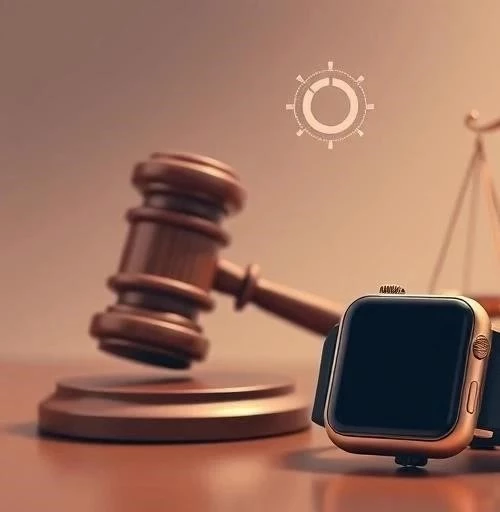
The widely reported “Apple Watch ban” was a U.S. import restriction arising from a patent dispute—not a finding that the watches were unsafe, nor a worldwide prohibition on owning them. The case concerned blood-oxygen measurement, a feature known as pulse oximetry, in certain Apple Watch models.
The dispute between Apple and Masimo
Masimo, a California medical-technology company that makes pulse oximeters, accused Apple of infringing its patents. The disputed technology uses light and sensors to estimate the oxygen saturation of a person’s blood through the skin. Apple introduced this feature in the Apple Watch Series 6 and included it in later models.
Masimo said Apple used protected technology without permission. It also alleged that Apple recruited its employees and obtained confidential information after discussions about possible cooperation. Apple disputed the accusations and challenged Masimo’s claims. These allegations formed part of a broader conflict between the companies; the import decision focused on patent rights.
Masimo brought its complaint to the U.S. International Trade Commission (ITC), an agency that can investigate unfair trade practices and restrict imports of products found to infringe U.S. patents. In 2023, the ITC ruled that some Apple Watch models with the blood-oxygen feature infringed Masimo patents and ordered an import ban.
What the restriction covered
The order applied to importing the affected devices into the United States. It did not make it illegal for people to own or use an Apple Watch, and it did not apply to every model or every country. The key models at the time were the Apple Watch Series 9 and Apple Watch Ultra 2, which included the disputed sensor technology.
In December 2023, after the presidential review period ended without the order being overturned, Apple paused direct U.S. sales of those models. It removed them from its website and stopped selling them in its own U.S. stores. The restriction did not immediately erase stock already held by independent retailers, so some stores could continue selling available units.
The Apple Watch SE was not included in the same way because it did not have the blood-oxygen sensor at issue. The dispute also did not mean that older watches already in customers’ hands had to be returned. The practical effect was on the sale and import of particular devices, not on routine use by their owners.
How Apple responded
Apple appealed the decision and sought to resume sales. It also changed the affected U.S. models so that their blood-oxygen feature was disabled, arguing that the revised versions no longer violated the order. The company later offered versions with the feature unavailable in the United States while the legal dispute continued.
That distinction matters: reports of a “ban on Apple Watch” can sound broader than the measure actually was. The ITC order addressed imports of products containing technology found to infringe patents. It did not prohibit Apple from making watches generally, and it did not prevent the company from selling models that complied with the order.
Why the case matters
The conflict illustrates how patent disputes can affect consumer products even when the contested component is only one feature. A company may have to suspend sales, disable a function, redesign hardware or software, or seek a court ruling before it can sell the original version again. The consequences can reach customers, retailers, employees, and competitors.
It also raises questions about how medical-sensing technology is developed and licensed. Pulse oximetry has existed for years, but companies may hold patents on particular methods, sensor arrangements, or signal-processing techniques. Determining whether a product infringes those rights requires legal and technical analysis; the existence of a similar feature alone does not settle the question.
In brief
Apple Watches were restricted in the United States because the ITC found that certain models infringed Masimo patents related to blood-oxygen sensing. Apple rejected the claims and pursued legal and technical responses. The restriction was limited to affected imports and sales; it was not a safety recall or a global ban on Apple Watch ownership.


1 Comment. Оставить новый
The article clearly distinguishes the import restriction from a safety issue or a ban on ownership, and explains the role of the ITC. However, the text appears to end mid-sentence, so the account is incomplete.