
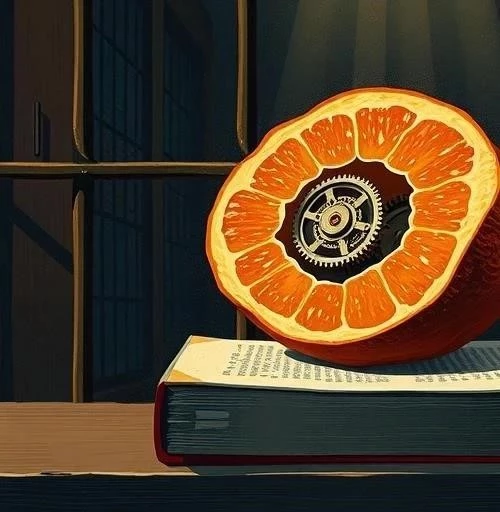
A Clockwork Orange was not banned everywhere‚ and the story is more complicated than the familiar claim that Stanley Kubrick’s film was simply outlawed. The novel by Anthony Burgess and the 1971 film adaptation faced different kinds of censorship in different places. The key reasons were their disturbing depictions of violence and sexual assault‚ fears about their influence on audiences‚ and disagreement over whether artistic freedom justified showing such material.
The film’s violence—and the fear of imitation
Kubrick’s film follows Alex‚ a teenager who commits brutal acts with his gang and is later subjected to an experimental treatment intended to make him incapable of choosing violence. Its stylised presentation is central to the controversy. Music‚ theatrical performances and Alex’s charming narration can make the violence seem alluring‚ even as the story exposes cruelty and state abuse. Critics feared that some viewers might admire Alex rather than question him‚ or copy what they saw.
Those concerns grew amid reports linking the film to real-life assaults. Such reports helped create intense public pressure‚ but a claimed connection is not proof that the film caused a crime. Depicting violence is not the same as endorsing it‚ and audiences do not respond uniformly. The film’s defenders argue that its disturbing scenes are essential to its warning: a government that removes a person’s capacity to choose may appear to create order‚ but it destroys moral freedom as well.
Was it officially banned in Britain?
The British case is often described inaccurately. The film was not simply prohibited by a nationwide government decree. After controversy and reported threats to his family‚ Kubrick asked Warner Bros. to withdraw it from UK distribution in 1973. It consequently became unavailable in British cinemas for many years. The withdrawal lasted until after Kubrick’s death in 1999‚ when the film returned to circulation. Thus‚ its absence resulted largely from the director’s own decision under pressure‚ not from a general legal ban.
Elsewhere‚ authorities did impose bans or restrictions at various times. These decisions reflected local standards and political anxieties about sex‚ crime and public morality. The novel‚ too‚ has been challenged or removed from some school and library collections‚ especially because of its language and sexual violence. However‚ objections to a book in one school or district do not mean that the work was banned nationally.
Why censorship remains disputed
There is a serious argument for restricting access in particular settings: graphic material can distress viewers‚ and schools may reasonably consider age and context. But a broad ban is harder to defend. It treats adults as unable to interpret fiction‚ and it can obscure the work’s critique of coercion. In the story‚ officials exploit Alex’s conditioning for political advantage; the apparent cure is itself a form of violence.
In short‚ A Clockwork Orange was restricted because many people feared its graphic content and possible social effects. Yet “banned” is an incomplete description‚ particularly for Britain‚ where Kubrick’s withdrawal—not a universal state prohibition—kept the film out of circulation. The controversy ultimately asks a larger question: whether protecting the public requires suppressing disturbing art‚ or whether discussion and informed viewing are better ways to confront it.

5 Comments. Оставить новый
The article does a good job correcting the familiar claim that the film was simply outlawed across Britain. Explaining the distributor’s withdrawal and its long absence from cinemas makes the history clearer. It would be interesting to compare this case with how the novel was treated, since the article notes that the book and film faced different forms of censorship.
The strongest point here is the tension between artistic freedom and concern about imitation. The film’s stylised violence can make that concern understandable, while the article rightly notes that viewers do not all respond in the same way. This balanced approach is more persuasive than assuming either that the film inevitably causes harm or that its effects are irrelevant.
I appreciate the attention given to the film’s underlying argument about choice. The controversy is not only about how violence is shown; it is also about whether preventing harmful behaviour by removing a person’s capacity to choose is morally acceptable. That context helps explain why some viewers see the disturbing scenes as central to the film’s warning.
This is a thoughtful account of a controversy in which public pressure, artistic choices, and fears about social influence overlapped. I especially value the careful distinction between a reported connection to crimes and evidence that a film caused them. That qualification keeps the discussion grounded without dismissing the genuine concerns people raised.
This article usefully distinguishes a formal government ban from Kubrick’s decision to withdraw the film from British distribution. That distinction matters because the two situations involve different forms of censorship and responsibility. The discussion also avoids treating reported links between the film and real-world violence as proof of cause.