
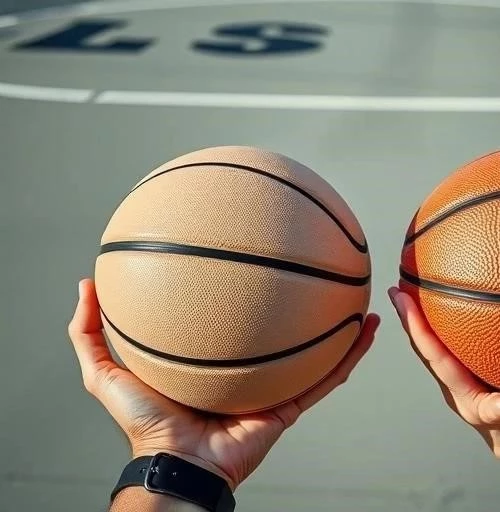
The right basketball should suit the player, the court and the way the ball will be used. Size, material, grip and construction all affect how it feels and performs. Before buying, check the intended playing environment and, if possible, handle the ball in person.
Choose the Correct Size
Basketball sizes are not interchangeable. The appropriate size depends mainly on the player’s age group and the rules of the league. Common guidelines are:
- Size 7: The standard men’s ball, used in most adult men’s competitions. It has a circumference of about 29.5 inches.
- Size 6: Commonly used in women’s competitions and by many players aged 12 and older. Its circumference is about 28.5 inches.
- Size 5: Often suitable for children aged approximately 9–11; its circumference is about 27.5 inches.
- Size 4 and smaller: Designed for younger children and early skill development.
Age ranges are general recommendations, not universal rules. League requirements can differ, so confirm the specified size before purchasing a ball for organized play. A ball that is too large or heavy may make it harder for a young player to control and shoot with sound technique.
Match the Ball to the Court
Basketballs are made for indoor use, outdoor use or both. Indoor balls are commonly made from leather or composite materials and are designed for wooden courts. They usually offer a softer touch and consistent grip, but may wear quickly on rough outdoor surfaces.
Outdoor balls are typically made from durable rubber or hard-wearing composite material. They are built to withstand asphalt and concrete, although their feel may be firmer. A “hybrid” or indoor/outdoor ball can be a practical choice for players who use different courts, but it may not perform as well as a specialist ball in either setting. Check the manufacturer’s surface recommendation rather than relying on the label alone.
Compare Materials and Grip
Rubber is generally affordable, durable and suitable for casual outdoor play. Composite leather is a versatile option, with a softer feel than basic rubber and versions intended for indoor, outdoor or mixed use. Genuine leather is primarily used for indoor competition; it may need a break-in period and is usually more expensive. Material names and quality vary by brand, so compare reviews and product specifications.
Grip should feel secure without requiring excessive force. Look at the channel depth, pebble texture and surface finish. Try bouncing and catching the ball with dry hands if a shop allows it. A tacky surface can help with control, but dust, moisture and wear affect grip. No material can compensate for a ball that is the wrong size or poorly inflated.
Check Construction and Inflation
Inspect the seams and surface for uneven areas, loose panels or visible damage. A well-made ball should retain its shape and bounce consistently. The bladder inside holds air; construction quality can influence how often the ball needs reinflation. Use a pump with a suitable needle, moisten the needle before insertion and follow the pressure printed near the valve or in the product instructions. Do not inflate by guesswork: overinflation can affect handling and stress the ball.
Set a Budget and Make the Choice
Decide how often the ball will be used and where. A basic rubber model may be enough for occasional outdoor recreation, while regular training may justify a more durable, better-gripping ball. Higher price does not automatically mean a better match for a particular player. Check warranty terms, return conditions and user feedback, especially comments about grip, shape retention and durability on the intended court.
In short, choose the correct size first, then match the material to the surface and frequency of play. A ball that feels comfortable to handle, follows the relevant rules and suits the court is usually the most useful choice.
6 Comments. Оставить новый
The article presents the main selection factors in an organized way, covering size, playing surface and material. Its practical guidance should help readers narrow down their options.
The comparison of indoor, outdoor and hybrid basketballs makes the material and court trade-offs easy to understand. Checking the manufacturer’s surface recommendation is practical advice.
The discussion of ball size includes helpful circumference figures and general age guidance. It also appropriately notes that age ranges can vary between leagues.
The point that an oversized or heavy ball may affect a young player’s control and shooting technique adds helpful context to the sizing recommendations.
The article clearly explains why basketball size should be matched to a player’s age group and league requirements. The reminder to confirm official rules is useful.
This article offers a useful overview for choosing a basketball, particularly for readers deciding between indoor and outdoor use. The explanations are straightforward and neutral.