
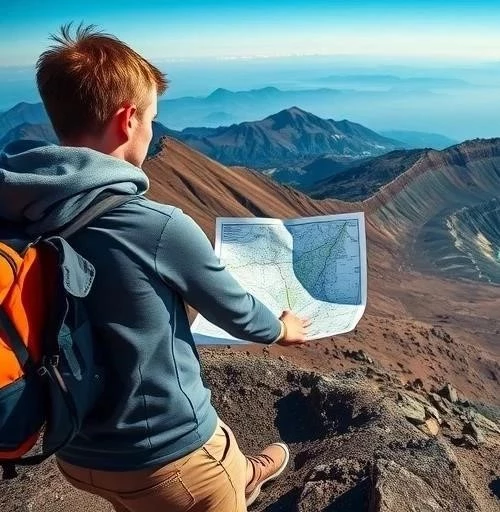
A visit to Nevado de Toluca works best when the mountain shapes the day, rather than a rigid itinerary. Known as Xinantécatl, this extinct volcano lies in the State of Mexico, southwest of Toluca de Lerdo. Its broad crater holds the Sun and Moon lagoons, a striking setting for trekking in Mexico—but altitude, weather and access matter as much as the view.
Build the journey around the mountain
For a trip from Mexico City, decide first whether you want a slow approach or an early start. Staying in Toluca de Lerdo the night before can make the morning easier and give you time to adjust. If you are travelling independently, check the route to the volcano shortly before departure. Road conditions change, and access rules may be updated. A rental car offers flexibility, while a transfer or guided tour can simplify transport and navigation. Compare what each option includes, especially park access, waiting time and the return journey.
Do not assume that every road leads to the crater. Ask which access point is operating, whether a park permit is required, and where parking is available. Confirm the national park’s opening hours and current admission cost with official sources. The national park may restrict entry, change permitted routes or announce a volcano closure because of weather, road works or safety concerns. A map of the route is useful, but local instructions take priority.
Make room for altitude and changing weather
The volcano’s elevation is close to 4,680 metres, so even a short walk can feel demanding. Plan acclimatization to the altitude rather than treating it as an afterthought: spend time at a lower elevation first, walk slowly and turn back if you feel unwell. Headache, nausea, dizziness or unusual weakness can indicate altitude sickness. Do not push on to reach the crater; descend and seek help if symptoms worsen.
Mountain weather can shift quickly. The dry season is generally more convenient for access, while the rainy season can bring slippery ground, cloud and reduced visibility. Neither guarantees ideal conditions. Check the forecast on the day, allow extra time, and be prepared to change plans. A bright morning is not a promise that the ridges will stay clear.
Choose a walk that suits the day
A hiking route around the crater is not automatically easy because it looks short on a map. The climb toward the crater rim and the paths between viewpoints may be steep, exposed or tiring at altitude. Select a permitted route that matches your fitness level, daylight and the group’s experience. You do not need to circle the entire crater to enjoy the landscape; a shorter out-and-back walk can be a sensible goal.
Wear warm layers, a windproof outer layer and trekking shoes with reliable grip. Add sun protection—hat, sunglasses and sunscreen—even when clouds cover the sky. Carry water and a snack, since services on the mountain may be limited. Keep the route map accessible and agree on a turnaround time before setting out. Staying together, following marked paths and keeping away from unstable edges are basic mountain-safety habits.
Let the details stay flexible
Check current rules before departure: stay on permitted routes, pack out rubbish, respect barriers and follow staff directions. If access is restricted, do not search for an unofficial way in. Nearby attractions around Toluca can provide an alternative if the mountain is closed, making a weekend trip worthwhile even when conditions change. Practical travel tips are simple: verify transport, opening hours and access the evening before, carry some cash, and keep a backup plan.
Whether you choose a guided excursion or independent travel, build the day around a safe return, not a summit target. With realistic pacing, suitable clothing and a flexible plan, the lagoons and crater become part of a considered journey rather than a race against the clock.
6 Comments. Оставить новый
The explanation of changing mountain weather and possible access restrictions helps set realistic expectations for a visit to Nevado de Toluca.
The emphasis on checking current access conditions is useful, since routes and park rules can change. The article also makes clear that a map alone should not replace local guidance.
The article gives a balanced overview of preparation, from an overnight stay in Toluca to checking road and park information before departure.
The altitude advice is practical and appropriately cautious. Encouraging visitors to turn back if they feel unwell is an important part of planning this trip.
Comparing transport options by what they include is a helpful suggestion, particularly for visitors deciding between an independent journey and a guided tour.
This is a useful planning guide for first-time visitors. Its focus on gradual acclimatization and flexibility makes the advice easy to apply.