
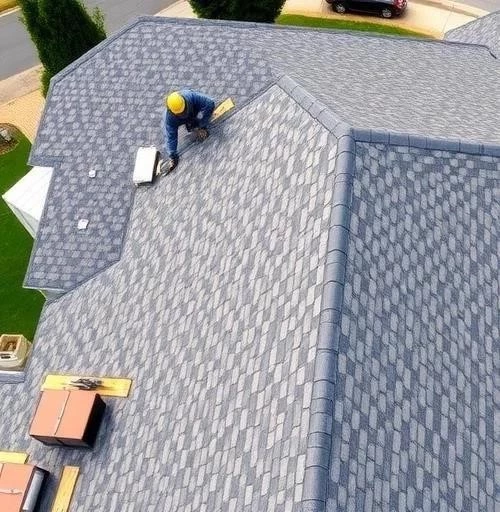
A roof renovation is not simply a new hat for an old house. It is an opportunity to uncover hidden weaknesses, improve comfort, and give the building a second beginning. Flexible shingles—also called bitumen shingles—are a versatile choice, but their performance depends on what lies beneath them. Treat the project as a sequence, not a race.
Inspect before you promise
Start with the roof’s age, leaks, sagging and damaged areas. Check the rafters and roof structure for rot, movement or insect damage. A repair may be enough when problems are local; widespread wear can call for replacement of the roofing covering; Calculate materials only after measuring slopes, valleys, eaves and ridges, then include sensible allowance for cuts and waste. This early survey shapes the reconstruction cost.
Strip back safely
Remove the old roofing carefully, section by section, and protect the home from rain as the work progresses. Demolition of old roofing reveals the true condition of the deck. Replace unsound timber, reinforce the rafter system where required, and make sure the roof can carry the new layers. Never cover a fault simply because the next dry day is tempting.
Build the quiet foundation
Prepare the base by creating a flat, firm, continuous deck: a solid sheathing of moisture-resistant plywood or OSB boards. Secure the boards properly and leave the expansion gaps specified by the manufacturer. Check that edges are supported and surfaces are smooth. Shingles copy the shape beneath them, so a lumpy deck becomes a visible roofline, not a secret.
Make water and air work together
Install a waterproofing underlay or underlayment carpet, paying special attention to valleys and vulnerable edges. Fit a vapor barrier on the warm side of the insulation, and insulate the roof without blocking ventilation. A clear ventilation gap and continuous roof ventilation help carry moisture away. Water control and airflow are partners: one keeps rain out; the other prevents damp air from lingering inside.
Lay the details before the field
Fit the eaves strip at the cornice, then the verge or gable-edge flashing. Line each valley with its specified underlay or metal detail. At a pipe junction, use compatible flashing and bitumen mastic according to the system instructions. These small transitions are where a roof is tested. Careful detailing here is more valuable than rushing through a broad, easy slope.
Set the shingles in motion
Follow the shingle installation technology for the chosen product: snap reference lines, begin at the eaves and stagger courses as directed. Nail each shingle with approved roofing nails in the marked zone; use enough fasteners, placed straight and flush. Apply mastic only where the instructions call for it. Finish the roof ridge with matching ridge shingles, keeping the ventilation path open when the design requires it.
Check, record, and maintain
Inspect the completed roof for aligned courses, secure edges, sealed transitions and clear outlets. Keep spare shingles and product details for future repairs to damaged sections. Regular checks after storms can extend roof lifespan and prevent a small tear from becoming an indoor waterfall. A thoughtful renovation turns the roof from a lid into a reliable, ventilated system—and gives the house a fresh chapter overhead.
4 Comments. Оставить новый
The strongest idea here is that a roof should be treated like a layered promise: every board, barrier, and air gap has to keep its word. The reminder to inspect before covering anything is especially valuable—fresh shingles can hide a problem, but they cannot solve it.
This guide gives practical advice without pretending that every roof is the same. Its best lesson is patience: measure properly, uncover the structure, and let ventilation and waterproofing work as a team. That’s the sort of detail that can save a homeowner from expensive surprises.
A roof renovation is presented here less as a pile of materials and more as a small piece of engineering. I appreciated the emphasis on safe removal and a sound foundation—unflashy steps, perhaps, but they’re what make the finished roof dependable when the weather turns.
I like how this turns roof work from a hurried makeover into a careful investigation. The line about shingles copying the shape beneath them is memorable; it makes the hidden deck feel like the roof’s true storyteller.