
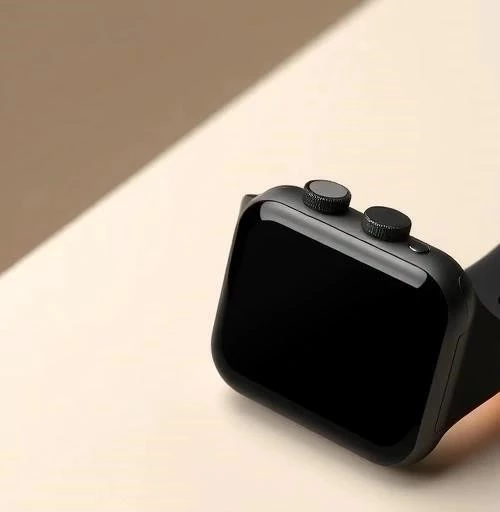
When Apple introduced the Watch Series 8 in 2022, the headline was not a dramatic redesign. Instead, Apple added a small set of practical capabilities to a familiar smartwatch: wrist-temperature sensing, retrospective ovulation estimates, Crash Detection and a Low Power Mode. The case, display and everyday experience remained close to those of the Series 7. That makes the Series 8 best understood as a refinement focused on health and safety, rather than a must-have upgrade for every owner.
Temperature sensing and cycle insights
The most distinctive hardware addition was a pair of temperature sensors: one on the back of the watch, near the skin, and another beneath the display. Their readings help reduce the effect of the surrounding environment and provide overnight wrist-temperature data. In the Cycle Tracking app, that information can support retrospective estimates of ovulation, alongside recorded cycle history.
This feature may be useful to people who want to understand patterns in their cycle, but its limits matter. The watch does not directly detect ovulation in real time, and an estimate is not contraception or a medical diagnosis. Apple also designed the cycle-tracking system with privacy protections, including on-device processing and encryption for health data. As with any health feature, users should check what is available in their region and consult a clinician about medical concerns.
Crash Detection: a meaningful safety addition
Crash Detection was another major addition. Using motion sensors, GPS, a barometer and algorithms trained to identify severe car crashes, the watch can prompt the wearer and, if there is no response, contact emergency services and notify emergency contacts where the feature is supported. This is a potentially valuable safeguard, particularly when a person is alone or unable to call for help.
It is not a substitute for careful driving or emergency services, and no automated system can identify every incident perfectly. False alerts and missed detections are possible. Still, adding an emergency response feature to a device worn on the wrist is a practical improvement, not merely a cosmetic specification.
Longer runtime when you need it
Series 8 added Low Power Mode, which can extend battery life by limiting or disabling selected functions, such as the always-on display and some background measurements. Apple quoted up to 36 hours in this mode under specified conditions, compared with an advertised 18-hour typical-use target. Actual results depend on settings, cellular use, workouts and battery condition, so these figures should be treated as estimates rather than guarantees.
The trade-off is reduced convenience: some readings and notifications may be delayed or unavailable. Low Power Mode is therefore most useful when a charger is out of reach, not necessarily as a permanent setting. Series 8 also supports fast charging with a compatible charger, making short charging breaks more useful.
What stayed familiar
The watch retained the Series 7 design, including 41 mm and 45 mm case sizes, an always-on Retina display and a durable, water-resistant construction. It used Apple’s S8 SiP, but everyday performance was broadly similar to the preceding generation rather than a dramatic speed leap. The familiar interface continued to support notifications, workouts, Apple Pay, GPS and optional cellular connectivity. Many software features, including sleep-stage tracking introduced with watchOS 9, also became available on older compatible watches, so they were not exclusive reasons to buy Series 8.
That distinction matters when judging the upgrade. Owners of a Series 7 already had a similar screen and core experience; the new temperature and crash features were the clearest reasons to move up. For users of substantially older models, Series 8 offered a more compelling combination of a modern display, health tools and safety features. The value also depended on price: discounts could make it attractive, while a small price gap to a newer generation might favor the newer watch.
Verdict
The Apple Watch Series 8’s real innovations were targeted rather than sweeping. Temperature sensing broadened cycle-tracking insights, Crash Detection added a potentially life-saving response, and Low Power Mode improved flexibility. Its unchanged design and modest performance gains, however, meant that it was not a revolutionary upgrade. In 2026, it is a previous-generation model, so buyers should compare its current price, software compatibility and battery condition with newer options. The Series 8 makes the strongest case for people who value its specific health and safety features—not for anyone expecting a completely different Apple Watch.
8 Comments. Оставить новый
The article makes a useful distinction between a modest refinement and a must-have upgrade. That framing helps readers judge the Series 8 by their own needs rather than by the novelty of its features.
The Crash Detection section appropriately describes both how the feature may help and why it cannot guarantee assistance in every incident. That balanced treatment is more informative than presenting an automated safety feature as infallible.
I appreciate the careful caveat that cycle estimates are not contraception or a medical diagnosis. Health technology can be useful, but explaining its limits is essential to preventing users from placing too much confidence in it.
The privacy details strengthen the discussion of cycle tracking. Explaining on-device processing and encryption gives readers relevant context, while the reminder to check regional availability keeps the advice practical.
This is a measured overview that avoids overstating what the watch can do. The reminders to consult a clinician about medical concerns and not to rely on Crash Detection as a substitute for emergency services are particularly responsible.
The article connects the Series 8’s additions to real-world uses rather than focusing only on specifications. Its emphasis on safety and health makes the comparison with the Series 7 more meaningful.
The explanation of wrist-temperature sensing is clear, especially the point that two sensors help account for environmental effects. It is also helpful that the article avoids presenting the readings as a direct or real-time measure of ovulation.
The discussion suggests a sensible way to evaluate an upgrade: consider whether the new health and safety tools matter to you, while recognizing that the familiar design and everyday experience may not justify replacing a recent model.