
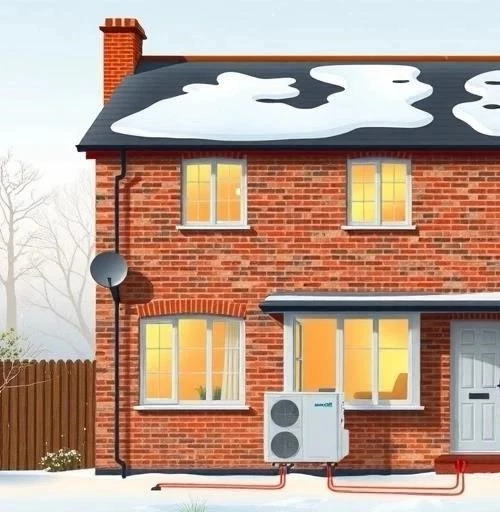
For a brick cottage, the best system is not necessarily the one with the cheapest boiler. The right private-house heating system must match heat loss, fuel availability and the owner’s willingness to maintain it. A well-designed system can provide autonomous heating and heating without constant supervision, while poor insulation can make even efficient equipment expensive to run.
Ranking of heating options
- Air-source heat pump. Usually the strongest choice for low operating costs and limited routine attention, especially in a well-insulated home with underfloor heating. Its efficiency falls in very cold weather, so check local climate, installation costs and the need for backup heating.
- Condensing gas boiler. A practical, low-maintenance option where a gas connection is available. It can provide reliable water heating and work with heating radiators or underfloor heating. A gas boiler still needs scheduled boiler maintenance, a safe chimney or flue, and a suitable boiler room in a private house.
- Pellet boiler. More automated than most solid-fuel equipment, but pellets must be stored and replenished, and ash and the burner require cleaning. Choose it when gas is unavailable and dependable fuel delivery is possible.
- Electric boiler. Simple, quiet and easy to install, but often costly to operate if electricity prices are high. It is best for a small, efficient cottage or as backup heating, rather than the default for a large, poorly insulated building.
- Other solid-fuel boiler. Can use locally available fuel, but loading, ash removal and chimney cleaning mean more hands-on care. It ranks lowest for heating without constant supervision.
Design matters as much as the heat source
Heating a brick house starts with reducing the heat loss of a brick cottage. Home insulation, airtight windows and careful ventilation can cut heating costs more reliably than replacing a boiler with a larger model. Assess the roof, walls, floors and thermal bridges before choosing heating equipment; otherwise, higher output may simply mean higher operating costs.
A closed heating system with a correctly sized expansion tank and circulation pump is a sound basis for most modern installations. A two-pipe heating system makes it easier to balance radiators in different rooms; a single-pipe heating system may cost less to install but can be harder to control evenly. Underfloor heating runs at lower temperatures, which suits a heat pump, while radiators can be appropriate for renovation projects.
Controls, reliability and lifetime
Heating automation improves comfort and can support energy efficiency. A thermostat prevents overheating; weather-compensated controls adjust water temperature to outdoor conditions, and remote heating control lets owners check settings while away. These features do not replace good installation or routine checks.
Compare heating systems by total cost, not purchase price alone: include installation, fuel, servicing and likely equipment service life. A reliable heating system also needs correctly selected safety devices and professional commissioning. For an economical cottage heating plan, insulate first, size the equipment to the calculated heat demand, and keep a backup heating option if outages or severe cold are realistic concerns. The best choice is the one that balances comfort, maintenance and long-term expense for the actual home.

3 Comments. Оставить новый
The comparison makes a useful distinction between low operating costs and low maintenance, which are often confused when homeowners choose a heating system. I especially appreciate the reminder to consider insulation and local fuel availability before comparing equipment. A brief note that heat-pump performance and installation costs vary considerably by region would make the guidance even more practical.
The strongest point is that improving the building envelope can matter more than simply installing a larger boiler. The ranking is helpful, but it appropriately avoids treating one technology as universally best. Readers would benefit from a little more detail on comparing total ownership costs, including installation, maintenance and expected energy prices.
This is a clear, balanced overview for someone planning heating in a brick home. The practical drawbacks of each option—such as pellet storage, electric running costs and solid-fuel upkeep—help readers think beyond the purchase price. The article could be strengthened by explaining that a professional heat-loss assessment is important before sizing any system.