
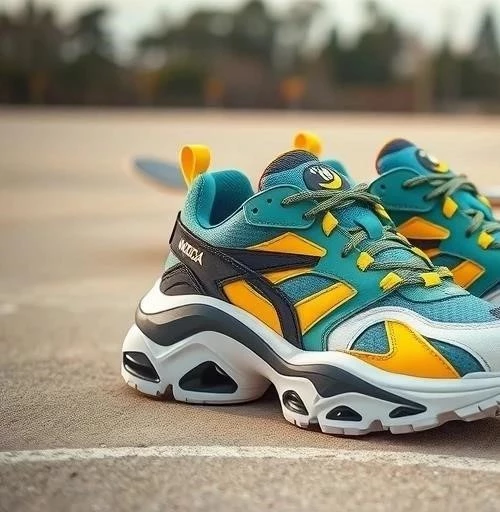
First‚ an important distinction: HOKA is best known for running and outdoor footwear‚ not skateboarding shoes. Its children’s models are not specifically designed for board control‚ repeated ollies‚ or the abrasion caused by grip tape. That does not make them useless for a young skater: a child may want a comfortable pair for walking to the skatepark‚ warming up‚ or wearing on days that include both skating and other activities. But if a child will skate regularly‚ a purpose-built skate shoe is usually the safer and more durable choice.
With that caveat‚ the most useful way to compare HOKA options is to look at youth versions of familiar models and assess them as crossover footwear‚ not as specialist skate shoes. Availability‚ names‚ and specifications can change by season and country‚ so check the current product listing and confirm that the shoe is genuinely offered in the child’s size. The models below are a shortlist of types to consider—not a claim that every version is currently sold everywhere.
What matters in a skate shoe?
Skateboarding places different demands on footwear from ordinary running. The shoe needs to feel predictable on the board‚ hold the foot securely‚ bend where the foot bends‚ and resist wear from grip tape. A running shoe may prioritize cushioning and a smooth ride; a skate shoe normally prioritizes board feel‚ a grippy flat outsole‚ reinforced high-wear areas‚ and a fit that does not let the foot slide around.
- Board feel: A relatively low‚ stable sole helps a skater sense the deck. A tall‚ soft midsole can feel less precise.
- Outsole contact: A broad‚ reasonably flat base is generally easier to balance on than a strongly rockered running sole.
- Fit and lockdown: The heel should not lift‚ and the laces should secure the midfoot without pressure or discomfort.
- Durability: Grip tape can quickly abrade mesh‚ foam‚ and lightweight overlays. Reinforced suede or other durable skate-specific materials often last longer.
- Protection: A secure upper and suitable cushioning can make a shoe more comfortable‚ but no footwear prevents every injury. A helmet and appropriate pads remain essential.
HOKA’s signature cushioning can be appealing to a child who spends hours walking or standing. However‚ extra cushioning is not automatically an advantage for skating. A high‚ soft platform may reduce the close connection between foot and board that many skaters prefer. Parents should treat comfort and skate performance as separate questions rather than assuming that a cushioned shoe is the best shoe for every activity.
HOKA Clifton Youth: The most balanced everyday crossover
If a youth Clifton is available in the right size‚ it is a sensible first model to investigate for a child who wants one comfortable pair for everyday use and occasional‚ low-intensity skatepark visits. Clifton models are associated with a cushioned running feel and a relatively versatile everyday profile. That makes them more plausible as a walk-to-the-park option than a highly specialized trail shoe.
Why consider it: The Clifton family is aimed at comfortable movement‚ which may suit children who walk a lot‚ commute to activities‚ or spend time on their feet. A familiar lace-up fit can also make it easier to achieve a secure hold than a loose slip-on. If the child is only learning basic movements and also needs a general-purpose shoe‚ versatility may matter more than maximum board feel.
What to watch: A cushioned running midsole and running-oriented outsole are not substitutes for a flat skate outsole. The shoe may feel higher or softer than a skate shoe‚ and exposed lightweight materials may wear quickly when they contact grip tape. Do not buy it on the assumption that HOKA designed it for tricks. Try it on a board‚ if possible‚ before relying on it for skating.
Best for: Beginners who skate occasionally‚ children who need a comfortable everyday shoe first‚ and families who already plan to use a dedicated skate shoe for regular sessions.
HOKA Speedgoat Youth: A grip-focused option for mixed outdoor days
A youth Speedgoat‚ where offered‚ is worth considering for children whose day combines trails‚ park paths‚ and occasional time around a skate spot. Trail-oriented models are built with outdoor surfaces in mind‚ so their outsole design may be useful on dirt or uneven ground. That is not the same as being optimized for a skateboard: traction patterns intended for trails can feel different against a smooth deck.
Why consider it: A child who walks on rough paths before or after skating may appreciate an outdoor shoe rather than a thin‚ minimalist skate model. A more protective construction can be practical for mixed terrain‚ and the model’s outdoor purpose may make it a better match for hiking or trail use than the Clifton.
What to watch: Trail tread‚ a substantial sole‚ or a pronounced shape can make foot placement on a board feel less direct. The outsole may also wear in ways that are hard to predict under repeated grip-tape contact. Inspect the tread and have the child stand on a board before deciding. If the shoe rocks‚ feels unstable‚ or makes it difficult to sense the deck‚ choose a skate-specific model instead.
Best for: Children who need one shoe for outdoor walking and occasional recreational skating‚ rather than for frequent technical practice.
HOKA Rincon Youth: A lighter-feeling candidate‚ if available
Some families may find a youth Rincon in the secondhand market or in a particular regional collection. It can be considered as another lightweight running-shoe crossover‚ but the exact generation and youth availability should be verified. Do not assume that an adult model has a child-sized equivalent or that specifications from one version apply to another.
Why consider it: A lighter shoe may feel less cumbersome than a heavily built outdoor model during general play and walking. For a child who dislikes bulky footwear‚ trying a lighter option can be worthwhile‚ provided the fit is secure and the shoe suits the child’s ordinary activities.
What to watch: Light construction often means more exposed fabric and less reinforcement than a dedicated skate shoe. That can be a poor match for repeated flicks and grip-tape abrasion. As with other running footwear‚ check whether the sole feels stable under the child’s stance; a light shoe is not automatically a board-friendly shoe.
Best for: Everyday wear and occasional casual skating only‚ when a suitable youth version is actually available and fits well.
HOKA Ora recovery footwear: Useful after skating‚ not for skating
Recovery slides or recovery-style footwear belong on a different part of the shortlist. They may feel comfortable when a child changes shoes after a session‚ but they should not be treated as skate shoes. A slide does not secure the heel and can move on the foot‚ making it unsuitable for riding‚ pushing‚ or attempting tricks.
Why consider it: If a child finds a recovery style comfortable for resting after activity‚ it may have a place in the sports bag or at home. It is an optional comfort item‚ not necessary equipment.
What to watch: Open-backed footwear is a poor choice on a skateboard because it cannot provide reliable foot retention. Keep it off the board and use a closed‚ properly fitted shoe for any skating.
Best for: Post-session comfort only‚ never for riding or training.
Which one should parents choose?
For most families‚ the decision depends less on a model ranking and more on how often the child skates. The distinction is important because a shoe that works for a short‚ supervised visit may be a frustrating or short-lived choice for weekly practice.
- Occasional skating plus everyday wear: Try a youth Clifton first if it is available‚ fits securely‚ and feels stable on a board. Consider a Speedgoat if outdoor walking and trails are also a priority.
- Mixed outdoor use: Compare the Clifton and Speedgoat in person. Choose for the child’s main activity‚ and do not mistake trail grip for skateboard grip.
- Regular lessons or frequent tricks: Prioritize a dedicated children’s skate shoe. Look for a flat‚ stable sole‚ secure fit‚ and reinforced zones. HOKA can remain the walking or running shoe.
- Comfort after a session: A recovery style may be an optional change of footwear‚ but it is not suitable for riding.
How to check fit and feel
Shop later in the day if possible‚ when feet may be a little larger‚ and have the child try both shoes with the socks they expect to wear. There should be enough room at the toes for natural movement‚ but not so much space that the foot shifts inside the shoe. Check that the heel stays in place while walking and that the laces can be tightened comfortably. Children’s feet grow quickly‚ but sizing up excessively to “make them last” can compromise control.
If the shoe will be used on a skateboard‚ let the child stand on the board on a flat‚ supervised surface before attempting to ride. Ask whether the sole feels too soft‚ too high‚ or unstable. A parent can look for heel lift‚ excessive side-to-side movement‚ and difficulty placing the foot consistently. This quick check cannot turn a running shoe into a skate shoe‚ but it can reveal an obvious mismatch.
Durability‚ care‚ and value
Skateboarding is hard on footwear. Grip tape behaves like an abrasive surface‚ and the front and sides of the shoe may wear much faster than they would during ordinary walking. Before buying an expensive pair for skating‚ check the product materials and consider whether replacement cost is reasonable. A discounted or previous-season model may be a better everyday choice‚ while a specialist skate shoe may offer better value for a child who practices often.
Keep expectations realistic: no ordinary running shoe should be expected to survive repeated tricks as well as footwear made for skateboarding. Inspect the sole and upper regularly. Stop using a shoe for skating if the sole is separating‚ the upper is badly torn‚ or the fit has become loose. Do not repair a structurally damaged shoe with tape and assume it is safe for riding.
Final verdict
The most defensible HOKA shortlist for young skaters is the Clifton Youth for general comfort‚ the Speedgoat Youth for mixed outdoor use‚ and a Rincon Youth as a lighter everyday possibility if a suitable version is available. Ora recovery footwear is for after skating‚ not on the board. These are crossover suggestions‚ not purpose-built skate models.
If the child is skating regularly‚ the best argument is for buying a real skate shoe: its flatter‚ more board-oriented construction and reinforced materials are designed for the job. Choose HOKA when the priority is comfortable walking‚ running‚ or outdoor use‚ and use it for skating only when the child finds it secure and the activity is occasional. The right choice is the shoe that fits the child‚ matches the main activity‚ and does not pretend that cushioning alone equals skate performance.

3 Comments. Оставить новый
The article makes a useful distinction between crossover comfort and actual skateboarding performance. Its emphasis on board feel, secure fit, and grip-tape durability gives parents practical criteria rather than implying that a popular running shoe is automatically suitable for skating.
The comparison is reasoned and easy to follow, especially its explanation of why a soft, elevated running sole may feel less predictable on a board. The article could be even more useful with model-specific evidence, but it appropriately avoids making unsupported claims about particular children’s shoes.
I appreciate the careful caveat that HOKA models are not purpose-built skate shoes and that availability varies by season and location. That qualification makes the advice more trustworthy and helps readers avoid treating a shortlist as a guarantee of current products or ideal skating footwear.