
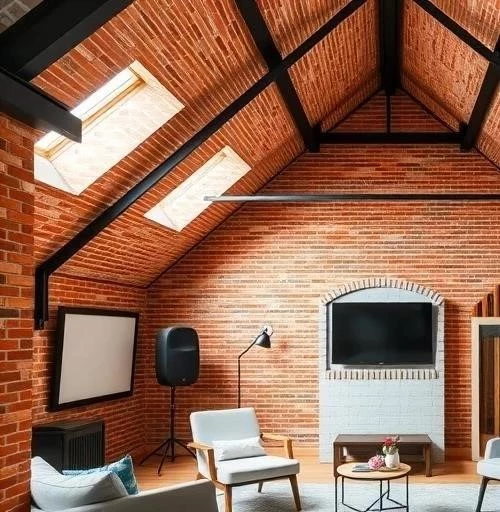
Brickwork in the attic gives a loft character, but its value is not merely visual. A brick wall in an interior adds texture and a sense of permanence; thoughtfully combined with soft surfaces, it can also help make a large, lively room more comfortable. The key is to treat brick and acoustics as one design problem, rather than expecting masonry alone to solve noise.
Choose the right brick finish
Decorative brick, reclaimed brick and facing brick each create a different effect. A textured brick wall or a restrained brick accent can define a seating area without making the whole attic feel heavy. Clinker tile is lighter than full masonry, which can matter in an older roof structure. Before installation, check the floor and roof load limits, especially if you plan a ceiling with brick finish or brickwork on sloping walls.
For loft-style attic finishing, combine brick and wood to soften the industrial look. Brick paired with upholstered furniture, rugs and curtains brings visual warmth and useful sound absorption in a room. These materials absorb some reflected sound, while bare brick, glass and hard floors reflect it. Therefore, more brick does not automatically mean better acoustics.
Plan for acoustic comfort
Loft acoustics can be challenging: open layouts and angled surfaces let sound travel and may increase echo. To reduce echo and control reverberation, place acoustic panels on selected walls or the ceiling, and use sound-absorbing materials such as dense curtains, a large rug and fabric-covered furniture. This balanced approach supports open-space acoustics without hiding the brickwork.
Attic sound insulation is different from sound absorption. Insulation limits noise passing between rooms or from outdoors; absorption reduces reflections within the room. For wall and ceiling sound insulation, use a properly designed assembly with sealed joints and suitable insulation behind the finish. Ask a specialist to assess the roof structure and ventilation before covering it.
Make the finish work harder
Use attic zoning to assign hard finishes to focal areas and softer finishes to reading or listening zones. In a loft-style attic interior, a brick accent behind a sofa can provide texture, while sound-absorbing decor nearby improves acoustic comfort. Good interior acoustic design preserves the material’s character while making conversation clearer. Treating brick as one element in a complete plan—not a cure-all—is the most reliable route to a beautiful attic-room finish.


9 Comments. Оставить новый
The practical advice about using brick selectively is sensible, particularly in an attic where sloping walls and open layouts can make the space feel smaller. An accent wall can establish the style without overwhelming the room.
This is a balanced guide to combining industrial style with a comfortable living space. The suggested mix of brick, wood and soft furnishings gives readers a practical way to avoid a room dominated by reflective surfaces.
I found the explanation of echo and reverberation clear and useful. It connects the design choices to everyday comfort rather than treating acoustic panels as an afterthought.
It is helpful that the article does not present brick as an acoustic solution by itself. A textured wall may look warm and substantial, but rugs, curtains and other absorptive materials are still important for comfort.
The point about asking a specialist to assess the roof structure and ventilation deserves attention. Interior finishes can affect more than appearance, especially in an attic where weight and airflow need careful consideration.
The article makes a convincing case for balancing the hard surfaces of a loft with textiles. This approach preserves the brick character while helping prevent the room from feeling overly echoing or visually stark.
I appreciate the reminder to check structural capacity before adding brick. Attics can have very different load limits, so the choice between full masonry and a lighter brick finish should be made with the building structure in mind.
The distinction between acoustic absorption and sound insulation is especially useful. These problems are often confused, even though a rug can reduce reflections inside a room without preventing noise from passing through a wall.
The article is strongest when it separates visual decisions from technical ones. Choosing a brick finish for its appearance is only part of the project; structure, sound control and appropriate installation also need to be considered.