
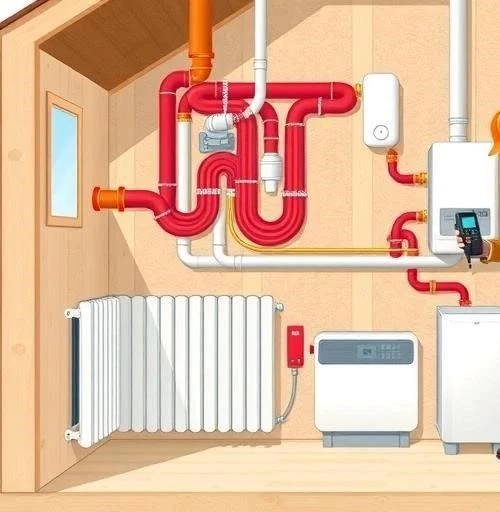
A heating system lasts when sound engineering, suitable equipment and regular care work together. No boiler or pipe can compensate for a poorly designed system. For homeowners, durability is therefore not a single product feature: it is the result of decisions made before installation and maintained throughout the system’s life.
Design before installation
Start with a heat-loss calculation for the building, not a guess based on floor area. The calculation accounts for insulation, windows, local climate and ventilation, helping determine the required capacity and operating temperatures. Oversizing a boiler can cause frequent cycling and wear; undersizing it can leave rooms cold and force continuous operation. A competent design also specifies pipe routes, radiator sizes, circulation and control settings.
Modern rules and applicable building codes, including SP 60.13330 where relevant, provide a framework for safe design. Compliance matters because a system must cope with expected loads, pressure and temperature—not merely work on its first day. Local requirements and the project should be checked by a qualified professional.
Materials, installation and water
Choose a gas or electric boiler to suit the home’s heat demand, available utilities and safety requirements. Radiators, pipes, valves and fittings must be compatible with the system’s pressure, temperature and heat-transfer fluid. Material quality matters, but correct installation matters just as much: poor joints, unsuitable pipe supports or incorrect slopes can cause leaks, noise and premature failure.
Water quality is another key factor. Hard or contaminated water can produce scale and deposits, reducing heat transfer and restricting circulation. Appropriate water preparation and corrosion protection help preserve boilers, radiators and pipes. Insulating pipes in unheated areas limits heat loss, while hydraulic balancing distributes heat evenly and avoids unnecessary strain on the pump.
Controls, safety and maintenance
Automation can adjust heating to occupancy and outdoor conditions, improving efficiency while reducing needless operating hours. It must be configured correctly: controls cannot fix poor design or a blocked circuit. Keep pressure and temperature within the manufacturer’s specified limits, and ensure safety devices operate properly. These measures protect both occupants and equipment.
Routine boiler servicing, system diagnostics and periodic flushing remove developing problems before they become expensive failures. A professional can check combustion or electrical components, pressure, circulation and signs of leakage. Do not wait for a breakdown: preventive leak checks and timely replacement of worn parts are usually less costly than repairing water damage or replacing a failed boiler.
A practical conclusion
The service life of home heating depends on the whole system, not just the warranty period of one appliance. A sound heat calculation, compliant design, careful installation, suitable materials, treated water, balanced circulation and scheduled maintenance all contribute to durability and energy efficiency. Common installation errors can shorten equipment life even when every component is new. Keep design documents and service records, follow the manufacturer’s instructions, and arrange replacement of components when inspection shows they are no longer reliable.
Key terms: срок службы системы отопления; долговечность отопления дома; отопление частного дома; проектирование системы отопления; монтаж отопительной системы; современные нормы отопления; строительные нормы и правила; СП 60.13330; тепловой расчет дома; выбор отопительного оборудования; газовый котел; электрический котел; радиаторы отопления; трубы для отопления; качество материалов; теплоноситель; подготовка воды; защита от коррозии; гидравлическая балансировка; теплоизоляция труб; автоматизация отопления; энергоэффективность; безопасность отопительной системы; техническое обслуживание котла; промывка системы отопления; диагностика отопительного оборудования; профилактика протечек; рабочее давление системы; температурный режим; ошибки монтажа; гарантийный срок оборудования; замена элементов отопления.


5 Comments. Оставить новый
The discussion of water quality adds an important practical point that is easy to overlook. Scale and deposits can affect circulation and heat transfer, so the article appropriately treats water preparation as part of long-term system care.
The article balances equipment selection with workmanship, noting that even good materials can fail when joints, supports or system settings are unsuitable. This makes the advice more realistic than focusing only on product brands.
The article makes a convincing case that heating-system longevity depends on the whole design and installation process, rather than on the boiler alone. The explanation of how oversized and undersized equipment can both cause problems is especially useful for homeowners.
I appreciate the emphasis on calculating heat loss instead of estimating capacity from floor area. That distinction helps explain why professional planning can improve comfort while also reducing avoidable wear and energy use.
The references to building rules and qualified professionals are sensible because heating systems involve both performance and safety requirements. The article also clearly explains why balancing and pipe insulation can contribute to reliable operation.