
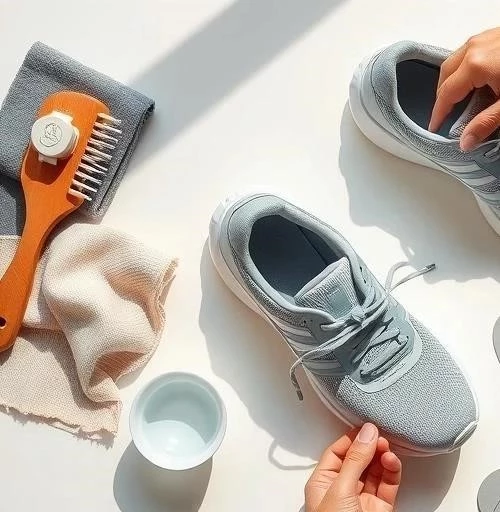
Fitness sneakers do a lot of work: they support your feet through lifting, classes, treadmill sessions and quick changes of direction. A pair costing less than €100 can serve you well, but regular use exposes it to sweat, dust, friction and repeated impact. The key to extending its life is not expensive equipment or complicated routines. It is choosing suitable products, cleaning gently, drying thoroughly and knowing when a shoe needs a rest.
This guide covers practical care for common gym-shoe materials, from mesh and synthetic leather to rubber and foam. Always check the care label or the manufacturer’s instructions first: construction varies, and a method that is safe for one model may damage another. If instructions conflict with general advice, follow the manufacturer.
Start with the materials
Most budget-friendly training shoes combine several materials. The upper may be breathable mesh, knitted fabric, synthetic leather or a mixture; the outsole is usually rubber, while the cushioning is made from foam. Before cleaning, look closely at the shoe and identify its different sections. Use the gentlest approach that will do the job, and test any cleaner on a small, inconspicuous area.
- Mesh and knit: breathable, but easy to snag or deform if scrubbed hard. Use a soft brush and a small amount of mild soap.
- Synthetic leather: usually easy to wipe clean. Avoid harsh solvents, which can strip coatings or loosen adhesives.
- Suede or nubuck details: keep them as dry as possible and use a suitable suede brush. Ordinary wet scrubbing can leave marks.
- Rubber outsoles: can generally be cleaned with a damp cloth or soft brush. Remove grit from the tread without using sharp tools.
- Foam midsoles: wipe gently. Strong chemicals and abrasive pads may discolour or roughen the surface.
After each workout: a two-minute routine
Small habits prevent dirt and moisture from building up. When you finish training, loosen the laces and open the tongue so air can circulate. Take out the insoles if they are removable, and let both the shoes and insoles air separately. Brush off dry dust and dirt with a soft brush or cloth before it gets pressed into the fabric. If the shoes are damp with sweat, wipe the inside with a clean, dry cloth.
Do not put sweaty shoes straight into a closed gym bag, locker or plastic box. A warm, damp environment encourages unpleasant odours and can keep the lining wet for hours. If you have to carry them, use a breathable shoe bag and take them out as soon as you get home. Keep them away from clean clothing and allow them to dry fully before the next session.
How to clean fitness sneakers safely
- Remove loose dirt. Tap the soles together outdoors, then brush away dust. Use a blunt wooden stick to lift pebbles from the tread if needed; do not dig into the rubber or cut the outsole.
- Prepare the shoes. Remove the laces and, if possible, the insoles. Clean these separately. Check for tears, loose stitching or peeling sections before adding water.
- Mix a mild solution. Add a little gentle detergent to cool or lukewarm water. A small amount is enough: too much soap can leave residue that attracts dirt or irritates skin.
- Clean the upper gently. Dip a soft cloth or brush into the solution and work in small sections. Do not soak the shoe or scrub mesh aggressively. Use a separate cloth for the sole to avoid transferring grit onto the upper.
- Wipe away residue. Use a clean, slightly damp cloth. Rinse and wring it out often rather than holding the shoe under a running tap.
- Wash laces and insoles carefully. Hand-wash them in mild soapy water, rinse well and press out excess moisture with a towel. Avoid twisting or stretching them.
- Dry naturally. Blot the shoes with a towel, reshape them and leave them in a ventilated place at room temperature.
Machine washing is not a default shortcut. Heat, tumbling and prolonged soaking can weaken glue, damage cushioning, distort the upper or affect the fit. Only machine-wash a pair if its maker explicitly says it is safe, and then follow the stated settings. Never assume that a fabric upper means the whole shoe is machine washable.
Drying: protect the shape and the glue
Patience is the safest drying tool. Direct sunlight, radiators, hot-air vents, hairdryers and tumble dryers can make materials brittle, shrink fabric or soften adhesives. Instead, loosen the shoes, remove the insoles and place the pair somewhere dry with good airflow. Stuff the toes loosely with plain paper towels to absorb moisture and help maintain shape; replace the paper when it becomes damp. Avoid coloured newsprint, which may transfer ink.
Do not wear a pair that is still wet inside. Damp cushioning and lining feel uncomfortable, may rub the skin and are more likely to develop odour. If you train frequently, alternating between two pairs is useful, even when each pair is inexpensive: it gives foam time to recover and lets moisture evaporate completely. If buying a second pair is not practical, allow at least a full drying period between hard sessions.
Keeping odour under control
Odour usually becomes noticeable when sweat and moisture remain in the shoe. Drying the pair thoroughly, washing removable insoles when appropriate and changing into clean training socks are the first steps. Choose socks that manage moisture and avoid wearing the same pair for a second workout. Let shoes air after every session rather than masking a damp smell with fragrance.
A shoe deodoriser or odour-absorbing sachet can be helpful, provided it is suitable for footwear and used as directed. Avoid pouring perfume, bleach, disinfectant or concentrated essential oils inside the shoe: these can irritate skin, stain fabric or damage materials. Baking soda is sometimes used at home, but loose powder can be difficult to remove and may leave residue. If you try an odour absorber, keep it contained in a breathable sachet and check that it does not contact or discolour the lining.
Protection and storage
A suitable water-repellent spray may help protect certain uppers from light splashes and surface dirt, but it is not essential for every gym shoe. Check that the product is designed for the material, test it discreetly and apply it in a well-ventilated area according to its label. Sprays are not a substitute for cleaning, and some can change the texture or colour of mesh, suede or coated synthetic materials.
Store clean, dry sneakers in a cool, ventilated place, away from radiators, damp basements and direct sunlight. Do not leave them crushed under heavy items or folded inside a tight bag. If you use a shoe box, make sure the shoes are completely dry first. Keep laces loosely fastened or undone so the upper is not under unnecessary tension. For everyday gym use, a simple shelf is often better than an airtight container.
Care for the outsole and cushioning
Check the tread regularly. Dust, hair and small stones can collect in grooves and reduce grip, particularly on smooth indoor floors. Brush the outsole clean and inspect it for smooth patches, cracks or areas where the rubber is separating. Do not use oils or household cleaners to make the sole look shiny; a slippery outsole is a safety risk. If the floor is wet, clean the shoes before training and let them dry completely.
Foam cushioning gradually compresses with use. Cleaning can improve appearance, but it cannot restore worn cushioning or make a shoe supportive again. Pay attention to a noticeable change in comfort, stability or fit. If one side of the sole is much more worn than the other, or the upper no longer holds your foot securely, consider replacing the pair. These signs matter more than the price tag or how clean the shoe looks.
Common mistakes to avoid
- Using too much water: soaking can affect adhesives, padding and the shoe’s shape.
- Scrubbing with a stiff brush: hard bristles can fray mesh and scratch synthetic finishes.
- Using bleach or strong solvents: these may fade colours, weaken materials and leave irritating residue.
- Drying with heat: radiators and hairdryers can damage foam, fabric and glue.
- Wearing one pair for every activity: running, lifting and court-style movement place different demands on footwear.
- Ignoring small problems: a loose seam or damaged lace is easier to address before it worsens.
- Cleaning only when shoes look dirty: sweat and moisture can affect the inside even when the exterior appears clean.
A practical weekly and monthly schedule
After every workout: loosen the shoes, air them out, remove damp insoles if possible and brush away dry dirt. Once a week, or when visibly needed: wipe the outsole and spot-clean marks on the upper. Wash laces or insoles only when necessary and according to their care instructions. Once a month: inspect the tread, seams, heel lining, laces and fit. A full wash is not required on a fixed schedule; clean only as much as the shoes need and allow them to dry completely.
This routine costs almost nothing. A soft brush, a clean cloth, mild detergent and a ventilated place to dry the shoes are enough for most ordinary maintenance. If a stain is stubborn or the shoe combines delicate materials, a specialist footwear cleaner may be a safer choice than experimenting with household chemicals. Professional cleaning is optional, not a requirement for keeping a budget pair in good condition.
Choosing sensible care products under €100
The €100 limit refers to the sneakers, not a reason to buy a cupboard of accessories. Spend first on a pair that fits well and suits your training. For routine care, a soft brush and a small bottle of mild cleaner usually provide better value than a large kit. Add a material-specific protector only if you need it and its instructions match your shoes. Check product labels, compare prices and avoid claims that promise to make footwear waterproof or “like new” without limitations.
Fit and intended use are part of care, too. Shoes that are too tight can stretch or wear unevenly; shoes that are too loose may rub and damage the lining. Use fitness sneakers for the activities they are designed for, and avoid wearing them outdoors unnecessarily if you want to preserve their grip for the gym. A low-cost pair can be a good purchase, but comfort, secure support and suitable construction should come before a particular brand or appearance.
When cleaning is not enough
Replace a pair when the sole has lost reliable grip, the cushioning feels flat, the shoe has become unstable or structural damage prevents a secure fit. Persistent discomfort during exercise is also a reason to reassess the footwear rather than simply adding an insole or continuing to wear it. Do not glue a damaged sole back together for demanding workouts unless a qualified repairer confirms the repair is safe. A tidy appearance does not guarantee that a shoe still provides appropriate support.
In brief
To make fitness sneakers under €100 last longer, air them after every session, remove dirt before it settles, clean with mild products and dry them slowly at room temperature. Keep them out of the washing machine unless the manufacturer approves it, and never use direct heat. Inspect grip, cushioning and fit regularly. Consistent, gentle care protects materials, reduces odour and helps you recognise when a pair has reached the end of its useful life.
4 Comments. Оставить новый
A concise and sensible overview. Identifying the different materials before cleaning is a simple step that could prevent a lot of wear and tear.
A clear, practical guide. I especially appreciate the reminder to check the manufacturer’s instructions and test cleaners on a hidden area first.
The material-by-material advice makes shoe care feel manageable. The tips for mesh, suede and foam are useful without recommending harsh cleaning methods.
Helpful advice for keeping affordable training shoes in good shape. I like the focus on gentle cleaning and avoiding damage to adhesives and coatings.