
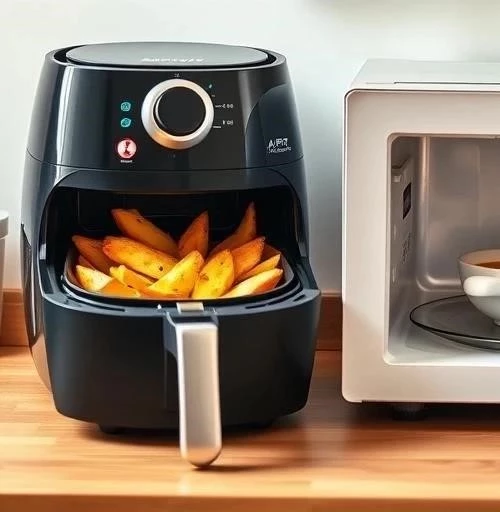
Short answer: an air fryer can reheat many foods‚ but it is not a true replacement for a microwave․ The two appliances heat food in different ways‚ so they produce different results and suit different tasks․ An air fryer is useful when you want a crisp surface; a microwave is usually better when you need speed or want to warm food evenly without browning it․
How the appliances work
A microwave oven uses electromagnetic waves to make water molecules in food move‚ generating heat throughout the food․ This is why it can heat a bowl of soup or a portion of leftovers in a few minutes․ Heating may still be uneven‚ so stirring and allowing food to stand briefly can help․
An air fryer is a compact convection oven․ A heating element warms the air‚ and a fan circulates it around the food․ The hot air cooks the outside first‚ encouraging browning and crisping․ Heat then moves toward the centre‚ which takes time․ The appliance does not heat food from within in the same way a microwave does․
When an air fryer works well for reheating
Choose the air fryer for foods that are meant to be crisp or have become soggy in the refrigerator․ Pizza‚ fries‚ roasted vegetables‚ breaded chicken‚ pastries and some sandwiches often regain a pleasant texture․ A microwave can soften their crust or coating‚ while circulating hot air helps dry and crisp the outside․
For a small portion‚ try a moderate temperature—around 160–180°C (320–355°F)—and check it after a few minutes․ Exact settings depend on the model‚ portion size and food․ Arrange pieces in a single layer so air can circulate‚ and turn or shake them partway through if needed․ Add time in short increments rather than leaving food unattended․
An air fryer can also warm foods when a crisp finish is welcome‚ even if crispness is not essential․ It may be convenient if the appliance is already on or if you are heating several pieces at once․ However‚ it generally takes longer than a microwave‚ especially for thick or dense portions․
When a microwave is the better choice
For soup‚ sauces‚ porridge‚ drinks and other liquids‚ a microwave is usually more practical․ It heats them quickly and does not rely on hot air reaching an exposed surface․ An air fryer cannot warm a mug or an uncovered bowl safely unless the container is suitable and stable‚ and liquid may spill or evaporate․ Never put a sealed jar or tightly closed container into either appliance․
A microwave is also usually preferable for soft foods‚ such as rice‚ pasta‚ casseroles and leftovers where you do not want a dry or browned exterior․ Air-fryer heat can remove moisture before the centre is hot․ If you do use one‚ cover the food loosely with an appropriate lid‚ add a small splash of water where suitable‚ and use a lower temperature․ Check that it is hot all the way through․
For a quick‚ even warm-up‚ the microwave normally wins․ The air fryer needs time to heat the chamber and circulate hot air‚ and a thick portion may warm unevenly unless you turn it or break it into smaller pieces․ A microwave-safe plate cannot automatically be assumed to be safe in an air fryer: it must also withstand the air fryer’s temperature․
Using an air fryer safely
- Use cookware explicitly labelled as oven-safe and suitable for the temperature you select․ Glass‚ ceramic and metal are not automatically safe; check the manufacturer’s instructions․
- Keep paper‚ plastic‚ wooden items and packaging out of the cooking basket unless the appliance maker specifically permits them․ Plastic containers made for microwave use may melt in an air fryer․
- Do not line the basket in a way that blocks airflow․ Loose parchment or foil can be lifted into the heating element by the fan․ Follow the appliance manual and keep any liner weighed down by food․
- Do not heat food in sealed containers․ Steam pressure can build up‚ and hot liquid can splash when opened․
- Follow food-safety guidance for leftovers․ Reheat them thoroughly‚ and use a food thermometer when appropriate; appearance alone cannot confirm a safe temperature․
Can you use both appliances together?
Yes․ For a practical two-step method‚ microwave a dense portion briefly to warm its centre‚ then transfer it to an air fryer-safe dish or basket to crisp the outside․ Do not move unsuitable microwave containers into the air fryer‚ and use oven mitts because dishes can become hot․ This approach can be quicker than heating the entire portion in the air fryer‚ although it adds an extra step and another item to wash․
Bottom line
You can use an air fryer to reheat many foods‚ but you cannot use it just like a microwave․ It is best for crisping and reheating solid foods; a microwave is generally faster and more convenient for liquids‚ soft dishes and everyday warming․ Pick the appliance based on the result you want‚ check the manufacturer’s guidance‚ and monitor the food rather than relying on a fixed time․
5 Comments. Оставить новый
I appreciate the reminder to check food after a few minutes and add time gradually. That’s useful advice for avoiding overcooked leftovers.
This is a balanced guide that explains both the advantages and limitations of an air fryer for reheating. I’d be interested in seeing more examples for specific foods.
The explanation of how each appliance heats food is clear without getting overly technical. It helped me decide which one to use for different meals.
The comparison makes it easy to understand why an air fryer and microwave produce such different results. The practical food examples are especially helpful.
Good point about arranging food in a single layer so the hot air can circulate. The tips feel practical for everyday use.