
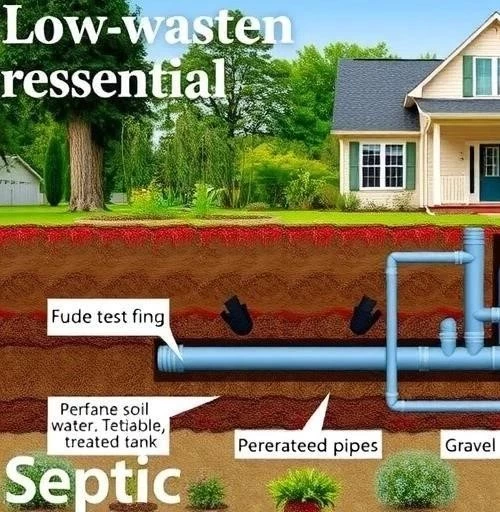
A septic system that needs little attention is not maintenance-free. Its reliability depends on correct sizing, suitable soil and sensible everyday use. When choosing a septic system for a private home (септик для частного дома), compare the treatment method, access for servicing and expected running costs—not just the purchase price. A well-planned autonomous sewage system (автономная канализация) can reduce callouts, but every system needs periodic checks.
Choose the right design
A septic tank without frequent pumping (септик без частой откачки) is usually a treatment unit with enough capacity and effective solids separation, rather than a tank that never needs emptying. Match tank volume and station capacity to the number of users, peak flows and possible surge discharge. A septic tank with an overflow (септик с переливом) separates stages; a sealed holding tank (герметичный резервуар) or storage tank (накопительная емкость) simply collects wastewater and must be pumped regularly.
Biological treatment (биологическая очистка) uses bacteria (бактерии для септика); some systems rely on activated sludge (активный ил) and an air compressor (компрессор для септика). A non-electric septic tank (энергонезависимый септик) works without power, while an electricity-dependent treatment station (энергозависимая станция) may achieve a higher effluent treatment level (степень очистки стоков). Check the manufacturer’s figures for wastewater treatment (очистка сточных вод) and consider what happens during a power failure.
Installation and care
Groundwater level and soil type determine whether a filter field or drainage well is appropriate. These site conditions also affect the layout of the whole sewage system. Professional assessment helps prevent flooding, poor drainage and premature repairs. For a cottage, choosing a septic system (выбор септика для дачи) should account for seasonal use as well as the maximum number of occupants.
A low-maintenance septic system (септик с минимальным обслуживанием) still needs septic maintenance (обслуживание септика). Follow the maker’s schedule for sludge removal, filter cleaning and clog prevention; pumping frequency depends on design and actual use. Arrange a vacuum truck (ассенизаторская машина) visit when inspection shows it is needed, rather than relying on a fixed guess. Avoid flushing wipes, grease or chemicals that harm treatment bacteria. If odour appears, investigate leaks, ventilation and overloading promptly.
Good operation (эксплуатация септика) and regular inspections extend septic system service life (срок службы септика). A suitable design minimizes routine work; it does not eliminate it.

4 Comments. Оставить новый
The article does a good job explaining how household needs, soil conditions and groundwater levels influence the choice of system. The maintenance guidance is useful without making unrealistic promises.
Helpful for homeowners comparing different septic options. The notes on power dependence and what to consider during an outage add an important real-world perspective.
Well organized and easy to follow, with a sensible emphasis on proper sizing and professional site assessment. It offers a useful starting point for planning a wastewater system.
A clear and practical overview of what affects septic-system reliability. I especially appreciated the distinction between treatment systems and storage tanks, since that can prevent costly misunderstandings.