
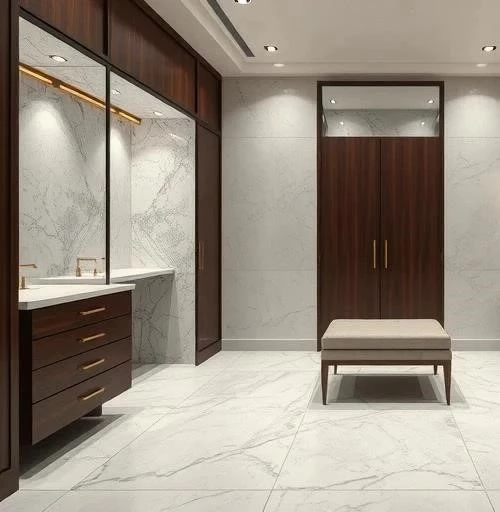
Natural stone in the interior can lend a wardrobe depth and quiet luxury, but it does not automatically create a cozy atmosphere․ In modern classic design, the aim is balance: thoughtful wardrobe finishing should support storage, light and comfort rather than turn a practical room into a formal showroom․ The most common finishing mistakes begin when stone is chosen for prestige alone, without considering scale, lighting and daily use․
Choose the stone for the room
Stone selection should account for the wardrobe’s size, ventilation and material moisture resistance․ Marble in a wardrobe offers delicate veining and suits an elegant interior, yet pale varieties may stain and need careful maintenance․ Granite in the interior is durable, but its strong pattern can dominate a compact room․ Travertine in finishing brings a softer, porous texture; it may require sealing․ Check the supplier’s guidance on natural stone care before committing, especially for surfaces touched often or exposed to cosmetics․
Consider the natural stone texture alongside the interior color palette․ Cool stone shades can feel crisp, but in a room with little daylight they may appear gloomy․ Warm lighting and wood can soften them․ A sample viewed under the actual wardrobe lighting is more reliable than a showroom impression․
Use stone with restraint
Excessive stone finishing is a frequent source of visual heaviness․ Covering every wall and the floor can create an overloaded interior, particularly in a small wardrobe․ Instead, use stone cladding on one feature wall, a niche or a durable surface, and balance it with wooden elements, metal hardware and textiles in the interior․ This combination of materials creates a harmonious combination of textures, while decorative panels can add depth without competing with the stone․
Wall and floor finishes should be planned together: a heavily veined floor may need quieter walls, while a textured feature wall works best with a simple floor․ Keep circulation clear and use shelves, mirrors or a change in finish for space zoning․ These choices make wardrobe design functional as well as refined․
Plan light and practicality
Wardrobe lighting reveals both color and flaws․ Artificial lighting that is too cold can exaggerate cool stone shades and make clothing colors misleading; layered, warm-neutral light usually gives a more welcoming result․ Match fittings to the stone’s care requirements, and choose finishes that tolerate routine cleaning․ The practicality of finishing matters as much as appearance: polished surfaces show marks, while textured stone can collect dust․
Avoid costly selection errors
Mistakes when choosing material include ignoring maintenance, pairing unrelated patterns and failing to test samples in place․ An interior in classic style does not require stone everywhere: measured use, restrained detailing and a clear palette produce a more convincing result; When stone, light and furnishings are coordinated, the wardrobe feels calm, durable and welcoming—not merely expensive․

4 Comments. Оставить новый
The article makes a useful point that natural stone should be selected for its practical qualities as well as its appearance. Comparing marble, granite and travertine helps readers understand why maintenance and visual impact matter in a wardrobe. The suggestion to view a sample under the room’s actual lighting is especially practical.
I appreciate the emphasis on restraint. Stone can add character, but using it on every surface may overwhelm a small space and make it feel less comfortable. The advice to pair a stone feature with wood, metal or textiles offers a clear way to keep the design balanced.
This is a thoughtful guide because it connects design decisions with everyday use. The reminders about staining, sealing and surface durability are important details that can be missed when choosing materials based only on appearance. Considering the wall and floor finishes together is also a sensible planning tip.
The article effectively explains why lighting and scale influence how stone feels in a wardrobe. A cool shade may look elegant in a bright showroom but feel gloomy in a darker room, so testing samples in place is good advice. I would also welcome more guidance on ventilation and specific care routines, but the main principles are clear.