
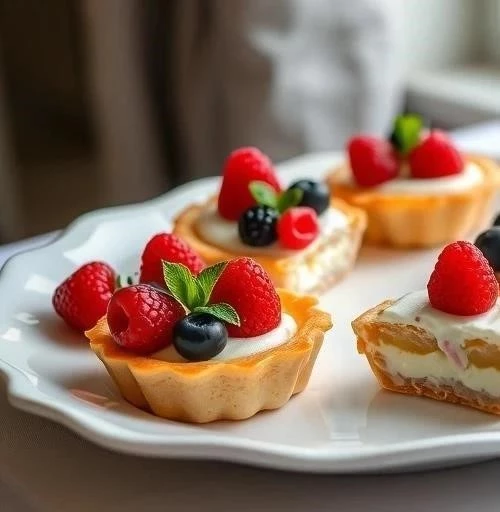
Tartlets with cottage cheese filling can be served as a light dessert or a savory appetizer. Their success depends on three things: a crisp tartlet base, a smooth filling and careful baking. Homemade tartlets allow you to adjust the size, sweetness and flavor to suit the occasion. The shell can be prepared ahead, while the filling and decoration are added closer to serving time.
Choosing and preparing the base
Shortcrust pastry is a reliable choice for sweet tartlets: it holds its shape and contrasts well with a soft filling. Keep the butter cold, mix the dough briefly and chill it before rolling. Press it evenly into the molds, including the sides, then prick the bottom with a fork. For a lighter, flaky shell, use puff pastry. It rises more, so avoid overfilling the molds and follow the package instructions.
The baking temperature and cooking time depend on the pastry and tartlet size. As a general guide, bake shortcrust shells at 180°C until golden, usually 12–18 minutes. Puff pastry may need a hotter oven. A useful oven recipe is to line the shells with baking paper and baking weights for the first part of baking, then remove them to let the bases brown. Cool the shells completely before filling; warm pastry can soften the filling and lose its crispness.
How to make the filling
For a smooth tartlet filling, choose well-drained cottage cheese or cream cheese. If using cottage cheese, press it through a sieve or blend it until creamy. A curd mixture can be loosened with a little cream or sour cream, but add liquid gradually so it stays thick enough to hold its shape. For a sweet version, mix in powdered sugar and vanilla sugar, then taste before adding more. A small amount of lemon zest can brighten the flavor.
An egg can help a baked filling set, although it is not necessary for a chilled filling. When baking shells with an egg-based mixture, fill them only after the pastry has cooled, then return them to the oven until the center is just set. Avoid overbaking, which can make cottage cheese dry. For a no-bake cottage cheese dessert, spoon the blended mixture into cooled shells and chill until firm.
Sweet and savory options
Sweet tartlets pair well with fresh berries and fruit. Add delicate toppings shortly before serving to keep them bright and prevent excess juice from soaking into the pastry. Sliced peaches, raspberries or blueberries work well; a thin layer of jam can help hold fruit in place. These simple choices make sweet tartlets colorful without masking the mild dairy flavor.
For savory tartlets, season cream cheese or cottage cheese with herbs, garlic, black pepper and a pinch of salt. A little sour cream can make the mixture easier to pipe. Top with chopped greens, cucumber or smoked fish. Keep the seasoning balanced, since the crisp shell should remain noticeable. Savory tartlets are convenient as a festive appetizer and can be prepared in small portions for a buffet.
Finishing and serving
Tartlet decoration should be attractive but practical: use a piping bag for a neat swirl, then add berries, fruit or herbs just before serving. Store unfilled shells in an airtight container and keep prepared fillings refrigerated. Once assembled, tartlets are best eaten the same day. This approach preserves their texture and makes preparation easier: bake the base in advance, mix the filling separately, and assemble shortly before guests arrive.
Whether you choose a simple cottage cheese baking recipe or a more elaborate dessert, the key is texture. A crisp base, a smooth filling and fresh toppings create a balanced result. Adjust the sweetness and seasoning to taste, and use the pastry’s own package guidance when it differs from general baking advice.

7 Comments. Оставить новый
The instructions about draining and blending cottage cheese provide a clear way to make the filling smooth. The suggestions for flavoring the sweet version are straightforward.
The article offers practical tips for preparing the shells ahead of time and filling them later. That approach could help with planning for a meal or gathering.
The article clearly explains how pastry choice, proper chilling and complete cooling affect the tartlet shells. The practical baking guidance is useful for home cooks.
The article balances general technique with specific tips, such as pricking the pastry and using baking weights. Its focus on keeping the shells crisp is especially useful.
This is a well-organized overview of tartlet preparation. It covers both the pastry and filling, with useful details about texture and timing.
The distinction between shortcrust and puff pastry makes the recipe adaptable to different preferences. The advice to add liquid gradually is also helpful for achieving a filling that holds its shape.
The guidance on baking temperatures and checking the shells for a golden finish gives readers a useful starting point, while recognizing that pastry types and sizes vary.