
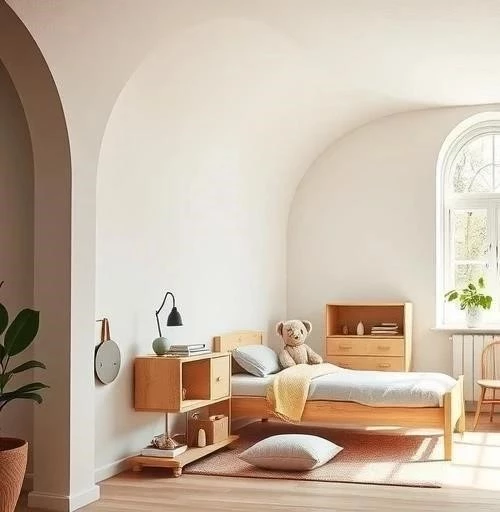
Decorative plaster can make a child’s room feel brighter without relying on a stark‚ clinical white. The best result comes from combining a light-reflecting finish with durable materials and a calm modern design. This matters because wall treatment shapes both the perceived size of the room and its everyday comfort: a beautiful surface is useful only if it can withstand play‚ cleaning and changing tastes.
Light‚ colour and a sense of space
For a light interior‚ choose pale wall colours that reflect natural light rather than absorb it. White and milk shades create an airy base; beige walls feel warmer‚ while a pastel palette adds gentle colour. Soft accents—such as muted green‚ blue or peach—can bring personality without making the room visually busy. These choices support visual enlargement of the space‚ especially when the ceiling and larger wall areas remain light.
Light alone is not enough: its distribution matters. A smooth plaster finish helps daylight travel across the room‚ while matte surfaces reduce glare. Use layered‚ diffused lighting for evenings so that corners remain comfortable rather than harshly illuminated. Together‚ daylight reflection and soft artificial light make compact rooms feel more open and welcoming.
Choosing the right finish
Textured plaster adds depth and can disguise minor wall imperfections‚ but pronounced relief may collect dust. For a child’s bedroom‚ select a subtle texture that is easy to wipe and does not create sharp ridges. Smooth plaster is a practical choice for a quiet‚ minimalist interior; Venetian plaster offers a refined sheen‚ but it should be specified and applied carefully. Mineral plaster is valued for its vapour permeability‚ helping walls release moisture.
Prioritise eco-friendly finishing materials and a child-safe finish. Check the manufacturer’s safety information‚ emissions‚ cleaning instructions and suitability for interior use; “natural” on a label is not‚ by itself‚ proof of safety. Washable plaster is especially useful near a desk or play area‚ where fingerprints and small marks are likely. A breathable coating can also be beneficial‚ provided the whole wall system is compatible.
Modern design without visual clutter
In a modern child’s room‚ plaster can serve as a restrained backdrop for geometric patterns‚ furniture and toys. Rather than covering every wall with decoration‚ create one accent wall behind the bed or reading nook. Subtle decorative textures can distinguish this area while keeping the rest of the room calm. This approach supports minimalism without making the space feel plain.
Plaster and wallpaper can also work together: use plaster on most walls and a small‚ washable wallpaper panel for a playful motif. This combination offers variety while avoiding an overloaded scheme. It can help zone the room into sleeping‚ studying and play areas; consistent pale colours keep those zones connected.
A practical‚ welcoming result
Before choosing a finish‚ consider the child’s age‚ the room’s daylight‚ cleaning needs and the condition of the walls. Request a sample and view it in both daylight and evening light‚ since texture and colour can change noticeably. Decorative plaster is not automatically brighter or more practical than paint; its value lies in selecting the right finish for the room.
When pale tones‚ suitable lighting and durable surfaces are planned together‚ wall decoration can create a cosy atmosphere as well as a brighter one. The strongest ideas for a child’s room balance appearance with maintenance‚ so the modern interior remains inviting and usable as the child grows.

1 Comment. Оставить новый
The article makes a useful point that a child’s room needs more than an attractive finish: durability, easy cleaning and verified safety are just as important. Its advice to balance light colours with soft lighting also feels practical, since glare or overly busy textures can make a small room less comfortable. I especially appreciate the reminder to check product information rather than assume that a material is safe simply because it is described as natural.