
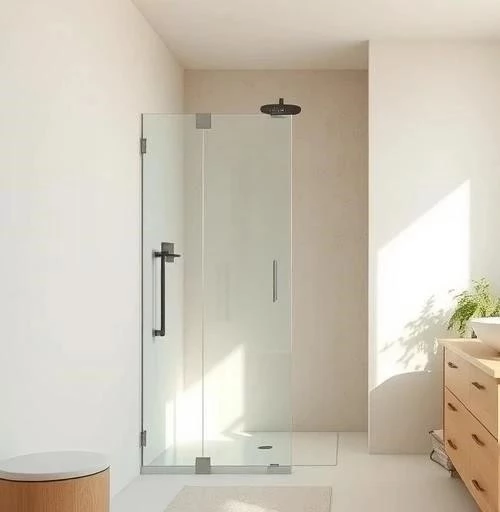
Decorative plaster in the bathroom can make a space feel lighter, warmer and more connected to nature. Unlike a wall covered entirely in glossy tile, a textured wall finish softens reflections and adds depth. The best bathroom finishing plan balances beauty with moisture control: choose suitable materials, protect splash zones and ensure effective bathroom ventilation.
Choose a light, natural palette
A light bathroom interior is not limited to plain white. Natural shades such as ivory, warm beige and muted olive create a nature-inspired color palette without making a small room feel heavy. White plaster and light walls in the bathroom help with the visual expansion of space, while their gentle tones support the reflection of natural light. A matte surface is especially calming, though the room still needs thoughtful bathroom lighting for evening use.
For an eco-style bathroom, consider mineral plaster or lime plaster in a suitable bathroom system. These finishes can offer a breathable, subtle texture, but no plaster should be assumed waterproof. Follow the manufacturer’s guidance, seal surfaces where required and use moisture-resistant coatings in wet areas. Wall protection from mold also depends on sound construction, prompt repairs and reliable ventilation—not on finish alone.
Explore textures and combine materials
Venetian plaster can bring a delicate natural stone effect; a restrained travertine imitation adds quiet movement. A sand texture feels soft and tactile, while a concrete-look finish gives a more contemporary character. Microcement in the bathroom creates a nearly seamless appearance, but installation and waterproofing must be handled as a complete system. Samples are essential: lighting and water can change how a finish looks.
The combination of plaster and tile is often the most practical solution. Use tile around the shower, bath and basin, then apply plaster to drier walls. This combination supports bathroom zoning without visual clutter. Wood accents, stone details and other natural materials reinforce eco-friendly interior design, provided they are selected for bathroom conditions and maintained properly.
Bring the room to life
Plants in the bathroom, when light and humidity allow, add a fresh note; olive accents, woven textures and a simple timber shelf can complete the scheme. Keep accessories restrained so the plaster remains the focus. In a beige interior, vary tones and textures rather than relying on one flat color. This creates a cozy bathroom with a clear, modern bathroom design and a genuinely nature-inspired interior.
Ultimately, decorative plaster works best when appearance and performance are planned together. Compare moisture-resistant plaster options, test samples under the actual lighting, and reserve delicate finishes for lower-risk areas. With suitable ventilation, considered zoning and carefully chosen natural shades, plaster can make the bathroom feel brighter and more restful without sacrificing durability.
5 Comments. Оставить новый
The discussion of ventilation and repairs adds valuable context to the design advice. A suitable finish matters, but preventing mold also depends on addressing moisture and maintaining the room properly.
The range of texture options is helpful, particularly the point that lighting and water can change how a finish appears. Testing samples in the actual room seems like a sensible step before choosing a material.
The natural palette suggestions show how a bathroom can feel warm without relying on heavy colors. I also like that the article connects visual choices with practical details such as lighting and surface protection.
The article makes a useful distinction between decorative appeal and moisture protection. Its reminder that plaster is not automatically waterproof is especially important for anyone planning a bathroom renovation.
I appreciate the practical suggestion to combine tile in splash zones with plaster on drier walls. That approach can preserve the softer look of a textured finish without overlooking the bathroom’s functional needs.