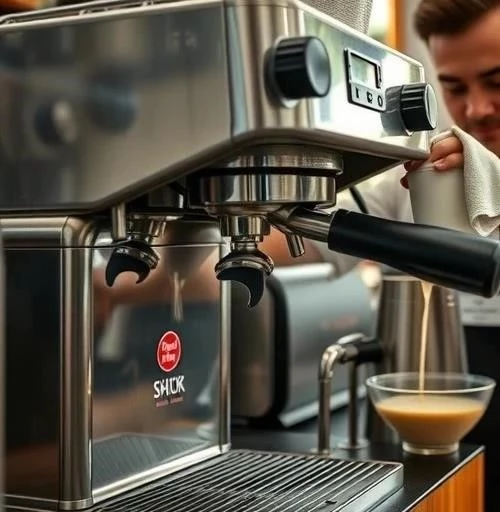
For café teams, DeLonghi’s milk system and LatteCrema components support dependable service, consistent drinks, and professional machine care through every busy shift to sustain café service.
Daily Cleaning: Automatic Rinse Mode, Milk-Carafe and Milk-Container Care, and Removal of Milk Residue
Opening: assign one staff member to check the DeLonghi milk system and confirm the carafe is seated correctly. After each milk drink, use the machine’s automatic rinse mode per guide; this cycle helps move water through the milk path and limits residue as it dries. Empty the milk-carafe or milk-container when service pauses, discard unused milk, and rinse the vessel with potable water. Check that the milk intake is unobstructed and that the milk-delivery tube is positioned securely, without kinks. During the shift, inspect for visible milk residue around connectors and the dispensing outlet; remove it promptly with a clean, damp, food-safe cloth. At closing, remove remaining milk, rinse the container and detachable milk-contact pieces as instructed for your model, and store them clean and dry. Record completion on the café checklist daily, so every shift starts with a clean, ready-to-use milk carafe.
Deep Cleaning and Sanitizing: Cleaning the Milk System, Flushing the Milk Circuit, and Cleaning the Milk Delivery Tube
For a deep clean, follow the model-specific DeLonghi instructions and isolate the milk circuit before handling its parts. Remove the milk container and accessible milk-contact fittings, then rinse each piece under warm running water to loosen deposits. Flush the milk circuit using the machine’s designated cleaning cycle, directing the discharge into a suitable vessel; repeat until flow is clear. Pay particular attention to the milk delivery tube and connectors, where trapped milk can encourage buildup; ensure the entire path is rinsed, not merely the outlet. Use potable water and clean, food-safe tools; avoid immersing electrical components or forcing liquid into openings. Sanitize milk-contact surfaces only with a method approved for the appliance and local food-safety rules, then rinse, if the product directions require it. Dry parts fully, and verify no milk remains in the tube, then reconnect it securely.
Cleaning the DeLonghi Cappuccino Maker: Automatic Frother, Disassembly and Reassembly, and Milk-System Hygiene
Keep the DeLonghi cappuccino maker hygienic by treating its automatic frother as a food-contact component. Before disassembly, consult the model-specific instructions and identify each connector, seal, and movable part. Remove only parts marked user-removable; do not force clips or open the machine casing. Wash the detachable frother pieces with warm water and a suitable, non-abrasive cleaner, paying attention to narrow channels where milk films can remain. Inspect seals for cracks or distortion, and replace damaged items with approved parts. Rinse away cleaner completely, then allow components to air-dry on a clean surface. Reassemble in the stated order, ensuring seals sit flat and the milk path is correctly aligned. Handle reassembled parts with clean hands, avoiding contact with milk-facing surfaces. Protect the assembled frother from dust and splashes during active café shifts and handling.
Maintenance Schedule: Cleaning Products, Descaling, Cleaning Programs, Foam Quality, Cappuccino and Latte Preparation, and Fault Prevention
Set a written maintenance schedule for the DeLonghi machine, matching every task to its workload and the manufacturer’s guidance. Use only DeLonghi-approved milk-system cleaner and descaler; never substitute household chemicals, mix products, or exceed label doses. Follow the display prompts for cleaning programs and schedule descaling when the machine signals or water conditions require it. Do not postpone alerts: scale can impair heating, while neglected settings may disrupt reliable service. At planned intervals, assess foam texture and temperature during cappuccino and latte preparation; log changes, check machine messages, and arrange qualified service if performance remains inconsistent. Keep a dated record of approved products, completed programs, descaling, and any faults; use it to spot patterns and prevent avoidable downtime in the café. Review foam and drink results daily, noting changes.