
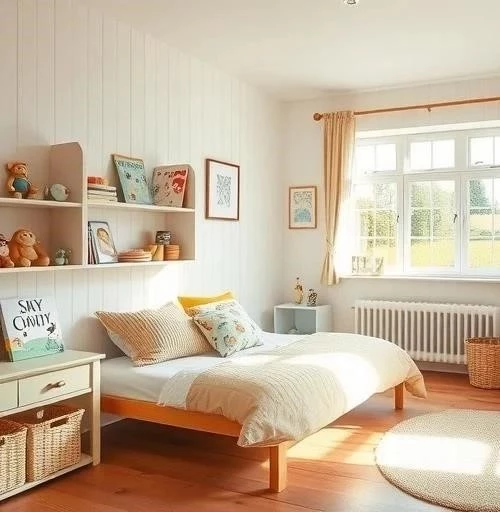
A children’s room in a country house should be more than attractive: it must support sleep‚ play‚ learning and safe movement throughout the year․ A considered children’s room design starts with the child’s age and interests‚ but also accounts for the building’s layout‚ temperature‚ light and noise․ These choices matter because a cottage may have different conditions from an apartment․
Plan the room around daily life
Begin with the nursery layout and space zoning․ Place the sleep zone in the quietest part of the room‚ away from doors and drafts․ Set up the play area where the floor is open and easy to supervise; position the workstation near a window‚ preferably so daylight falls from the side rather than directly into the child’s eyes․ Keep a toy storage area close to the play space․ This arrangement reduces clutter and makes everyday routines easier․
Allow for change as the child grows․ A toddler needs room for floor play and accessible shelves; a school-age child needs a proper desk and task lighting․ Ask about the child’s interests‚ then add them through easily replaceable artwork‚ colors or accessories instead of costly built-in features․ A functional interior should adapt without a complete renovation․
Choose safe‚ durable materials
Children’s furniture should fit the child’s height and encourage good posture․ Prioritize safe furniture with stable construction‚ rounded corners and secure wall fixings․ Ergonomics also means leaving clear routes between zones and keeping frequently used items within reach․ Compact storage—drawers‚ labeled boxes and shelves—can save space‚ but heavy objects belong low down and climbing hazards should be avoided․
Use eco-friendly materials and safe finishes with low emissions‚ especially for paint‚ flooring and furniture․ Choose flooring that is warm‚ durable and easy to clean; a non-slip floor helps prevent falls․ Check that rugs have secure backing․ In a cottage‚ thermal insulation and the heating of a country house affect comfort‚ so avoid cold spots and overheating․ Good ventilation helps maintain a healthy microclimate; air the room regularly without creating a draft around the bed․
Light‚ comfort and protection
Make the most of natural lighting while adding layered artificial lighting: general ceiling light‚ a desk lamp and a soft bedside light․ A calm color palette can make the room feel restful‚ while brighter accents bring energy to the play area․ Choose children’s textiles that are washable‚ breathable and comfortable‚ including curtains that do not block all daylight․
Consider sound insulation if the room is near a living area‚ utility space or noisy road․ Window safety is essential: use secure locks or restrictors‚ keep furniture away from openings and never rely on a screen as a fall barrier․ Add socket protection and conceal cords․ The best children’s interior for a cottage balances character with practical safeguards․ Plan carefully‚ then review the room as the child’s needs change․


8 Comments. Оставить новый
The focus on low-emission finishes and durable, easy-to-clean flooring is valuable because children spend so much time close to these surfaces. The article sensibly treats material choices as part of health and maintenance, not just style.
This is a thoughtful overview of how storage can support independence as well as reduce clutter. Accessible shelves and labeled boxes make it easier for children to put things away, while the reminder to avoid climbing hazards keeps practicality balanced with safety.
The article makes a useful case for planning a child’s room around everyday routines rather than appearance alone. Separating sleep, play and study areas can make the space calmer and easier to use, especially in a country house with different lighting and temperature conditions.
The safety guidance is well considered. Stable furniture, rounded corners, wall fixings and clear paths address risks that can be overlooked when the focus is only on décor. Keeping heavy items low is also a simple, actionable recommendation.
The advice about placing a desk near a window while avoiding direct glare is especially helpful. It connects room layout to how children actually study, and shows that natural light needs to be planned rather than treated as an automatic benefit.
Overall, the article offers practical principles without insisting on one particular look. Its strongest point is that a successful children’s room should combine comfort, safety and flexibility, with decisions shaped by the child’s age and the home’s layout.
I appreciate the emphasis on designing for a child’s changing needs. Choosing replaceable decorations instead of expensive permanent features is a practical way to keep the room personal while avoiding a full renovation as the child grows.
I like that the guidance recognizes a cottage may have different conditions from an apartment. Considering drafts, temperature, noise and daylight from the start can prevent a room from looking good on paper but feeling uncomfortable in daily use.