
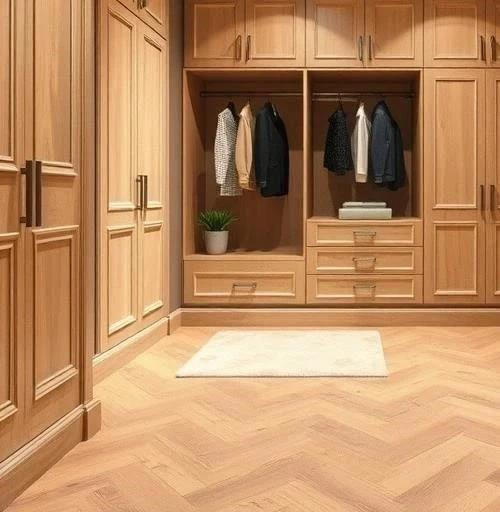
Engineering wood can bring warmth and durability to a wardrobe, but it does not automatically improve room acoustics. A hard floor reflects sound; it does not absorb it. The result may be a sharper, more reverberant space, even when the boards look elegant. In a modern classic interior, the best result comes from coordinating the floor, storage, and soft finishes rather than expecting one material to solve every acoustic problem.
Choose the floor system, not just the finish
Installation errors can undermine both comfort and the floor itself. Before laying boards, check that the subfloor is clean, dry, stable, and level. Follow the manufacturer’s limits for moisture in the wood and the room’s temperature and humidity. An uneven base, unsuitable underlay, or missing expansion gap can lead to movement, squeaks, and gaps between boards.
A floating installation may transmit impact noise if the acoustic underlay is wrong or poorly fitted. A suitable underlay can reduce some impact sound, but it is not a substitute for proper floor sound insulation. Glued installation can provide a stable feel, provided the substrate and adhesive are compatible. Choose the method for the specific floor assembly, not simply because one option seems quieter.
Balance hard surfaces with absorption
Built-in wardrobes and cabinet fronts add large surfaces that may reflect sound. Fabric-lined panels, a rug where practical, and upholstered details help absorb sound and soften the room’s acoustic character. These choices improve acoustic comfort more reliably than decorative changes to the floor alone. Keep textiles clear of ventilation and ensure the wardrobe’s microclimate stays dry and stable.
For a modern classic scheme, natural wood, a considered oak tone, and classic mouldings can create a coherent look. Avoid mismatched finishes, excessive glossy surfaces, and installing wood before wet trades are complete. These are common interior mistakes that can harm both appearance and performance. Plan the wardrobe and apartment flooring together, then follow the maker’s care guidance: avoid standing water and harsh cleaners.
Key terms
инженерная доска, отделка гардеробной, акустика помещения, звукоизоляция пола, звукопоглощение, шумоизоляция, акустический комфорт, современная классика, интерьер гардеробной, напольное покрытие, укладка инженерной доски, основание пола, подложка под доску, акустическая подложка, плавающий способ укладки, клеевой монтаж, компенсационный зазор, температурно-влажностный режим, влажность древесины, деформация покрытия, скрип пола, щели между досками, подготовка основания, ровность пола, шумоизоляционные материалы, ударный шум, отражение звука, звукопоглощающая отделка, текстиль в интерьере, встроенные шкафы, мебельные фасады, классические молдинги, натуральная древесина, оттенок дуба, интерьерные ошибки, уход за инженерной доской, микроклимат гардеробной, проектирование интерьера, отделка пола в квартире.


2 Comments. Оставить новый
I appreciate the balanced approach to combining hard finishes with rugs and upholstered details. Rather than promising that flooring alone will solve acoustic issues, the article considers how the room’s surfaces work together. The reminder to protect wood from moisture and unstable conditions is also valuable because good design depends on the floor performing well over time.
The article makes a useful distinction between choosing a wood finish and selecting a complete floor system. Its point that underlay can help with impact noise without replacing proper sound insulation is especially important, since it discourages unrealistic expectations. The practical emphasis on checking the subfloor and following the manufacturer’s requirements also makes the advice actionable.