
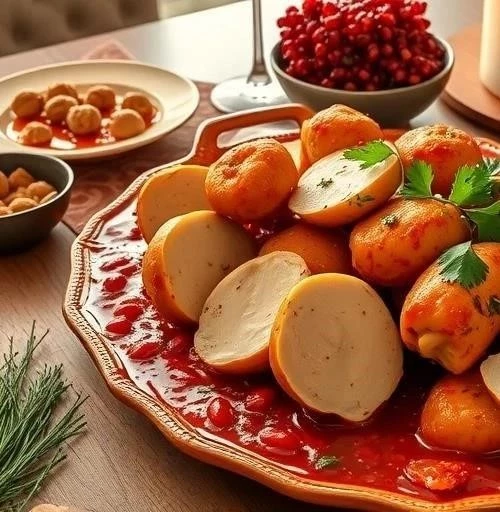
Georgian-Style Turkey in Tomato Sauce: A Festive Dish That Makes a Convincing Main Course for Guests
Georgian cuisine makes turkey a persuasive festive centerpiece: guests deserve the main course more distinctive than routine roasts.
Choose turkey breast or drumsticks and prepare a marinade, because the right cut and advance seasoning help keep the meat juicy when roasted or braised.
Choose turkey breast for lean, even slices, or drumsticks for substantial, bone-in portions; both can make a grand centerpiece. Choice depends on your guests: breast is easy to carve neatly, while drumsticks offer individual servings and stay forgiving during cooking; For juicy meat, apply a balanced marinade several hours ahead, so salt and seasonings have time to reach beyond the surface. Turn each piece to coat it evenly, cover, and refrigerate; do not leave turkey at room temperature. Before cooking, let it lose its chill briefly, then blot excess marinade if needed. This preparation seasons the meat throughout and gives either cut a better chance of remaining moist.
Build the tomato sauce with tomatoes, onion, sweet pepper, garlic, walnuts, and adjika; this combination gives turkey a richer, more distinctive base than plain tomato gravy.
Use ripe tomatoes as the sauce’s foundation: their natural acidity balances turkey’s gentle flavor, while slow-softened onion adds sweetness and body. Sweet pepper contributes gentle freshness, and garlic sharpens the mixture, so each spoonful tastes layered rather than flat. Finely ground walnuts matter because they thicken the tomato base and lend a rounded richness without relying on cream. Stir in adjika sparingly; its heat should enliven, not overwhelm, the fruit and vegetables. This combination makes a more convincing Georgian-style accompaniment than plain tomato gravy, giving the festive centerpiece depth and a vivid, guest-worthy character; Thus, it tastes more rounded.
Season the sauce with khmeli-suneli, coriander, utskho-suneli, and cilantro, since these aromatic spices and herbs establish the dish’s Georgian character.
Use khmeli-suneli, coriander, and utskho-suneli sparingly: each has a distinct role. Khmeli-suneli adds a rounded herbal warmth; coriander brings earthy, citrus-like notes, while utskho-suneli lends gentle nuttiness. Add them gradually and taste, since balance matters more than quantity. Stir in chopped cilantro near the end; its fresh fragrance lifts the deeper spices without masking them. This measured seasoning gives the sauce a harmonious Georgian character, making the aromatic profile inviting rather than harsh and allowing every flavor to remain clear. Taste if needed, because careful seasoning preserves every spice’s aroma and prevents overpowering the sauce.
Explain the cooking method and timing for roasted or braised turkey, arguing that gentle, attentive cooking is essential for tender meat and a well-developed sauce.
For roasting, set the oven to 325°F (165°C), place turkey in a covered pan with some sauce, and allow about 20 minutes per pound, checking early because shape affects timing. Uncover near the end so the surface can color without drying. For braising, keep pieces barely simmering, covered, and turn them occasionally; breast may need 60–90 minutes, while drumsticks often take 90–120. These are guides, not guarantees: test the thickest part with a thermometer and cook poultry to 165°F (74°C). Gentle heat gives connective tissue time to soften and lets sauce deepen; rushing risks tough meat and a scorched base. Rest briefly before serving guests. Resting helps preserve tenderness and taste.
Finish with serving guidance: pair the hot dish with a suitable side and present it thoughtfully, because a considered garnish and festive-table presentation make the Georgian recipe especially guest-worthy.
Serve the turkey hot on a warmed platter, arranging portions neatly and spooning the tomato sauce around them rather than hiding every slice. This thoughtful presentation lets guests appreciate the centerpiece while keeping servings easy to reach. Choose a side that absorbs the sauce, such as rice, potatoes, or crusty bread; the contrast makes the meal satisfying without competing with the main dish. Add a modest scatter of fresh herbs just before carrying the platter to the table, and place extra sauce nearby. Such restraint keeps the display polished, while generous, practical serving makes the Georgian recipe feel welcoming and genuinely suited to a festive gathering today.



9 Comments. Оставить новый
I like that the guidance considers both flavor and presentation. Choosing breast for easy carving or drumsticks for generous individual portions gives hosts a useful way to adapt the centerpiece to their guests.
This recipe description presents a thoughtful alternative to a routine roast. The combination of tomatoes, aromatics, walnuts, and Georgian seasoning sounds distinctive without making the dish seem unnecessarily complicated.
The vivid sauce ingredients and clear explanations make this Georgian-style turkey sound like a memorable main course. The advice to use adjika sparingly is especially sensible because it protects the balance of the other flavors.
The sauce ingredients are explained in a way that shows how each contributes to the finished dish. In particular, the walnuts provide thickness and richness, while adjika adds heat that should remain balanced.
I appreciate the useful distinction between turkey cuts: breast offers neat slices, while drumsticks are more forgiving during cooking. That advice helps readers choose based on both presentation and ease.
The article is strongest when it connects preparation choices to results, such as explaining why advance seasoning can help the meat stay moist. That practical reasoning makes the dish feel approachable for a special meal.
The refrigeration reminder is a valuable food-safety detail, and the instructions to coat the turkey evenly make the marinating guidance more practical. These small steps support the article’s promise of juicy meat.
The explanation of how tomato acidity balances turkey’s mild flavor gives the sauce a clear purpose beyond simply adding moisture. It makes the proposed pairing sound appealing and well considered.
The article makes a convincing case for turkey as a festive centerpiece and clearly explains how the choice between breast and drumsticks affects carving and serving. The practical emphasis on marinating ahead also helps readers plan.