
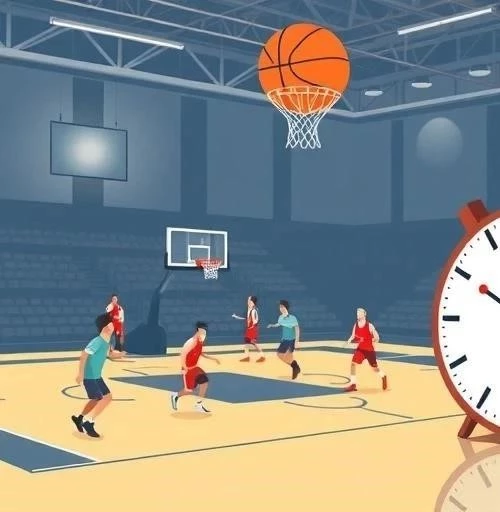
A basketball game looks like a sprint measured in minutes, but the clock has a secret: it stops whenever the action pauses․ So the answer depends on which clock you mean—the official playing time or the real time you spend watching the drama unfold․
The short answer
Under FIBA rules, used in international competitions and many leagues, a game has four 10-minute quarters: 40 minutes of playing time․ In the NBA, each of four quarters lasts 12 minutes, making 48 minutes of playing time․ Those totals describe time on the game clock, not the length of a typical evening at the arena․
- FIBA: 4 × 10-minute quarters = 40 minutes․
- NBA: 4 × 12-minute quarters = 48 minutes․
- Overtime: 5 minutes under both FIBA and NBA rules․
Why 40 minutes can take two hours
Basketball is played in bursts․ The clock generally stops when the referee blows the whistle, when the ball goes out of bounds, and during timeouts․ It also pauses for free throws, substitutions, reviews and the breaks between periods․ When play resumes, the clock starts again—so a close finish can stretch a small handful of game-clock seconds into a much longer scene․
As a rough guide, an ordinary televised or arena game often takes around one and a half to two and a half hours in real time․ The exact duration varies with the competition, the number of fouls and timeouts, and how often officials need to review a play․ A flowing game may finish sooner; a tense, whistle-heavy contest can run longer․
Quarters, breaks and the halftime pause
The four quarters are separated by short intervals, with a longer halftime break after the second quarter․ These pauses are not part of the playing-time total, but they are part of the audience’s experience․ Players catch their breath, coaches redraw the plan, and fans get time to wonder whether that last shot really went in before the buzzer․
Basketball is divided into quarters rather than two halves in FIBA and NBA play․ People sometimes say “half” to mean the first or second part of the game, but the official structure is four periods․ The quarter length is the key difference behind the familiar 40-versus-48-minute comparison․
What happens if the score is tied?
If the teams are level at the end of regulation, they play an overtime period of five minutes․ If the score is still tied, another overtime follows․ There is no fixed cap on the number of extra periods: play continues until one team leads when an overtime ends․ Each extra period adds five minutes of game time, plus its own stoppages and interval;
That means a game cannot be given one guaranteed real-world duration․ A regulation contest may already last close to two hours, while multiple overtimes can turn it into a long night․ The scoreboard may say “5:00,” but every timeout, foul and dead ball can make those five minutes feel like a small season․
Why the rules differ
Basketball is played under different competition rulebooks․ FIBA’s four 10-minute quarters are used in international basketball and competitions such as the Olympics and many national leagues․ The NBA uses four 12-minute quarters․ China and the Philippines are also among the leagues noted for using 12-minute quarters․ Always check the rules of the particular tournament if exact timing matters․
At a glance
- FIBA regulation: 40 minutes on the clock; usually considerably longer in real time․
- NBA regulation: 48 minutes on the clock; commonly around 1․5–2․5 hours to watch․
- Tied game: five-minute overtimes continue until there is a winner․
So, how long does a basketball match last? The clean answer is 40 minutes under FIBA rules or 48 minutes in the NBA․ The honest answer is that the clock tells only the skeleton of the story․ Timeouts, whistles, halftime and possible overtime give the game its real length—and give the final possession room to become unforgettable․


2 Comments. Оставить новый
A tidy guide with a lively pulse. I particularly enjoyed the image of a few seconds stretching into a whole scene—it captures basketball’s odd talent for making time both measurable and theatrical. A clear, engaging read for newcomers and casual fans alike.
The article makes the game clock feel like a mischievous character: it vanishes during pauses, then returns just in time to raise the stakes. The FIBA–NBA comparison is crisp, and the distinction between playing time and watching time is especially useful.