
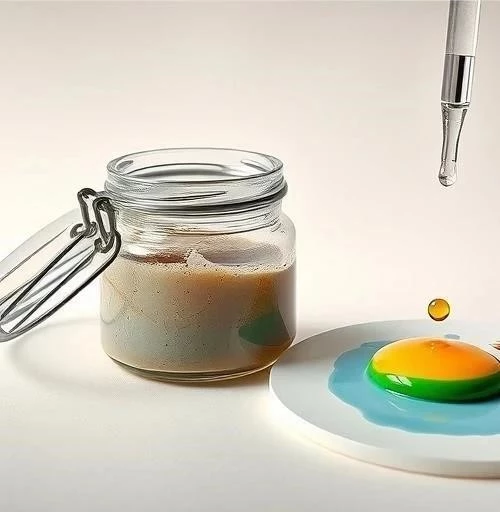
Acrylic paint is water-based while wet, but it dries into a durable plastic-like film. What can be done depends on whether the paint has merely thickened or has completely hardened. Slightly thick paint can often be made usable again; paint that has dried into a solid lump or formed a continuous skin usually cannot be restored to its original condition. The safest approach is to identify its state first, then add a compatible product in small amounts.
First, check how far the paint has dried
Open the container and inspect the paint. If it is still soft, creamy, or lumpy but can be stirred, it may respond to water or acrylic medium. If a thin skin has formed on top, lift it out rather than mixing it in: dried fragments can spoil the finish and clog brushes. If the contents are hard throughout, or have become rubbery and will not blend, adding liquid is unlikely to restore a smooth, dependable paint.
Also check the paint’s smell and appearance. Discard it if it has an unusual, persistent odor, visible mold, or signs of contamination. Do not try to rescue paint that appears spoiled by adding water, solvent, or household chemicals.
Water: suitable for small adjustments
For ordinary water-based acrylic paint, clean water is the simplest option when the paint is only a little thick. Add a few drops, stir thoroughly, and wait briefly for the liquid to spread through the paint. Repeat gradually until it reaches a workable consistency. Avoid pouring in a large amount at once: excessive dilution can weaken coverage, change how the paint handles, and make it less durable on the finished surface.
Use clean water and a clean mixing tool. If the paint is in a tube or a small pot, transfer only the amount needed to a palette and adjust that portion. This helps keep the remaining paint free from water and contamination. Water is generally most appropriate for restoring workability, not for replacing a substantial amount of paint that has evaporated.
Acrylic medium: often the better choice
Acrylic gloss, matte, or fluid medium can thin paint while retaining more of its binder than water alone. It may be a better choice when the paint needs noticeable thinning, when a more even flow is desired, or when maintaining film strength is important. Add a small quantity, mix well, and follow the product label. Different media can change sheen, transparency, drying time, or texture, so test the mixture on scrap material before using it on a finished piece.
Acrylic flow improver is another possible aid for certain painting techniques, but it is not the same as a general-purpose thinner. It is usually highly concentrated and should be used only at the rate specified by its manufacturer; Too much can interfere with drying or adhesion.
How to recondition paint that has thickened
- Remove any dry skin or hard particles with a clean tool.
- Stir the remaining paint slowly, scraping the sides and bottom of the container.
- Add a few drops of water or a small amount of compatible acrylic medium.
- Mix until uniform, then check the texture before adding more.
- Test a small amount on the intended surface and let it dry before deciding whether to use it.
If lumps remain after careful mixing, strain the paint through a fine paint filter or mesh only if the remaining mixture is otherwise sound. Straining can remove particles, but it cannot restore paint whose binder has broken down or whose contents have fully cured. Do not force hard pieces through the filter.
What not to add
Do not use paint thinner, mineral spirits, turpentine, or other oil-paint solvents to thin ordinary acrylic paint. They are not compatible with its water-based binder. Household products such as vinegar, rubbing alcohol, window cleaner, or detergent can destabilize the paint, affect adhesion, or produce an unpredictable finish. Boiling water and direct heat are also unsuitable: heating can damage the paint and create avoidable safety risks.
Do not pour water into the original container unless the whole contents will be used soon; Added water can encourage contamination during storage, and a loosely closed container allows more moisture to evaporate. Clean the rim, seal the lid tightly, and store the paint according to its label, away from freezing temperatures and excessive heat.
When to replace it
Replace the paint if it is fully solid, contains many persistent hard chunks, has separated in a way that will not correct with stirring, or fails a small test after drying. Even when thickened paint becomes spreadable again, it may not perform as well as fresh paint. For important work, a new container is usually more reliable than trying to revive material that has substantially dried.
In brief: use a little clean water for mildly thickened acrylic paint, and use a compatible acrylic medium when more thinning or better binder retention is needed. Add either gradually, test the result, and do not expect fully hardened paint to become fresh again.

7 Comments. Оставить новый
The guidance to assess the paint’s condition before adding anything is practical and easy to follow.
The distinction between slightly thickened paint and paint that has fully hardened makes the advice clear.
The reminder to remove a dried skin rather than stir it in is a useful detail for avoiding unwanted bits in the paint.
The explanations are organized around observable signs, making it easier to decide whether the paint may still be usable.
The article offers a measured approach to adding water gradually instead of risking excessive dilution.
Using a separate palette portion to test adjustments is a sensible way to protect the paint left in the container.
The advice about checking for unusual odors or visible mold appropriately addresses when paint should be discarded.