
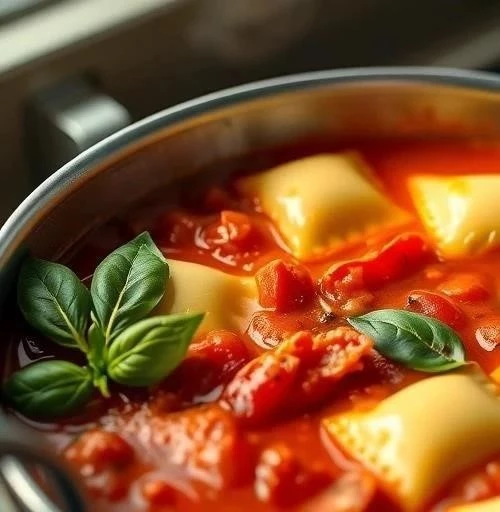
Ravioli with tomatoes make a quick, satisfying meal, but timing matters: overcooked pasta can split and lose its filling, while undercooked dough stays unpleasantly firm. For the best result, cook the ravioli separately, then briefly warm them with the tomatoes or sauce. This preserves their shape and lets the flavors come together without turning the dish watery;
Cooking time and method
Bring a large pot of water to a gentle boil. Add salt; the water should taste pleasantly seasoned. Carefully lower in the ravioli and stir once so they do not stick to the bottom. Fresh ravioli usually need about 2–4 minutes. Frozen ravioli generally take 4–6 minutes, but check the package because size, dough thickness, and filling affect the exact time. Start timing when the water returns to a gentle boil, and follow the maker’s directions when available.
So, how long should ravioli cook? Treat the stated times as a guide, not a guarantee. When the pasta floats, test one piece: the dough should be tender, and the center should be hot. Floating alone does not prove that the filling is cooked through, particularly in large meat-filled ravioli. Avoid a vigorous rolling boil, which can break delicate edges. Drain with a slotted spoon rather than tipping everything into a colander.
Tomatoes, sauce, and serving
For a simple tomato version, warm halved tomatoes in a pan with a little olive oil, then add the drained ravioli and a spoonful of cooking water. Toss gently for about a minute. Alternatively, simmer tomato sauce separately and fold in the pasta just before serving. This short finish coats the ravioli without masking the filling. Add basil at the end for freshness, and finish with finely grated Parmesan. Taste before adding more salt, since cheese and sauce may already be seasoned.
The filling should guide the sauce: cheese ravioli pair especially well with fresh tomatoes and basil, while meat ravioli can stand up to a richer, longer-simmered tomato sauce. In either case, keep the sauce moderate; too much liquid can overwhelm the pasta; Serve immediately in warm bowls, with Parmesan on the side. This approach reflects the balance valued in Italian cooking: each ingredient remains distinct, yet contributes to a coherent dish.
Useful recipe terms
For readers using Russian recipe searches: время приготовления равиоли; сколько варить равиоли; равиоли с томатами; равиоли в томатном соусе; рецепт равиоли; приготовление равиоли; варка равиоли; свежие равиоли; замороженные равиоли; равиоли с помидорами; томатный соус для равиоли; итальянская кухня; начинка для равиоли; равиоли с сыром; равиоли с мясом; вода для варки равиоли; соль; оливковое масло; базилик; пармезан; подача равиоли.
Bottom line: cook fresh ravioli for roughly 2–4 minutes and frozen ones for about 4–6, then finish them briefly with tomatoes. Test for tenderness, since the package and the filling matter more than the clock alone.

3 Comments. Оставить новый
The suggestions for finishing ravioli with tomatoes are clear and help explain why a brief toss with a little cooking water can improve the sauce’s texture. The article also sensibly recommends gentle handling, which is important for preventing delicate pasta from breaking.
The piece is useful because it connects sauce choices to the ravioli filling instead of treating every variety alike. Its reminders to season carefully and add basil at the end are also sound, making the advice accessible without requiring complicated ingredients or techniques.
The article gives practical guidance by distinguishing fresh from frozen ravioli and emphasizing that package instructions should take priority. I also appreciate the advice to test a piece rather than relying only on whether it floats, since that is a more reliable way to check both the pasta and its filling.