
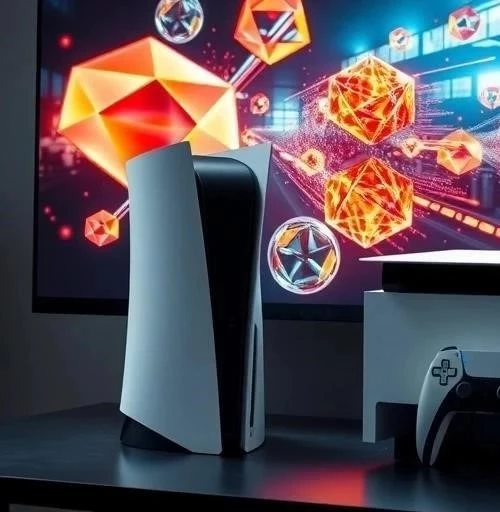
The standard PlayStation 5 has a graphics processor rated at 10.28 teraflops of theoretical peak performance. This figure is often shortened to 10.3 TFLOPS. It describes the maximum rate at which the GPU can perform a particular kind of calculation under ideal conditions; it is not a direct measure of how many frames a game will display or how good its graphics will look.
The number applies to the original PS5 and the PS5 Slim‚ which have essentially the same gaming performance. The PS5 Digital Edition also has the same GPU capability as the disc-drive model. A separate‚ more powerful system—the PS5 Pro—has different specifications and should not be confused with the standard PS5.
What does 10.28 TFLOPS mean?
A FLOP is a floating-point operation: a calculation involving numbers that can include decimal values. A teraflop is one trillion such operations per second. In console specifications‚ the advertised figure generally refers to theoretical peak single-precision‚ or FP32‚ performance. So 10.28 TFLOPS means that the PS5’s GPU can theoretically reach about 10.28 trillion FP32 operations per second in suitable workloads.
That definition is more limited than it may first sound. The figure is about a specific category of arithmetic performed by the graphics processor. It does not include every task a game console carries out‚ and it does not say how quickly the system completes a particular game’s rendering work. Actual performance depends on the game‚ the GPU’s workload‚ memory access‚ software‚ and many other factors.
How is the PS5’s teraflop figure calculated?
The PS5’s custom GPU is based on AMD’s RDNA 2 graphics architecture. Its commonly cited configuration has 36 compute units‚ running at a peak frequency of up to approximately 2.23 GHz. Each compute unit contains 64 shader processing units. For the familiar FP32 peak-performance estimate‚ each unit can perform two operations per clock cycle.
The calculation is therefore:
36 compute units × 64 shader units × 2 operations per cycle × 2.23 billion cycles per second ≈ 10.28 trillion operations per second.
This is a theoretical peak‚ rather than a promise that every game will continuously reach that rate. The PS5 uses a variable-frequency design: its processor adjusts operating frequencies in response to the workload and power conditions. The headline number communicates the GPU’s maximum theoretical capability using the usual calculation‚ not a constant speed that every title sustains at all times.
Does 10.28 TFLOPS tell you how powerful the PS5 is?
It gives a useful point of comparison‚ but only a partial one. Teraflops can help describe the arithmetic capacity of a GPU‚ especially when comparing graphics processors built on similar principles. They cannot‚ by themselves‚ predict game performance. Two systems with similar TFLOPS ratings may produce different results because their GPU architectures‚ clock behavior‚ memory systems‚ software tools‚ and rendering features differ.
It is helpful to think of a teraflop rating as one specification in a much larger system. A game also depends on the CPU‚ memory bandwidth and capacity‚ storage‚ the way its engine is programmed‚ and the resolution and visual settings selected by its developers. A high theoretical GPU number cannot compensate for every limitation elsewhere in the hardware or software.
Why doesn’t a game simply use all 10.28 teraflops?
Games do not consist of one uninterrupted stream of identical FP32 calculations. A frame may require geometry processing‚ shading‚ lighting‚ texture work‚ post-processing‚ and other operations. Different tasks stress different parts of the GPU‚ and some are limited by memory access or by how quickly data can be prepared and delivered. The GPU may also spend time on work that is not represented by the headline FP32 figure.
Developers balance these demands to meet a frame-time target. At 60 frames per second‚ for example‚ a game has roughly 16.7 milliseconds to produce each frame; at 30 frames per second‚ it has about 33.3 milliseconds. The amount and complexity of the work that fits into that time depends on the game’s design and chosen graphics settings. A title may use its resources for a higher resolution‚ more detailed effects‚ a steadier frame rate‚ or some combination of those goals.
Consequently‚ two PS5 games can look and run differently even though they use the same console. One might prioritize visual detail and target 30 frames per second‚ while another uses lower internal resolution or simpler effects to target 60. Some games offer selectable graphics modes‚ and their performance can vary by scene. None of these differences means the console’s advertised teraflop count has changed.
Teraflops‚ resolution‚ and frame rate
Resolution and frame rate are related to GPU workload‚ but neither is determined by TFLOPS alone. Rendering more pixels generally requires more work‚ while producing frames more frequently gives the system less time to render each one. Yet the final result also depends on the visual effects being used and how efficiently the game performs its work.
Games may use dynamic resolution‚ in which the internal rendering resolution changes as needed to help maintain performance. They can also use reconstruction or upscaling techniques to create a higher-resolution output from a lower-resolution image. These methods can allow a game to balance image quality and frame rate without requiring every frame to be rendered natively at the display’s full resolution.
That is why “10.28 teraflops” should not be translated into a guaranteed resolution or frame rate. It is not a rule that says every PS5 game will run at 4K‚ nor does it promise that every title will reach 60 or 120 frames per second. Those outcomes depend on the specific game‚ its rendering choices‚ and sometimes the display and selected mode.
How does the PS5 compare with other consoles?
The standard PS5’s 10.28 TFLOPS rating is higher than the commonly quoted figures for the PlayStation 4 and PlayStation 4 Pro. The original PS4 is typically listed at around 1.84 TFLOPS‚ while the PS4 Pro is listed at approximately 4.2 TFLOPS. On paper‚ that makes the PS5’s peak figure substantially larger. It also reflects a newer GPU architecture and a broader generational change in the console’s hardware.
The Xbox Series X is commonly specified at about 12 TFLOPS‚ a higher theoretical peak figure than the standard PS5. That does not mean every Xbox Series X game will automatically outperform every PS5 game. The comparison is between headline GPU calculations‚ not a complete measurement of games or the full consoles. Hardware design‚ development tools‚ game engines‚ and title-specific optimization all matter.
When comparing systems‚ it is better to look at real games and their available modes in addition to the specification sheet. Reviews can show whether a title maintains its target frame rate‚ how it handles image quality‚ and what compromises are made between performance and visual detail. A TFLOPS number alone cannot answer those practical questions.
What about the PS5 Slim and PS5 Pro?
The PS5 Slim is a smaller revision of the standard console. Its form factor and storage configuration differ from earlier PS5 models‚ but it is not a more powerful GPU generation. For ordinary comparisons of game performance‚ the Slim should be treated as having the same approximate 10.28-TFLOPS graphics capability as the standard PS5. The Digital Edition also uses the same core gaming hardware; the main distinction is that it does not include an optical disc drive.
The PS5 Pro is a different model with upgraded graphics hardware. Its advertised theoretical GPU performance is approximately 16.7 TFLOPS‚ so its figure should not be used as the answer for the standard PS5. Even with the Pro‚ a larger TFLOPS rating does not guarantee that every game will run at a particular resolution or frame rate. The actual benefit depends on how a game uses the upgraded hardware and which features or modes it supports.
Does ray tracing change the answer?
No. The standard PS5’s commonly cited headline figure remains 10.28 TFLOPS. Ray tracing is a graphics technique for simulating how light interacts with objects‚ and compatible PS5 hardware can accelerate parts of that work. However‚ a TFLOPS rating is not a ray-tracing performance score. It does not tell you how many ray-tracing effects a game can use‚ how quickly they will run‚ or what visual quality a developer will choose.
Ray tracing can increase the amount of work required to render a scene. Developers may therefore limit its use to selected effects‚ such as reflections or shadows‚ or combine it with a performance mode that adjusts other settings. A game’s specific implementation matters more than trying to infer ray-tracing results from the general teraflop number.
Common misunderstandings
- “10.28 TFLOPS is the PS5’s frame rate.” It is not. Teraflops measure theoretical calculation throughput‚ while frames per second measure how many images a game produces each second.
- “Every game uses the full 10.28 TFLOPS.” The figure is a theoretical peak‚ and games vary in their workloads. No single headline number describes every part of rendering.
- “More teraflops always means a better-looking game.” Results also depend on architecture‚ software‚ game design‚ and how developers allocate available resources.
- “The Slim has more teraflops than the original PS5.” It is a revised form factor‚ not a GPU upgrade with a higher standard performance rating.
- “The PS5 Pro’s number is the standard PS5’s number.” These are separate models. The standard PS5 is rated at about 10.28 TFLOPS; the Pro has a higher advertised theoretical figure.
Quick answer
The standard PlayStation 5 has approximately 10.28 teraflops of theoretical peak GPU performance‚ often rounded to 10.3 TFLOPS. That figure comes from its 36-unit RDNA 2-based GPU operating at up to about 2.23 GHz. It is a useful specification‚ but not a direct prediction of a game’s resolution‚ frame rate‚ or visual quality. For those‚ check the performance and graphics options of the particular game.

3 Comments. Оставить новый
The breakdown of FLOPS and FP32 performance provides useful context. The caveat that teraflops alone don’t predict frame rates or visual quality is especially important.
The explanation makes the teraflop figure approachable while clearly distinguishing theoretical peak performance from real-world gaming results.
It’s helpful that the article separates the standard PS5 models from the PS5 Pro and clarifies that the Slim and Digital Edition have comparable GPU performance.