
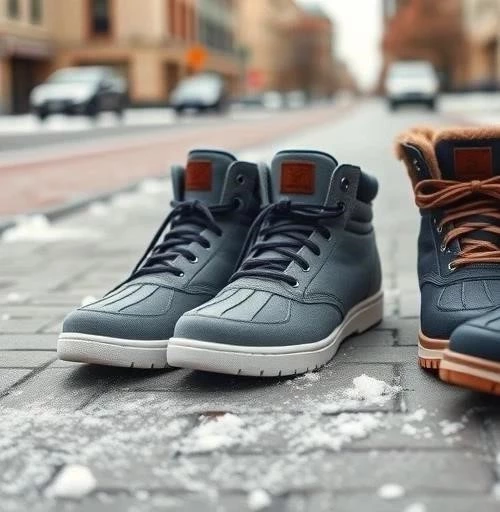
The best winter sneakers are not necessarily the warmest or most technical pair. For daily use, they should suit the local weather, feel comfortable during ordinary walking, and provide enough grip and protection for the routes you take. Adidas offers casual and outdoor-inspired designs, but features differ by model and version. Checking the product specifications is more useful than relying on a collection name alone.
Start with the conditions
Consider the coldest temperatures you normally encounter, how often you walk through snow or slush, and whether you need footwear for commuting, errands, or long outdoor walks. A lightly insulated sneaker may be practical in a mild, mostly dry winter. Regular exposure to wet snow calls for stronger water protection, while icy paths make outsole traction especially important. No sneaker can guarantee a secure footing on ice.
Features worth comparing
- Water resistance: A treated upper can help with brief contact with moisture, but it is not automatically waterproof. If staying dry matters, look for an explicitly stated waterproof construction or membrane, and check care guidance.
- Warmth: Insulation and a lining can improve comfort in cold weather. Thick socks also help, but shoes should still leave enough room for toes; a tight fit may feel colder and less comfortable.
- Grip: Examine the outsole pattern and material description. A more pronounced tread can be useful on packed snow or wet paths, though performance depends on the surface and conditions.
- Fit and support: Try shoes with the socks you expect to wear. Check heel hold, toe room, and comfort while walking. If you use orthotic insoles, confirm that the footbed can be removed and that the fit remains suitable.
- Weight and flexibility: A lighter, flexible pair may suit city routines. A more structured outdoor design may feel steadier on uneven routes, but can be less convenient indoors.
Casual or outdoor-inspired?
For mostly urban wear, a casual Adidas sneaker with a winter-ready upper may pair easily with everyday clothing and feel familiar for short trips; However, a fashionable silhouette alone does not indicate insulation, waterproofing, or dependable traction. Outdoor-inspired options may offer a more protective build or deeper tread, but features vary across models. Compare the specific version, rather than assuming every shoe in a range has identical construction.
How to choose
- Write down your main need: warmth, wet-weather protection, grip, or versatile appearance.
- Compare the exact model’s materials, lining, outsole, and stated weather features.
- Try both shoes later in the day, when feet may be slightly larger, with winter socks.
- Walk on a safe indoor surface to check comfort, stability, and pressure points.
Care and limitations
Follow the label’s cleaning instructions and allow damp shoes to dry at room temperature, away from direct heat. Use only treatments suitable for the upper material. Even water-resistant footwear can become wet through seams, openings, or prolonged exposure, so avoid treating a sneaker as a substitute for a fully protective boot in deep snow or severe weather.
Verdict
For everyday city wear, the most suitable Adidas winter sneaker is the model that matches local conditions while fitting comfortably with winter socks. In mild weather, prioritize comfort and a practical upper; in frequent slush, seek clearly specified water protection; on snowy routes, give tread and stability greater weight. There is no single best choice for everyone, so compare current specifications and try the pair before buying.
1 Comment. Оставить новый
A practical overview that focuses on the factors most relevant to winter use, especially fit, weather protection, and traction. The reminder that water-resistant features and grip have limits helps keep expectations realistic.