
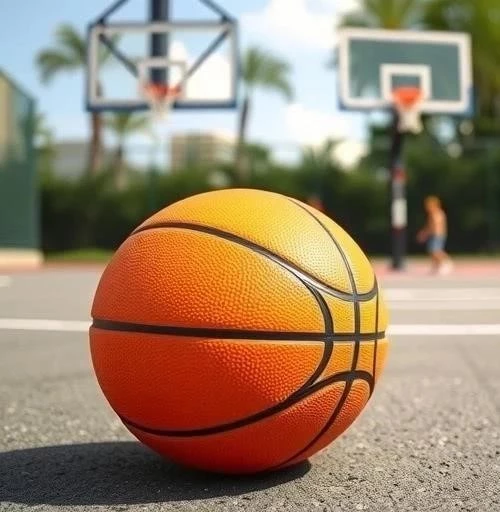
The right outdoor basketball should suit the players, the court and how often it will be used. A ball that feels excellent on a polished indoor floor may wear quickly on asphalt, while an overly hard, slippery ball can make practice frustrating. Prioritise durability, grip and the correct size—not colour or branding alone.
Choose the right size
Size affects handling, shooting and confidence, so match the ball to the player rather than buying an adult size for everyone. Size 7 is the standard men’s adult ball and is commonly used by boys aged about 15 and older. Size 6 is used in women’s adult play and is often suitable for girls and boys around 12–14. Size 5 is a common choice for younger players, roughly ages 9–11. Age ranges are only a guide: check the rules of the league or school, and consider what feels manageable in the player’s hands.
Match the cover to the court
For regular play on asphalt or concrete, look for a ball specifically labelled “outdoor” or “indoor/outdoor.” Durable rubber is usually the practical choice for rough surfaces: it resists abrasion and tends to cost less. Composite or synthetic leather can offer a softer feel and refined grip, but not every model is built to withstand constant contact with coarse asphalt. A ball designed mainly for indoor hardwood may lose its texture or cover sooner outside. On specialist outdoor courts, such as rubberised or tartan surfaces, a quality outdoor or all-surface model can work well.
Check grip and construction
Inspect the pebbled surface and the channels between the panels. A defined, reasonably deep texture helps your fingers hold the ball during dribbling, passing and shooting, especially when hands get sweaty. The channels should be even and clearly formed, not shallow or smoothed over. Grip should feel secure without being abrasive. Look for consistent seams and a cover that sits firmly around the ball; uneven panels can affect control and may signal poor construction. Remember that texture alone cannot compensate for a ball used on the wrong surface.
Consider bounce, pressure and standards
Inflate the ball to the pressure printed near its valve, using a pressure gauge if possible. Underinflation makes the ball feel heavy and can spoil the bounce; excess pressure makes it harder and less comfortable to handle. Check it on a level surface: a sound ball should rebound consistently rather than wobble or lose height unevenly. If you can, test a few dribbles and catches before buying. For organised competition, confirm the required size and whether the event specifies an approved or certified model. Certification matters for rule compliance, but it does not by itself mean a ball is durable enough for asphalt.
Buy for your actual routine
For daily street games, favour a robust outdoor cover and dependable grip over premium indoor feel. For occasional play on a smoother outdoor court, an indoor/outdoor ball may offer a good balance. Check the product description carefully: “all-surface” is useful only when supported by suitable construction. After playing, wipe off grit and moisture, store the ball away from sharp objects and extreme heat, and maintain the recommended pressure. These simple habits help preserve grip and shape.
Quick checklist
- Choose the correct size for the player and the rules.
- Pick an outdoor-rated cover for asphalt and concrete.
- Feel the grip and inspect the pebble texture, channels and seams.
- Check pressure guidance, bounce consistency and any competition requirements.
The best outdoor basketball is the one that fits its players, holds up on their court and feels predictable in use. Taking a moment to check these details is more reliable than choosing by appearance alone.