
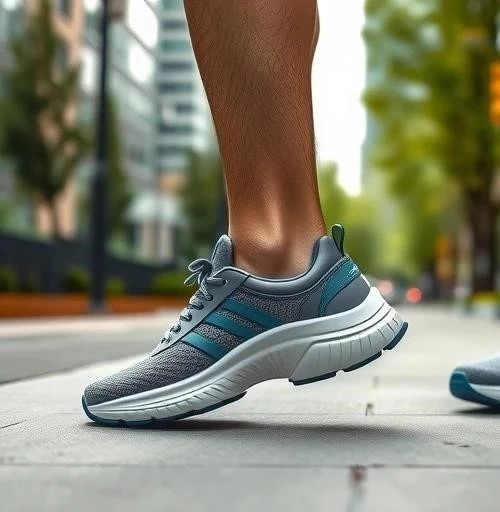
Define Your Everyday Needs: Walking Distance, Commute, and Typical Surfaces
Plan around your actual day: estimate walking time, commute length, and how long you stand between trips. Map your usual route—smooth pavement, sidewalks, park paths, stairs, or a combination—and note transit changes and weather exposure. Sportmaster’s listings describe sneakers as suitable for walks; treat that as a starting point, then choose Hoka for your usual daily routes.
Choose a Hoka Model for the Right Balance of Cushioning and Support
Choose cushioning by how you want everyday steps to feel, not by the biggest-looking midsole. Hoka’s Bondi is known for a plush ride; Clifton offers a more balanced daily feel, while Arahi and Gaviota are options to compare if you prefer guidance from a stability-focused design. Treat these as starting points, since comfort is personal and editions change. Sportmaster’s catalog describes sneakers for walking, so match the model’s ride to your routine and preferred level of softness.
Check Fit, Sizing, and Width for All-Day Comfort
Try Hoka shoes later in the day, when feet may be slightly larger. Wear the socks you use most often, loosen the laces, and stand with weight on both feet. Allow a little space beyond the longest toe; toes should move without touching the front, while the heel feels secure without pinching.
Check both feet; one may be longer or wider. Try shoes late in the day, wearing your usual socks. Hoka models can fit differently, so consult the current size chart for the exact version; treat it as a guide, not a promise. Ozon’s listings include sneakers for wide feet, underscoring the value of checking available width options. Walk indoors and notice toe pressure, heel rubbing, or forefoot numbness. Seek a different size or width if discomfort remains.
Before ordering, compare the model’s chart with your familiar size and check the seller’s return terms. A good fit feels natural from the first try: no toe curling, lace-tightening to hold the foot, or pressure that builds while standing. Give each foot a few minutes, then reassess.
Assess Outsole Grip, Durability, and Practicality for City Wear
For city use, inspect the outsole as carefully as the upper. Look for rubber coverage in the areas that meet the ground most often, especially the heel and forefoot, and check that the tread is evenly attached, without gaps or lifting edges. A clear tread pattern can help you judge whether the shoe is intended for ordinary pavement or for more varied paths; do not assume that a running shoe’s appearance guarantees secure footing on every surface.
Think about the surfaces on your regular route: dry sidewalks, polished indoor floors, painted crossings, wet paving, or occasional gravel. If possible, try the shoes on a clean, dry floor and take a few careful steps. This can reveal an unstable sensation, but it cannot prove how the outsole will behave in rain, so use caution on slick surfaces. Hoka models and versions may differ, and outsole materials or designs can change; check the product details for the exact pair rather than relying on a brand-wide promise.
Durability depends on how often and where you wear the shoes. Examine the rubber after use for uneven smoothing, worn tread, or separation, and rotate pairs if your daily schedule allows. Sportmaster’s online catalogue presents sneakers as suitable for walks, a useful reminder to consider everyday use, but that general description is not a guarantee of grip or lifespan for a particular Hoka model. Read the current listing and care instructions, and choose based on your own route and frequency of wear.
For practicality, consider whether the outsole is easy to wipe clean and whether its grooves are likely to collect grit. A quick inspection after walks can help spot damage early. Prioritize a stable, predictable feel on the surfaces you encounter most, and replace footwear when the tread is visibly worn or the sole begins to detach.
3 Comments. Оставить новый
The advice to consider typical walking surfaces, weather, and time spent standing makes this more helpful than a simple list of shoe models. I’d also check the return policy before ordering.
I appreciate the reminder that cushioning and stability are personal preferences. Comparing models in person and checking the exact version’s sizing chart can help avoid a disappointing purchase.
A practical guide that rightly emphasizes matching a shoe to your routine rather than choosing by appearance alone. The fit checks are especially useful.