
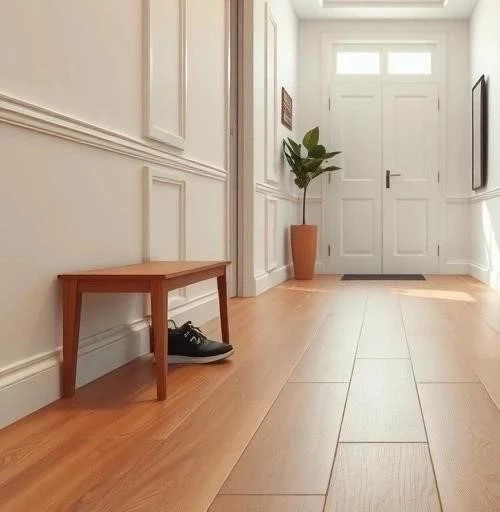
A hallway is a small room with a big appetite. It welcomes wet boots, gritty shoes, rolling suitcases and the daily parade of paws. The right laminate for the entryway must do more than look elegant: it has to handle traffic, resist dirt and remain easy to live with. Think of laminate in the corridor as a hardworking host, not a delicate showroom guest.
Start with the traffic, not the color
The wear class describes how much everyday use a floor is designed to withstand. Class 32 is often suitable for a quieter home; class 33 offers a reassuring margin for a busy household. Class 34 is made for very heavy commercial traffic and may be more than a typical home needs. Check the abrasion rating too: AC4 is a sound domestic choice, while AC5 is designed for more demanding use. These figures are clues, not magic shields. Floor-covering strength also depends on the core, finish and quality of the locking joint.
Water is the hallway’s surprise guest
Moisture-resistant laminate can tolerate occasional splashes when spills are wiped promptly. Waterproof laminate may offer stronger protection, but the term does not mean that every floor can sit in standing water indefinitely. Read the manufacturer’s warranty, especially its rules for seams and installation; Good moisture resistance starts before the first rainy day: use a dirt-trapping mat, dry puddles quickly and avoid washing the floor with a soaking-wet mop.
Build a floor that feels solid
Laminate thickness affects the feel underfoot and can help a floor bridge minor variations, but thicker is not automatically tougher. Match the laminate thickness to the subfloor, doors and adjacent rooms. A suitable underlayment for laminate can reduce tapping sounds and smooth tiny imperfections; it cannot repair a bumpy base. Careful laminate installation matters just as much as the product. A clean, level subfloor and a properly engaged locking joint help prevent gaps and movement.
Style can work hard, too
Wood-look decor brings warmth without asking you to sand or varnish it. Light laminate can make a narrow hallway feel airier and show dust less dramatically; dark laminate gives the space a bold, tailored mood, though pale grit may stand out. Beveled-edge laminate emphasizes each plank and creates texture, but its grooves need regular attention. For a coherent hallway design, sample the boards beside your wall color and check them in both daylight and evening light.
Comfort, care and the long view
Scratch resistance is useful, not invincible: trim pet claws, lift furniture rather than dragging it, and choose felt pads. Consider floor load from heavy cabinets or appliances and follow the flooring maker’s limits. Underfloor heating beneath laminate is possible only when the product is approved for it; observe temperature limits and installation instructions.
For simple laminate care, sweep grit away, wipe with a barely damp cloth and use cleaners approved by the manufacturer. With sensible protection, the right flooring for a corridor can keep its good looks for years. The best choice is not the toughest label or the trendiest shade: it is a balanced floor that suits your traffic, moisture risks, budget and daily routine.



6 Comments. Оставить новый
A welcome reminder that a floor’s toughness is a team effort: finish, core, joints, installation, and everyday care all play their part. The strongest plank can’t rescue a neglected foundation.
This makes choosing laminate feel less like guessing from a wood pattern and more like solving a small home-design puzzle. Traffic, moisture, thickness, and the subfloor each get a sensible place in the picture.
The mat gets an understated starring role here. It’s a humble little gatekeeper, catching grit before it can turn a lovely hallway into a sanding workshop.
I like the idea of treating hallway flooring as a hardworking host rather than a showroom ornament. It makes the practical advice feel vivid—and reminds me that muddy boots are the real critics.
Practical and refreshingly grounded: thicker isn’t automatically better, and impressive ratings aren’t magic shields. I’d use this as a checklist before shopping—and before blaming the floor for a bumpy subfloor.
The warning that “waterproof” is not a promise of eternal puddle immunity is worth framing by the front door. Clear, useful guidance without letting a marketing word do all the talking.